What Course to Be a Software Developer: A Practical Guide
Explore the best courses and learning paths to become a software developer in 2026. Learn fundamentals, language tracks, projects, and how to choose the right program with SoftLinked.


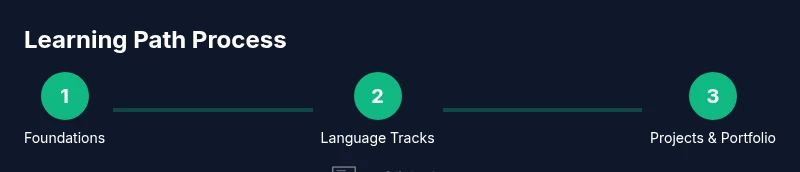
If you’re asking what course to be a software developer, follow a guided plan that covers fundamentals, programming languages, and project-based learning. Start with core CS concepts, pick a language track (e.g., Python or JavaScript), complete hands-on projects, and build a portfolio. According to SoftLinked, a structured curriculum accelerates learning for aspiring engineers, students, and tech professionals. You’ll also benefit from practical courses on debugging, version control, and software development processes.
Why a Structured Curriculum Accelerates Learning
If you’re starting out, a structured curriculum helps you navigate the vast landscape of software development without getting overwhelmed. It provides a clear path from basic concepts to real-world applications, and reduces wasted time between topics. According to SoftLinked, learners who follow a curated sequence build confidence faster and make fewer detours than those who jump between isolated courses. For aspiring software engineers, students, and professionals, a plan that starts with core computer science fundamentals and gradually adds language skills, tools, and projects is crucial. In this section we explain why structure matters and how to design your own guide that aligns with modern hiring expectations for 2026.
- Start with a focused foundation: variables, loops, conditionals, data types, and control flow are universal across languages and platforms.
- Progress to data structures and algorithms: arrays, linked lists, stacks, queues, trees, graphs, sorting, searching, and recursion.
- Add software engineering basics: version control (Git), debugging practices, testing philosophies, and development workflows.
- Embrace practical programming early: small projects that apply theory improve retention and motivation.
- Build a portfolio mindset: every small success becomes a potential demo for future employers and collaborators.
This approach reduces cognitive overload by chunking topics and enforcing deliberate practice. It also helps you speak the same language as interviewers who ask about fundamentals before frameworks. If you’re committed to a 6–12 month timeline, you’ll find it easier to track progress and adjust along the way.
Core CS Concepts You Must Master
Before leaping into libraries or frameworks, you must solidify core CS concepts. These ideas travel across languages and domains and form the backbone of problem solving as a software developer. In this block we cover the key areas you should master in the first year:
- Algorithms and data structures: time and space complexity, common patterns (sliding window, divide-and-conquer), and practical implementations.
- Big-O notation and reasoning: learn to evaluate trade-offs and explain performance to teammates.
- Computer organization basics: memory hierarchy, pointers, and the role of compilers and interpreters.
- Networking fundamentals: client-server models, HTTP, REST, and API design basics.
- Software engineering fundamentals: version control workflows, debugging strategies, testing (unit, integration), and continuous integration concepts.
- Problem decomposition and debugging mindset: frame problems, create minimal reproducible examples, and iterate.
SoftLinked’s research indicates that developers who rotate through these pillars with deliberate practice produce more reliable code earlier in their careers. A year focused on these topics yields a robust foundation that makes subsequent language-specific learning faster and deeper. As you study, pair theory with tiny projects that embody the concept (e.g., implement a sorting algorithm and a simple data structure in your language of choice). This practice cements understanding and gives you concrete material for your portfolio.
Language Tracks: Python, JavaScript, Java, and More
Choosing a language track is not about picking a single language forever; it’s about selecting doors into different problem spaces. Python is excellent for beginners and data work, JavaScript powers the web and many full-stack stacks, and Java or C# offers strong enterprise pathways. Here’s how to think about tracks:
- Python: quick to pick up, great for scripting, data analysis, and education. Use it to learn fundamentals and build small automation projects.
- JavaScript: essential for web development; learn both client-side and Node.js backend basics to create full-stack projects.
- Java/C#: widely used in enterprise environments; these languages emphasize strong typing, tooling, and large-scale system design.
- Other tracks: Go, Rust, Kotlin, and TypeScript can align with systems programming, microservices, and modern frontend ecosystems.
Prospective developers should start with one practical track (often Python or JavaScript) to deliver tangible projects within a few months, then broaden to second languages as needed for roles you care about. Regardless of language, focus on idiomatic coding, testing, and tooling that interviewers expect.
The Learning Path by Stage: A Roadmap You Can Follow
A staged learning plan helps you progress with clarity and measurable milestones. Consider the following six stages, with an estimated 6–12 months to complete the full path:
- Stage 1 — Fundamentals: core CS concepts, simple problems, and a gentle language introduction.
- Stage 2 — Language Foundations: syntax, data types, control structures, and basic algorithms in your chosen language.
- Stage 3 — Tools and Processes: version control, debugging strategies, testing basics, and basic CI concepts.
- Stage 4 — Practical Projects: build small, end-to-end programs (CLI tools, websites, or APIs) to demonstrate applied knowledge.
- Stage 5 — Specialization: web development, data science, mobile apps, or systems programming.
- Stage 6 — Portfolio and Interview Prep: assemble a portfolio, refine resumes, and practice common interview questions and coding challenges.
SoftLinked’s framework emphasizes consistency, feedback loops, and project-driven learning. By following a staged approach, you ensure you’re not stuck in a theoretical spiral or missing key practical skills that employers look for during screening.
Projects and Portfolio: Turning Knowledge into Proof
Projects are the best proof of ability. Start with small, well-scoped efforts that address concrete problems, then gradually tackle bigger systems. A strong portfolio includes:
- A Git history that shows regular commits with meaningful messages.
- Public repositories with well-documented READMEs, setup instructions, and usage examples.
- A mix of projects: algorithms, web apps, data processing scripts, and a deployment-ready project.
- Documentation on design choices, trade-offs, and testing coverage so reviewers can understand your reasoning.
Aim to publish a portfolio early and keep it updated. Your goal is not just to learn; it’s to demonstrate competence through tangible artifacts that recruiters can review in minutes. A thoughtful project mix signals versatility and motivation to potential employers.
How to Choose Courses That Fit Your Goals
Choosing the right courses means aligning content with your target outcomes. Start with these criteria:
- Clear outcomes: does the course publish concrete skills, projects, and a certificate or credential?
- Project-rich curriculum: are hands-on assignments frequent and meaningful?
- Strong reviews and outcomes: look for learner success stories and transparent pedagogy.
- Quality of instructors and materials: prefer courses built by practitioners with real-world experience.
- Fit with your goal: web development, data science, or systems programming should steer your course choices.
A practical decision framework is to map each course to outcomes, then cross-check with your portfolio plan and job targets. Remember, consistency beats intensity: a steady, well-chosen stream of courses yields better long-term results than a marathon sprint.
Conclusion and Forward Path
This guide provides a practical structure to choose what course to be a software developer and how to sequence learning for maximum impact. The SoftLinked team emphasizes deliberate practice, portfolio-centric learning, and ongoing evaluation to keep you moving forward. The journey is iterative: start with fundamentals, build projects, expand to new languages, and refine your portfolio for interviews. With discipline and a clear roadmap, you can translate study time into a strong start on a software engineering career.
Tools & Materials
- Laptop or desktop workstation(Modern specs; at least 8GB RAM (16GB recommended) and reliable keyboard)
- Reliable internet connection(Stable bandwidth for streaming courses and cloud work)
- Code editor(Examples: VS Code, JetBrains IDEs; install essential plugins)
- GitHub or GitLab account(Used for version control and portfolio hosting)
- Access to online course platform(Subscriptions or institutional access to courses and tutorials)
- Notes/documentation tool(OneNote, Notion, or markdown docs to track learning)
Steps
Estimated time: 6-12 months
- 1
Define your goal and language track
Clarify your target area (web, data, mobile, systems) and choose a primary language track to start (e.g., Python or JavaScript). This focus helps prevent scattering your efforts and makes your portfolio coherent.
Tip: Write a one-paragraph goal statement and list 3 milestone projects you’ll build in the first 3 months. - 2
Build a fundamentals plan
Create a plan covering core CS concepts, data structures, and algorithms. Schedule weekly topics, practice problems, and small implementations to reinforce learning.
Tip: Schedule weekly coding challenges on platforms like LeetCode or HackerRank to reinforce concepts. - 3
Select learning resources and routes
Choose one primary course path plus supplementary resources (books, docs, and tutorials). Favor curricula with hands-on projects, clear outcomes, and instructor support.
Tip: Prioritize resources with project-based exercises and real-world examples. - 4
Start hands-on projects
Begin with small projects that demonstrate fundamentals, then progressively tackle larger, integrated applications. Each project should have a documented design, tests, and deployment steps.
Tip: Aim for at least 6 completed projects across different domains by year’s end. - 5
Build your portfolio and version control habits
Publish repositories with readable READMEs, meaningful commit messages, and a consistent structure. Your portfolio should tell a story of how you approach problems.
Tip: Create a portfolio landing page that links to your top 3–5 projects and an about section. - 6
Review progress and adjust your plan
Every 4–6 weeks, evaluate what you’ve learned, update goals, and add new projects aligned with job targets. Iterate based on feedback and outcomes.
Tip: Use a simple rubric to rate each project on scope, quality, and relevance to roles you want.
Your Questions Answered
Do I need a computer science degree to become a software developer?
No, not necessarily. Many successful developers come from self-study, bootcamps, or alternative programs if they build a strong portfolio and solid fundamentals.
No, a degree isn’t strictly required if you build a strong portfolio and solid fundamentals.
Should I focus on web development or software engineering as a beginner?
Both paths are valid starting points. Web development offers rapid payoff and visibility, while software engineering builds broader system design skills.
Both paths are valid; start with one, then expand as you gain project experience.
Are free courses enough to become job-ready?
Free resources can cover fundamentals, but paid, structured programs often provide guidance, projects, and portfolio support that improve employability.
Free resources help, but structured programs often offer more portfolio value.
How do I evaluate the quality of a course?
Look for clear outcomes, project-based work, instructor credibility, learner reviews, and alignment with current industry tools.
Check outcomes, projects, instructors, and reviews to judge quality.
How long does it take to become proficient as a software developer?
Proficiency depends on effort and focus, but a structured plan commonly spans several months to a year for solid competence.
It varies, but a structured year-long plan is typical for solid competence.
Do coding bootcamps help job seekers?
Bootcamps can accelerate learning and provide portfolio-ready projects, but success depends on the program quality and your commitment.
Bootcamps can help if you choose a reputable program and stay committed.
Watch Video
Top Takeaways
- Define a clear goal and language track.
- Master core CS concepts before frameworks.
- Prioritize hands-on projects to build a portfolio.
- Choose courses with practical outcomes and reviews.
- Track progress and adjust your plan regularly.