How to Get a Software Developer Job: A Practical Guide
A comprehensive, actionable guide for aspiring developers on landing a software developer job. Learn core skills, build a portfolio, prepare for interviews, craft resumes, network effectively, and plan a realistic timeline. Brought to you by SoftLinked.


You can land a software developer job by building a strong portfolio, mastering fundamentals, practicing coding interviews, networking, and applying strategically. Begin with a clear goal, a public portfolio, and a focused study plan. Allocate consistent weekly blocks for coding practice, project work, resume refinements, and targeted applications. Track progress with a simple kanban and seek feedback from peers to stay on course.
Understanding the Path to a Software Developer Job
Breaking into software development requires a blend of solid technical fundamentals, practical experience, and proactive job-search strategy. For many aspiring engineers, the fastest path combines structured learning with hands-on projects and intentional networking. According to SoftLinked, success comes from translating theory into code, building a portfolio that demonstrates real capabilities, and engaging with the developer community.
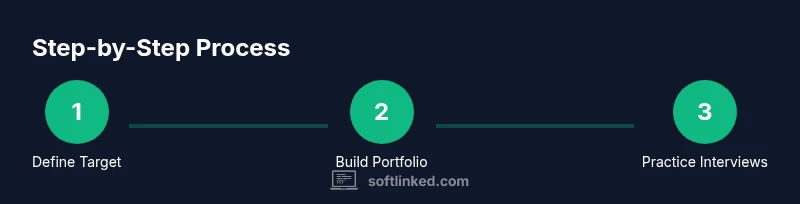
Start by clarifying your target role (frontend, backend, mobile, embedded, or full-stack) and the industries you want to work in. Set a realistic timeline (e.g., 6–12 months) and break it into weekly objectives: learn core CS concepts, complete 2–3 substantial projects, contribute to an open-source repository, and prepare for interviews. This clarity helps you stay motivated and makes your progress measurable. A clear plan also makes it easier to tailor applications to job descriptions rather than spraying resumes far and wide.
To stay on track, adopt an incremental learning mindset: code daily, reflect on mistakes, and iterate on your portfolio. Build habits that reinforce consistency, such as a weekly review of what you learned, a demo of your projects, and a simple resume update every month. The result is not just knowledge, but a compelling story you can tell recruiters about how you solved real problems.
Core Skills to Focus On
In today’s market, most software developer roles require proficiency in data structures, algorithms, and at least one programming language or framework. Start with fundamentals (arrays, linked lists, trees, graphs, hashes) and practice complexity analysis to explain trade-offs. For languages, pick one versatile language (e.g., Python, JavaScript, Java) and gain practical fluency in both syntax and idioms. Don’t neglect debugging, testing, and version control, as these are essential in most teams. Beyond coding, build an understanding of software design principles (SOLID, separation of concerns) and basic systems thinking (APIs, databases, and deployment basics).
SoftLinked’s guidance emphasizes practical competence: you should be able to read a problem, design a clean solution, implement it, and verify correctness through tests. In addition to core CS concepts, develop comfort with modern tooling (Git, GitHub, CI/CD basics) and collaborative workflows (pull requests, code reviews). A well-rounded candidate demonstrates both depth in a chosen stack and breadth across essential engineering practices. Finally, cultivate soft skills like communication, teamwork, and the ability to explain technical ideas to non-technical teammates; these often differentiate applicants in competitive markets.
Building a Strong Portfolio and Projects
Your portfolio is the centerpiece of your job hunt. It should showcase projects that illustrate practical skills, not just lines of code. Start with 2–4 solid projects that demonstrate end-to-end capability: problem definition, design decisions, implementation, testing, and deployment or user-facing interfaces. Include a brief README that explains the problem, approach, trade-offs, and learning outcomes. Favor projects that align with the roles you’re applying to (e.g., a REST API for backend roles, a responsive UI for frontend positions, or a small data pipeline for data-oriented roles).
Host your code on a public repository with clear contribution history and meaningful commit messages. Add live demos or screenshots and a short “Project in 3 minutes” video if possible. Don’t forget to document testing strategies, performance considerations, and any security or accessibility considerations. Finally, contribute to open-source or collaborative projects to show teamwork and problem-solving in real-world contexts. A compelling portfolio accelerates recruiter interest and opens doors to interviews.
Mastering Coding Interviews
Coding interviews are a common hurdle, but a structured prep plan can demystify the process. Begin with a solid foundation in common data structures and algorithms, then practice problems of varying difficulty. Use a mix of platforms for timed practice, mock interviews, and peer reviews. Develop a systematic approach: restate the problem, outline a plan, write tests, implement, and verify with examples. Always discuss trade-offs and alternative approaches, as interviewers value clarity of thought.
Simulate real interview conditions: whiteboard-friendly explanations, concise communication, and a focus on correctness and efficiency. Build a repo of solved problems with explanations you can revisit during later rounds. Review failures to identify patterns and gaps in your knowledge. Lastly, prepare for behavioral questions with concise, authentic stories that highlight collaboration, ownership, and learning.
Crafting a Standout Resume and LinkedIn
Your resume should be concise (1 page for early career, 2 pages for experienced developers) and tailored to each role. Start with a strong summary focusing on outcomes and skills relevant to the target job. Highlight 2–4 flagship projects with tangible results and metrics (e.g., improved latency by X%, reduced code complexity, or increased user engagement). List technical skills categorized by language, framework, tools, and platforms. Include links to your portfolio and GitHub, and ensure your LinkedIn profile mirrors your resume with consistent details and recommendations.
Avoid generic buzzwords; instead, quantify impact and emphasize problem-solving abilities. Use action verbs like designed, built, reduced, and implemented. Ensure your online presence demonstrates consistency between your resume, portfolio, and interview narrative. Finally, solicit feedback from peers or mentors to refine phrasing and readability. A well-crafted resume and online profile can dramatically improve visibility to recruiters.
Networking and The Job Hunt
Networking plays a pivotal role in software opportunities. Start by informing your circle that you’re actively seeking a software developer role, then attend local meetups, hackathons, and university career fairs. Leverage LinkedIn, GitHub, and alumni networks to connect with engineers and recruiters. When reaching out, personalize messages, demonstrate genuine interest in the work, and offer value (such as a project demo or a thoughtful question about a company’s tech stack).
Contribute to discussions in relevant forums, participate in open-source, and seek informational interviews. Be consistent: 15–30 minutes of outreach per week, followed by a few meaningful conversations each month. Track your conversations and follow up to keep relationships warm. A strong network can lead to referrals, which often shorten and simplify the interview process.
Practical Roadmap by Experience Level
- Students and new grads: Build a portfolio of 2–4 projects, learn fundamental algorithms, and secure internship experiences if possible. Focus on internships or apprenticeships that provide mentorship and hands-on experience.
- Career switchers: Identify transferable skills from your previous roles and demonstrate them through projects that align with software development. Start with backend fundamentals or frontend basics depending on your target path and incrementally add complexity.
- Experienced professionals: Prioritize depth in a technical domain, contribute to open-source, and lead small projects. Highlight leadership, impact, and mentorship experiences, and prepare to discuss real-world decisions during interviews.
Across all levels, set quarterly goals for portfolio growth, interview practice, and networking activities. The key is to maintain momentum while refining your story to match the jobs you pursue.
Common Pitfalls and How to Avoid Them
Many candidates stumble by trying to do too much at once or by relying on vague, generic résumés. Avoid shiny-object syndrome: don’t chase every new framework without depth. Instead, pick a focused tech stack and commit to building substantial projects around it. Neglecting testing, documentation, and accessibility can also derail progress; these are essential in professional settings. Finally, don’t rely solely on online applications—prioritize targeted outreach and networking to improve your chances of landing interviews.
How to Measure Progress and Adapt Your Plan
Set concrete milestones every 4–6 weeks: a portfolio update, a set of interview problems solved, a resume revision, and a number of meaningful network interactions. Track metrics like interview invites, callbacks, and the quality of feedback you receive. If progress stalls, reassess your strategy: adjust your target role, increase practice time, or seek feedback from mentors. Adaptability is essential in a changing job market; staying curious and persistent yields better outcomes over time.
Tools & Materials
- Laptop with modern OS(Able to run code editors and local servers)
- Code editor/IDE (e.g., VS Code)(Configured with common extensions)
- Git and GitHub account(Public repositories for portfolio)
- Public portfolio hosting (GitHub Pages, Netlify, or similar)(Showcase projects with live demos)
- Resume template (PDF and editable)(Tailored per job type)
- LinkedIn and GitHub profiles(Consistent branding and details)
- Interview practice platform subscription(Optional but helpful for structured practice)
- Notebook for notes and reflections(Track learning and feedback)
Steps
Estimated time: 6-12 months
- 1
Define target role and timeline
Identify the exact software developer path you want (frontend, backend, full-stack, mobile, or data-related). Set a realistic 6–12 month timeline with monthly milestones for learning, building, and applying. This focus helps you tailor your portfolio and job applications and keeps you motivated.
Tip: Write down 3 target companies and the skills they value most for your chosen path. - 2
Build a focused portfolio
Select 2–4 substantial projects that demonstrate end-to-end capability and real-world thinking. Include a README that explains the problem, approach, trade-offs, and results. Ensure your code is clean, tested, and documented, and host it publicly.
Tip: Prefer projects with visible impact metrics or user-facing components to catch recruiter attention quickly. - 3
Master the basics and practice problems
Solidify data structures, algorithms, and fundamental CS concepts. Practice with problems of varying difficulty and simulate interview scenarios. Build a simple personal algorithm library with explanations to reference during interviews.
Tip: Practice explaining your thought process aloud; interviewers value clarity over speed alone. - 4
Polish your resume and online presence
Craft a concise resume that highlights outcomes and skills relevant to your target role. Update LinkedIn and GitHub with consistent branding, add a portfolio link, and ensure project descriptions map to job descriptions you’re pursuing.
Tip: Use quantifiable results and action-oriented verbs in your project summaries. - 5
Network strategically
Reach out to engineers and recruiters with personalized messages. Attend meetups, hackathons, and university career events. Seek informational interviews to learn about teams and preferences.
Tip: Aim for 1–2 meaningful conversations per week and follow up promptly with value demonstrates your interest. - 6
Prepare for behavioral and system-design questions
Practice stories that show collaboration, ownership, and problem-solving. For mid- to senior roles, prepare for system design or architecture questions with scalable thinking and trade-offs.
Tip: Have a concise narrative for your career journey and the specific impact you’ve made. - 7
Apply intelligently and iterate
Apply to roles that match your skills and preferred path. Tailor each application, track responses, and refine your approach based on feedback and outcomes.
Tip: Keep a simple tracking sheet to monitor applications, responses, and next steps.
Your Questions Answered
What is the fastest way to land a software developer job?
There is no single fastest path, but a focused plan yields results: define a target role, build 2–4 strong projects, practice problems regularly, and network to uncover hidden opportunities. Combine resume optimization with proactive outreach to recruiters.
There isn’t a universal fastest path. Start by focusing on a target role, build strong projects, practice coding problems, and network to uncover opportunities.
Should I specialize in frontend, backend, or full-stack?
Choose based on your interests and market demand. Frontend emphasizes UI/UX and modern JS frameworks; backend focuses on APIs, databases, and performance; full-stack combines elements of both. Start with one, then broaden as you gain confidence.
Choose frontend, backend, or full-stack based on your interests and market demand, then expand as you gain confidence.
Do I need a computer science degree to get a software job?
Many roles hire on skills and portfolio merit rather than degrees. A strong portfolio, solid fundamentals, and interview performance can outweigh formal education for many employers.
A degree isn’t always required. Strong skills, a solid portfolio, and good interview performance matter just as much.
How long does it typically take to land a job?
Timeframes vary widely. With focused preparation and networking, some candidates receive interviews within 3–6 months; others may take longer. Maintain consistency and adjust plans as needed.
It varies, but with focused prep and networking, you might land interviews in a few months. Stay steady and adjust as needed.
Do internships help if I’m switching careers?
Yes. Internships provide hands-on experience, mentorship, and a bridge to full-time roles. They demonstrate capability and commitment to your new path.
Internships can be a great bridge into software development, especially when you’re switching careers.
How should I prepare for a system design interview?
Start with common patterns, practice with real-world scenarios, and learn to discuss trade-offs and constraints. Use diagrams to communicate architecture clearly and concisely.
Learn common patterns, discuss trade-offs, and illustrate your ideas with clear diagrams.
Watch Video
Top Takeaways
- Define a clear target role and timeline to focus your efforts.
- Build a strong portfolio with real, end-to-end projects.
- Master core CS fundamentals and interview fundamentals.
- Network strategically to increase interview chances.
- Tailor your resume and maintain consistent online branding.