How to Be a Software Engineer: A Complete Career Path
A practical, step-by-step guide to becoming a software engineer. Explore learning paths, core skills, portfolio building, and interview prep to launch your software development career.


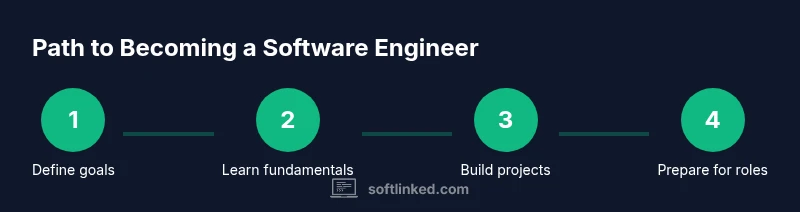
Learn how to be a software engineer with a practical, step-by-step plan. This guide covers multiple paths (degree, coding bootcamp, and self-study), essential technical and soft skills, portfolio-building projects, and interview prep. You'll follow a structured schedule, build real projects, and track progress to land your first role. Preparation and consistency are the keys to success.
Why this guide helps you become a software engineer
If you're starting from zero or switching careers, this guide helps you learn how to be a software engineer in a practical, actionable way. According to SoftLinked, successful engineers combine solid fundamentals with purposeful practice and real-world projects. You don't need to know everything at once; you build competence by layering knowledge, aligning learning goals with industry needs, and building a portfolio that demonstrates impact. This article lays out core competencies, learning paths, and a realistic timeline so you can track progress. You'll see how theory translates into code, how to choose learning resources, and how to set up a study plan that fits your schedule. The emphasis is on clarity, repeatable steps, and measurable milestones—so you can stay motivated and avoid burnout while progressing toward your first software engineering role. If you want to know how to be a software engineer, this guide answers that question with a practical path.
Core competencies every software engineer should master
Successful software engineers build on a foundation of core competencies. Start with programming fundamentals and a solid grasp of data structures and algorithms, then expand into software design principles, testing, and debugging. You should also become fluent with version control, APIs, databases, and basic security concepts. Beyond pure coding, focus on problem-solving, communication, and collaboration, because most roles require teamwork across product, design, and operations. Regular practice through small, real projects helps solidify these skills faster than theoretical reading alone. SoftLinked emphasizes deliberate practice: set clear goals, practice in short, focused bursts, and review your progress frequently to identify areas for improvement. This blend of theory and hands-on work is what separates beginners from practitioners who can ship reliable software.
Education paths and learning strategies
There are multiple routes to becoming a software engineer, and you can combine them for a personalized plan. A computer science degree offers structured theory and credentialing, but a coding bootcamp can accelerate practical skills with project focus. Self-study plus guided coursework works well for disciplined learners who prefer flexibility. Regardless of path, adopt a learning strategy that emphasizes project-based progress, regular code review, and spaced repetition for retention. Create a portfolio from day one by building small projects that solve real problems. Schedule weekly milestones, audit your progress, and adjust your plan as your interests evolve. SoftLinked recommends aligning your path with your target role (front-end, back-end, data, or devops) to ensure your learning stays relevant.
Practical project ideas to build a portfolio
A strong portfolio is your best advocate when landing interviews. Start with small, well-scoped projects to demonstrate fundamentals: a todo app with persistence, a RESTful API, or a data visualization dashboard. Progress to more complex systems: a full-stack web app with authentication, a microservice, or an open-source contribution. Each project should include a clear README with architecture decisions, run instructions, and testing notes. Host code on GitHub, document trade-offs, and highlight measurable outcomes (response times, throughput, user adoption). Consider building clone projects of popular apps to study patterns, then pivot to your own creative idea that showcases problem-solving and originality. This approach shows employers you can translate theory into concrete software.
Mastery of essential tools and environments
Proficiency with the right tools accelerates learning and productivity. Start with a modern code editor like Visual Studio Code, and configure it with linting, formatting, and Git integration. Learn the basics of the terminal, file system navigation, and scripting to automate repetitive tasks. Get comfortable with Git workflows (branching, commits, pull requests) and GitHub for collaboration. Install language runtimes (for example Node.js or Python) and set up a lightweight local environment or containers for consistent development. Familiarize yourself with debugging tools, unit testing frameworks, and basic CI/CD concepts. Finally, explore cloud services (at least one provider) to understand deployment basics and scalability.
The interview landscape and how to prepare
Interviews typically test a mix of coding skills, problem-solving, and system design, plus behavioral fit. Start with algorithm practice on platforms, but don’t neglect understanding complexity analysis and writing clean, maintainable code. For system design, study scalable architectures, trade-offs, and common patterns, then practice presenting your decisions clearly. Prepare portfolio stories that illustrate real impact, including challenges faced and lessons learned. Finally, practice mock interviews with peers or mentors to gain comfort with time pressure and feedback. SoftLinked advises scheduling mock sessions regularly, refining your explanations, and building a personal narrative around your learning journey.
Growth mindset and career progression
A software engineering career is a long-term journey, not a sprint. After landing your first role, continue broadening your skills by exploring specialization tracks (frontend, backend, mobile, data engineering, or devops). Set annual milestones for mastering new languages, frameworks, or design patterns, and seek opportunities to lead small projects or mentorship. Build a reputation for reliability by delivering at quality and pace, writing clear documentation, and contributing to open-source. Regularly reflect on feedback, adjust your learning plan, and seek opportunities for cross-functional collaboration. A growth mindset—embracing feedback and continuous learning—will sustain your trajectory over the years.
Balancing theory with hands-on practice
Theory without practice fades quickly; practice without theory struggles to scale. Create a balanced weekly routine that allocates time to core concepts, project work, and review. Use short, focused coding sessions to reinforce fundamentals, then apply them in small projects that you can showcase. Incorporate code reviews and pair programming to accelerate learning and expose you to new patterns. This balanced approach ensures you stay curious, motivated, and capable of solving real problems in any tech stack you encounter.
Time management and learning plans
A realistic learning plan requires discipline and cadence. Start with a 12-week sprint cycle: allocate time for fundamentals, then transition into portfolio projects. Schedule regular check-ins to measure progress, adjust goals, and celebrate milestones. Use time-boxing, avoid multitasking, and build a habit of daily practice—even if it is just 30–45 minutes. Finally, reserve time for reflection, documenting what you learned and how you applied it. Consistency beats intensity when building long-term competence.
Common pitfalls and how to avoid them
Avoid common traps such as chasing every new framework, neglecting fundamentals, or delaying project work. Resist the urge to cram too many resources at once; instead, pick a focused, coherent path and stick to it. Don’t skip the fundamentals of data structures, algorithms, and clean code, as these are essential for interviews and robust software. Combat burnout by scheduling breaks, maintaining balance with sleep and exercise, and pursuing projects you find meaningful. Finally, seek feedback regularly and iterate on your work.
Realistic timelines and milestones
Expect a steady, incremental progression rather than overnight mastery. Set milestones like completing a fundamentals course, finishing a portfolio project, solving a set of coding problems weekly, and performing mock interviews. Use a simple tracking system to monitor progress and adjust pace as needed. The goal is continuous improvement, not perfection, so stay flexible and keep moving forward.
How to sustain long-term learning and growth
Continual growth comes from ongoing practice, collaboration, and contribution to the community. Regularly contribute to open-source projects, attend local meetups or online communities, and pair with peers to learn different approaches. Teach others what you’re learning through write-ups, tutorials, or mentoring; teaching reinforces your own understanding. Finally, keep coding interesting by starting personal projects that align with your passions and career goals.
Tools & Materials
- Computer with internet access(Modern OS; at least 8GB RAM; admin access preferred)
- Code editor / IDE (e.g., VS Code)(Install essential extensions: linting, Git integration, and debugging)
- Git and GitHub account(Set up SSH keys for secure access; create a portfolio repository)
- Language runtimes (e.g., Node.js, Python)(Choose based on your learning path and target stack)
- Terminal / command line basics(Learn navigation, file operations, and scripting basics)
- Open-source project starter templates(Helps jump-start portfolio with well-structured code)
Steps
Estimated time: 6-12 months
- 1
Define your goal and learning path
Clarify whether you want to pursue frontend, backend, mobile, or data roles. Pick a primary path and a secondary backup. Set a realistic timeline and identify success metrics (projects completed, problems solved, interviews attempted).
Tip: Write a one-page plan with weekly milestones and review it every Sunday. - 2
Acquire fundamentals
Study core programming concepts, data structures, algorithms, and basic CS concepts. Practice by solving small problems and build simple programs to reinforce understanding.
Tip: Schedule daily 30–60 minute coding sessions with a clear objective. - 3
Choose a language and ecosystem
Pick a language aligned with your goals and dive into its ecosystem. Build small projects to apply concepts and understand tooling, testing, and debugging in that ecosystem.
Tip: Stick with one language for 6–8 weeks to gain depth before expanding. - 4
Build portfolio-worthy projects
Develop 2–3 projects that demonstrate problem-solving and real-world impact. Include architecture decisions, testing strategies, and clear setup instructions in a README.
Tip: Document measurable outcomes and user impact to stand out. - 5
Learn version control and collaboration
Master Git workflows, branching strategies, and collaborative processes on GitHub. Practice code reviews and merge requests to emulate real team workflows.
Tip: Always write meaningful commit messages and maintainable PRs. - 6
Study software design basics
Understand modular design, SOLID principles, and common design patterns. Learn how to break problems into components and define clear interfaces.
Tip: Create small design diagrams to communicate your approach. - 7
Practice debugging and testing
Develop a habit of writing tests and debugging systematically. Learn unit, integration, and end-to-end testing concepts relevant to your stack.
Tip: Test first when possible; it clarifies requirements and catch bugs early. - 8
Prepare for interviews
Practice coding problems, explain your thought process, and study common system design questions. Build a narrative around your projects and outcomes.
Tip: Schedule regular mock interviews to build comfort with timing. - 9
Gain real-world experience
Contribute to open-source, internships, or freelance projects. Real-world collaboration reinforces learning and adds tangible outcomes to your portfolio.
Tip: Document your contributions and impact in your portfolio. - 10
Engage with the community
Join local meetups, online forums, and code clubs. Networking helps you learn from others and discover opportunities.
Tip: Teach others what you’ve learned to reinforce your own knowledge. - 11
Specialize with purpose
As you gain confidence, select a specialization aligned with your interests and the market. Develop depth in one domain while maintaining breadth.
Tip: Aim to be the go-to person for a specific area in your team. - 12
Plan ongoing growth
Set yearly learning goals, maintain a habit of reading, coding, and contributing. Reassess your career trajectory and adjust your learning plan as needed.
Tip: Schedule annual skills assessments and update your portfolio accordingly.
Your Questions Answered
Is a formal degree required to become a software engineer?
No. Many successful software engineers come from diverse backgrounds, including bootcamps and self-study. A degree can help with foundational knowledge and access, but practical skills and a strong portfolio are often what employers value most.
No, a degree isn't strictly required. A solid portfolio and practical skills can lead to opportunities.
What language should I start with?
Choose a language aligned with your goals. Python and JavaScript are popular starting points due to readability and broad ecosystem support. Focus on fundamentals, then gradually learn ecosystem tools and best practices.
Start with a beginner-friendly language like Python or JavaScript, then expand as you grow.
How important are data structures and algorithms?
DSA are essential for problem-solving and many interviews. Build intuition with regular practice, but also learn to translate problems into practical coding solutions for real projects.
DSA matter a lot for interviews and for building solid problem-solving skills.
How can I build a strong portfolio quickly?
Start with 2–3 well-documented projects that demonstrate core skills and impact. Include a readable README, setup instructions, and notes on design decisions. Add your code to GitHub and provide links in your resume.
Focus on two or three solid projects with clear READMEs and demonstrable impact.
How do I prepare for system design interviews as a beginner?
Begin with small, scalable components and practice explaining trade-offs. Study common patterns and draw diagrams to communicate your approach clearly. Seek feedback from mentors or peers after practice sessions.
Start with simple designs, explain decisions, and seek feedback to improve.
What’s the best way to start contributing to open source?
Find beginner-friendly issues in projects you use, read contribution guidelines, and submit small patches. Engage with the community respectfully and learn from code reviews.
Look for easy issues in projects you care about and contribute small patches.
Watch Video
Top Takeaways
- Master fundamentals before frameworks.
- Build a portfolio with real, documented impact.
- Practice interview problems regularly and reflect on feedback.
- Choose a learning path that matches your career goals.
- Stay consistent to achieve long-term growth.