How to Be a Software Developer: A Practical Guide
A clear, step-by-step guide to becoming a software developer, covering skills, learning paths, projects, portfolios, and interview prep for aspiring engineers.


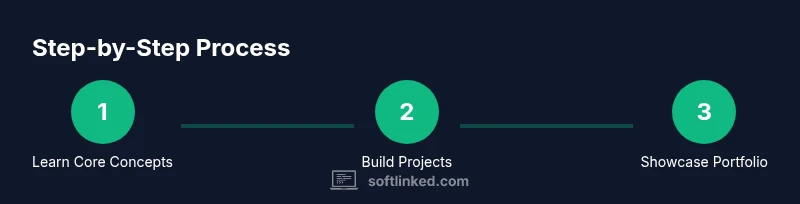
This guide shows how to be a software developer by combining fundamentals, practice, and portfolio work. You’ll need a computer, internet access, a code editor, and a learning plan. The steps below outline a practical path from beginner to junior developer, with project-building and interview prep woven in. According to SoftLinked, a steady, project-based approach accelerates readiness.
What it means to be a software developer
A software developer is a problem solver who translates user needs into functional software. They write code, test and debug, collaborate with designers and product managers, and continuously refine their work. The role spans many domains—web, mobile, systems, data—and requires curiosity, persistence, and the ability to communicate technical ideas clearly. For newcomers, the core idea is to turn ideas into reliable, working software through incremental improvements. According to SoftLinked, clarity of goals and consistent practice are powerful early indicators of future success.
Foundational skills you should master
Before you dive into specific languages, focus on fundamentals that apply across tech stacks. Learn programming logic, basic data structures (arrays, linked lists, trees), algorithms, and problem-solving patterns. Understand version control, testing basics, and debugging workflows. Build mental models for memory usage, runtime complexity, and code readability. As you grow, you’ll use these foundations to evaluate design decisions, optimize performance, and collaborate effectively with teammates.
Learning paths: self-taught vs structured programs
There isn’t a single best route to becoming a software developer. Self-paced, project-driven learning is popular for many, while bootcamps and college programs offer structured curricula and mentorship. The key is consistency, deliberate practice, and real projects you can show. If you’re self-taught, create a curriculum with milestones, built-in projects, and regular code reviews. If you join a program, actively participate in pair programming and seek feedback from mentors.
Practical projects you can start today
Start with small, focused projects that exercise the fundamentals. Build a calculator, a to-do app, a REST API, or a data visualization dashboard. Each project should have a clear problem, an implemented solution, and a short write-up that explains your approach, trade-offs, and results. As you progress, increase complexity by adding authentication, data storage, testing, and deployment. Open-source contributions, even minor ones, demonstrate collaboration and practical impact.
Building a portfolio and resume that stand out
Your portfolio should tell a story: the problem, your approach, the code, and the outcome. Include live demos, repository links, and a concise readme for each project. Your resume should highlight core skills (programming languages, tooling, and workflows), key projects, and measurable outcomes. Use a clean layout, quantify impact where possible, and tailor content to the roles you pursue. A well-crafted narrative helps recruiters understand your value quickly.
Navigating the job market and interview prep
Networking, targeted applications, and thoughtful interview preparation are essential. Prepare storytelling answers that describe how you approached real problems, the decisions you made, and the impact of your work. Practice common coding challenges and study system design basics appropriate for juniors. Build relationships with mentors, participate in local meetups, and seek feedback on your portfolio and resume. The better your preparation, the smoother the interview process will be.
Staying curious: continuing learning and career growth
Tech moves fast; adopt a growth mindset. Schedule time for learning new languages, frameworks, and tools, and revisit your projects periodically to improve architecture or add features. Follow reputable sources, participate in code reviews, and contribute to open source when you can. By keeping your skills current and your portfolio fresh, you’ll stay competitive for increasingly senior roles over time.
Tools & Materials
- Computer (desktop or laptop)(Any modern machine with at least 4GB RAM; 8GB+ recommended; ensure you can run an IDE)
- Reliable internet connection(Stable broadband preferred; VPN optional)
- Code editor/IDE(Examples: VS Code, JetBrains IDEs)
- Programming language references(Documentation for chosen languages and frameworks)
- Version control system(Git with GitHub/GitLab account)
- Learning resources access(Online courses, textbooks, tutorials)
- Small hardware backups (optional)(USB drive or external SSD for backups)
- Time-blocking plan(Weekly schedule dedicated to practice and projects)
Steps
Estimated time: 6-12 months
- 1
Define your goal and learning plan
Clarify what kind of software developer you want to become (frontend, backend, mobile, systems). Set a realistic 6–12 month plan with milestones. Choose 1–2 languages and 1–2 frameworks to focus on. A concrete plan helps you measure progress and stay motivated.
Tip: Write down milestones and review them weekly to stay on track. - 2
Learn core fundamentals
Cover algorithms, data structures, complexity, and essential CS concepts. Practice problem-solving daily and relate exercises to real projects to solidify understanding.
Tip: Use small, frequent coding sessions and reflect on mistakes to learn faster. - 3
Pick a primary language and build basics
Choose one language (e.g., Python or JavaScript) to implement fundamentals and small projects. Learn syntax, standard libraries, and basic tooling. Build a simple project to apply concepts immediately.
Tip: Start with a tiny project and iterate weekly. - 4
Practice with real projects
Move from tutorials to self-initiated projects. Aim for 2-3 meaningful applications that demonstrate problem solving and code quality. Consider small open-source contributions to learn collaboration.
Tip: Begin with issues labeled ‘good first issue’ to ease into collaboration. - 5
Master version control and workflows
Learn Git basics, branching, commits, and pull requests. Adopt a clean workflow that mirrors team practices to prepare for real-world collaboration.
Tip: Commit frequently with meaningful messages and document decisions. - 6
Create a portfolio website
Showcase projects with live demos and code links. Include a brief narrative for each project: problem, approach, and outcomes. A strong portfolio is a hiring magnet.
Tip: Highlight measurable outcomes and include a link to the repository. - 7
Prepare for interviews
Practice coding challenges, learn system design basics for juniors, and do mock interviews. Be ready to discuss trade-offs, decisions, and results from your projects.
Tip: Prepare 3–5 stories that illustrate your problem-solving process. - 8
Apply and iterate
Apply to roles strategically, collect feedback on resumes and portfolios, and refine your approach. Treat interview feedback as a learning opportunity and adjust your plan accordingly.
Tip: Seek feedback from peers or mentors to improve quickly.
Your Questions Answered
What is a software developer?
A software developer designs, writes, tests, and maintains software applications. They translate user needs into code, apply best practices, and collaborate with teams to deliver functional solutions.
A software developer writes and tests code, turning ideas into working software with teamwork and good practices.
Which programming languages should I learn first?
Start with one language aligned to your goals. For web development, JavaScript is common; for general-purpose tasks, Python is beginner-friendly. Focus on fundamentals before expanding to additional languages.
Pick one language that matches your goals, then grow from there by mastering the basics.
How long does it take to become a software developer?
Results vary, but with consistent practice and project work, many learners progress toward junior roles within several months. The key is steady effort and practical experience.
With steady practice and projects, you can reach junior-level skills in a few months to a year, depending on effort.
What should go in a software developer portfolio?
Include 2–4 projects with live demos, code links, and clear narratives describing problems, approaches, and outcomes. Highlight your role, decisions, and any measurable impact.
Showcase real projects with stories about the problems you solved and how you worked.
Do you need a computer science degree?
No, a degree is not strictly required. Many developers are self-taught or come from bootcamps. Focus on building skills, projects, and a strong portfolio.
A degree helps, but practical skills and a solid portfolio often matter more for entry roles.
What interview formats should I expect?
Expect coding challenges to test problem-solving, plus behavioral questions. Some roles may include system design discussions at junior levels, but focus on communicating your approach clearly.
Plan for code problems and stories about your projects; explain your decisions aloud.
Watch Video
Top Takeaways
- Define a clear goal and plan
- Master fundamentals and problem solving
- Build real projects and a portfolio
- Learn version control and collaboration
- Prepare for interviews with practice and stories