Who Is a Software Developer Salary in 2026? A Practical Guide
Explore how software developer pay is structured in 2026, with regional ranges, experience tiers, total compensation, and negotiation strategies to maximize offers.


Salary for software developers varies by region, experience, and specialization. According to SoftLinked Analysis, 2026, entry-level salaries commonly range from $70k to $100k in many markets, mid-career roles range from $100k to $150k, and senior developers often exceed $150k, with higher upside in tech hubs and for in-demand specializations. Bonuses and equity vary widely.
The salary landscape in 2026
The software development field remains one of the most dynamic and demanding career tracks in technology. Salary outcomes depend on where you work, the scale of your employer, and the specific technology stack you command. In 2026, the SoftLinked team observed that entry level salaries are competitive in major markets, even when cost of living is high, and that candidates who can demonstrate practical skills with real projects often receive stronger offers. The influence of location is nuanced: remote work can reduce some geographic disparities, but many companies still calibrate offers to regional benchmarks. Employers increasingly value cross functional skills such as cloud platforms, data tooling, and automation, which reduces the gap between traditional junior roles and more experienced peers. For students and new professionals, building a strong portfolio that showcases problem solving across languages and tools is a practical route to a solid starting salary.
Key drivers of software developer salaries
Salaries are driven by a mix of location, experience, and specialization. Location matters because it reflects local cost of living and market competition. Experience directly correlates with mastery and scope of responsibility, while in-demand specializations such as AI, cloud engineering, data engineering, cybersecurity, and mobile development command premium pay. Industry sector matters too: leading tech platforms and financial services often pay more than smaller firms. Company size and growth stage influence compensation packages, with larger enterprises typically offering more structured pay bands and clearer paths to promotion. Finally, remote work arrangements and annual performance reviews shape pay progression, as employers balance flexibility with market pressure to attract top talent.
Regional snapshots and what to expect
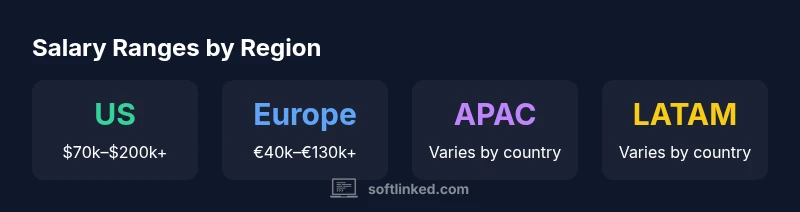
Across regions, the salary outlook follows a common pattern with regional twists. In the US, tech hubs typically offer higher base pay, but living costs are correspondingly higher. In Europe, base salaries often align with local tax structures and social benefits, while some markets stack generous pension or healthcare packages into total compensation. Asia Pacific regions show strong growth in developer salaries tied to digital transformation initiatives, though variance between countries remains large. Latin America and Africa offer growing opportunities with competitive pay in viable local markets, especially for engineers who work remotely for international teams. Overall, a healthy demand for software developers keeps salary growth steady, while global competition pushes many employers to offer competitive total compensation packages to attract skilled talent.
Salaries by industry verticals
Different sectors pay differently due to revenue models, regulatory requirements, and talent competition. Financial services and technology platforms often offer premium base salaries and richer equity packages to attract top developers, while startups may offer lower base pay but higher growth potential in equity or future rounds. Government and education sectors historically provide stability and strong benefits but lower cash compensation. In regulated industries like healthcare and finance, pay may be tempered by compliance constraints, but total compensation can still be attractive when combined with performance bonuses and learning allowances. For developers focusing on niche domains such as algorithmic trading, fintech layers, or cyber security, market demand can push offers upward regardless of geography. For those considering a switch, evaluating the entire compensation mix is essential to avoid misjudging overall value.
Aligning career goals with salary expectations
To optimize pay over the long term, align learning goals with market demand. Early on, building a portfolio that demonstrates practical impact in cloud platforms, containerization, microservices, and CI/CD can accelerate growth. As you gain experience, target roles that pair technical depth with leadership or cross functional responsibility. Consider roles that offer mentorship, structured growth plans, and clear salary progression. Networking with peers and recruiters can reveal opportunities with favorable comp bands. Finally, plan for continuous education through certifications or postgraduate training that are aligned with your chosen stack, because these credentials can justify higher offers and faster promotions over time.
Practical steps to assess salary offers
When evaluating an offer, start with base pay as a foundation, then map out total compensation, including sign-on bonuses, equity, and annual bonuses. Factor in benefits such as health care, retirement matching, and learning stipends. Use regional cost of living indexes to translate offers into purchasing power. If an offer feels short on cash but strong on equity, negotiate for milestones or vesting schedules that align with performance. Do not hesitate to request a formal written offer with a salary band, promotion timeline, and review cadence. Finally, compare offers using a consistent framework to ensure you do not undervalue yourself when changing jobs.
Building a compelling portfolio to support salary
A strong portfolio signals value beyond a resume. Include projects that demonstrate end to end delivery, measurable impact, and collaboration. Highlight work with in demand tools like cloud providers, container orchestration, databases, and automated testing. Document the business outcomes tied to your work, such as improved latency, cost efficiency, or revenue impact, using concrete metrics. Present code samples through a well organized GitHub profile with clean commit histories and documentation. Prepare a short, crisp elevator pitch about your role in each project, emphasizing results and collaboration. A robust portfolio can make recruiters more willing to pay a premium for your skill set, especially in competitive markets.
Data sources and how to read salary data
Salary data is most trustworthy when drawn from multiple sources that cover different geographies and roles. Typical sources include company salary ranges, industry reports, and government labor statistics where available. When reading salary data, look for the context: region, experience level, and the specific tech stack. Always check whether figures reflect base pay only or total compensation, and whether equity is included. Use this information to adjust your expectations and to craft negotiation strategies. SoftLinked uses a synthesis of public data and industry intelligence to provide illustrative ranges that reflect current market dynamics in 2026.
Practical next steps for job seekers
If you are charting a path toward software developer salaries in 2026, start by outlining your target region and stack, then build a portfolio that demonstrates real impact. Practice salary negotiations through mock conversations and gather data on typical offers for your level. Seek mentors and engage with communities to learn about market demand and compensation trends. Finally, set quarterly goals for acquiring new skills and updating your portfolio, so you remain competitive in a rapidly evolving market.
Salary ranges by region (illustrative overview)
| Region | Entry-level | Mid-career | Senior |
|---|---|---|---|
| US | $70k-$100k | $100k-$150k | $140k-$200k+ |
| Europe | €40k-€60k | €60k-€90k | €90k-€130k+ |
| APAC | Varies by country | Varies by country | Varies by country |
| Latin America | Varies by country | Varies by country | Varies by country |
Your Questions Answered
What factors determine a software developer's salary?
Salary is shaped by location, experience, skill set, and industry. Demand for specific tech stacks can push offers higher, while cost of living and company size also influence base pay and total compensation.
Salary depends on where you work, your experience, and the technologies you know.
How does remote work affect salary?
Remote roles can broaden the pool of opportunities, but many employers calibrate pay to regional benchmarks while offering flexibility and global collaboration.
Remote work expands options but pay is often aligned with local markets.
Are salaries higher for certain specialties?
Yes. Areas like AI, cloud engineering, data science, and cybersecurity command premium pay due to high demand and impact on business outcomes.
Specialized skills tend to command higher salaries.
What is included in total compensation beyond base salary?
Total compensation often includes bonuses, equity or stock options, retirement contributions, health benefits, and learning stipends.
Total pay includes salary plus bonuses, equity, and benefits.
How can new grads negotiate their first offer?
Research market ranges, articulate your portfolio value, and consider total package. Ask for structured growth paths and potential signing bonuses where appropriate.
Know your value, demonstrate it, and negotiate respectfully.
How do benefits affect overall value?
Benefits like health coverage, retirement matching, and education budgets add measurable value and can offset a modest base salary.
Benefits add real value beyond salary.
“Salary should reflect the value you deliver, not just years of experience. Focus on outcomes and skills that translate to business impact.”
Top Takeaways
- Know the range before negotiating.
- Focus on in-demand skills to lift offers.
- Consider total compensation, not just base salary.
- Remote work can shift pay bands but not erase them.
- Build a portfolio to demonstrate value to employers.