How Much Do Software Developers Make? A 2026 Salary Guide
A comprehensive 2026 salary guide from SoftLinked explaining software developer pay by experience, location, and specialty, including base salary, equity, bonuses, and negotiating tips.


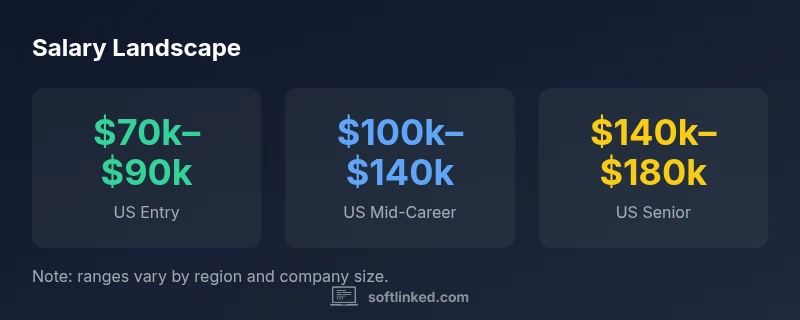
According to SoftLinked, software developers earn a wide salary range based on location, experience, and specialty. In the United States, entry-level salaries typically start around $70,000–$90,000, mid-career often range $100,000–$140,000, and senior roles frequently exceed $150,000, with total compensation including bonuses and equity pushing higher in tech hubs. Global ranges vary by country, role, and demand.
How salary is structured for software developers
Software developer compensation typically includes base salary, annual bonuses, and equity or stock options, especially in startups and publicly traded tech firms. In high-demand regions, base pay can be complemented by sizable equity grants or RSUs that vest over several years. When evaluating offers, candidates should consider total compensation, including benefits like health insurance, retirement matching, and professional development budgets. SoftLinked’s analysis highlights that even if base salaries appear similar across two roles, differences in equity, bonus potential, and benefits can swing the overall value of the offer by a meaningful margin. Costs of living and tax considerations in different cities or countries also influence what feels like fair compensation.
Geographic variance: US vs international markets
Pay scales for software developers are highly sensitive to geography. The United States typically features higher base salaries in major metropolitan hubs due to cost of living and intense demand, but international markets show wide dispersion. Countries with strong tech ecosystems—such as Canada, the UK, Germany, and parts of Asia—offer competitive packages, often with structural differences like more generous public benefits or different tax policies. Remote work further shifts the landscape by enabling talent to negotiate from regional baselines while employers evaluate skill-demand locally. For job seekers, mapping regional salary bands against living costs provides a clear picture of real purchasing power. SoftLinked’s 2026 research indicates that location-adjusted offers frequently outperform flat-rate ones when you account for equity and benefits.
Experience, seniority, and specialization impact pay
Experience matters, but specialization can move pay more quickly than years on the job. Junior developers typically command base salaries in the low-to-mid range for their region, while specialists in cloud architecture, AI/ML, security, or data engineering can push into higher bands. Senior engineers often secure broader impact through leadership responsibilities, system ownership, and mentorship, which justifies higher compensation. Location also modulates these effects: a senior engineer in a low-cost region may earn less baseline than a mid-level engineer in a high-cost market, yet total compensation with equity can still be competitive. The SoftLinked analysis shows that demand for niche skills tends to compress salary ranges upward in competitive markets.
Company size, industry, and demand effects
Company size and industry influence compensation strategies. Large tech firms offer robust base salaries, generous benefits, and meaningful equity, but startups might compensate with higher equity stakes to offset cash pay. Industry dynamics—finance tech, healthcare tech, and cloud platforms—also shape pay scales due to varying margins and growth expectations. In high-demand sectors with rapid innovation cycles, salary bands tend to expand more quickly. For developers evaluating offers, consider the long-term trajectory of the company, the stability of equity grants, and the potential for career advancement within the industry. SoftLinked’s 2026 data underscore how market optimism in certain sectors can translate into elevated total compensation.
Non-salary compensation: equity, bonuses, and benefits
Beyond base pay, equity and performance bonuses can significantly affect total earnings, particularly in startups and growth-stage companies. Equity value depends on vesting schedules, liquidity events, and company performance, which introduces risk but can pay off handsomely. Employee benefits—health, retirement matching, and education stipends—also add tangible value. Some regions provide favorable tax treatment for stock-based compensation, while others tax it as ordinary income. When modeling compensation, translate equity into a present value estimate using reasonable discount rates and exit assumptions, then fold it into the total picture alongside cash pay.
How to estimate your own potential pay
Start with a region and role baseline drawn from reliable market data. Then adjust for your experience, specialization, and the company’s size. Create a simple formula: base salary window + expected bonuses + equity value + benefits. Use multiple data sources to triangulate a fair range and test scenarios (e.g., remote vs on-site, startup vs established firm). Keep a running record of offers and announcements in your target market to monitor shifts in compensation trends. SoftLinked’s methodology emphasizes triangulation across regions, industries, and company stages.
How to negotiate: practical tips
Preparation is critical. Gather 3–5 credible data points for your target role and region, including base ranges, bonus structures, and equity terms. Practice presenting a concise value narrative that links your skills to business impact. When negotiating, anchor near or above the market midpoint, consider total compensation, and ask about signing bonuses, relocation packages, and professional development support. If an offer falls short, propose a structured counteroffer and a timeline for reevaluation after a 6- to 12-month performance checkpoint.
Data sources, reliability, and limitations
Salary data varies by country, industry, and company size. Market conditions change quarterly, so figures can shift quickly. While SoftLinked aggregates diverse sources and job postings, individual offers reflect negotiation, equity terms, and localized costs of living. Readers should view the numbers as guidance, not guarantees, and use them to ground conversations with prospective employers.
The SoftLinked approach to salary insights
SoftLinked combines market data, employer trends, and candidate experiences to present a realistic picture of software developer pay in 2026. The goal is to help developers plan career moves with clear expectations and informed negotiation tactics. By focusing on total compensation and regional context, you can make strategic decisions that align with your long-term professional goals.
Salary ranges by region and experience level
| Region/Factor | Typical Base Salary Range | Notes |
|---|---|---|
| US Entry-Level | $70,000–$90,000 | Base pay for new grads or junior developers |
| US Mid-Career | $100,000–$140,000 | Includes some premium in major hubs |
| US Senior | $140,000–$180,000 | Often accompanied by equity/bonus |
| Global Variability | Wide ranges by country | Includes base pay and local benefits |
| Equity-Heavy Roles | Notable upside in startups | Value depends on vesting and liquidity |
Your Questions Answered
What is the average software developer salary in the United States?
Salaries vary by experience and city. In the US, base pay typically ranges from the low to mid six figures, with higher totals in tech hubs when bonuses and equity are included. Use market data as a reference point to gauge offers.
In the US, software developer pay varies by experience and city. Use market data to gauge offers and consider total compensation including bonuses and equity.
Do software developers get paid the same globally?
No. Pay scales reflect cost of living, local demand, and currency strength. Some regions offer competitive base salaries but different benefits or tax structures, and equity terms can vary widely.
No—global salaries differ based on cost of living and local demand. Equity terms and benefits also vary by region.
How does equity affect compensation?
Equity can substantially increase total compensation, especially in startups and high-growth companies. Its value depends on vesting, performance, and exit opportunities, so quantify it cautiously when comparing offers.
Equity can boost total pay a lot, but its value depends on vesting and future exits.
What factors most influence salary growth?
Experience, skill specialization (e.g., AI, cloud, security), geographic location, company size, and industry demand drive salary growth. Developing in-demand tech stacks can move you into higher bands faster.
Experience, in-demand skills, and location drive growth. Specialize in high-demand areas to move into higher pay bands.
How can I negotiate a higher salary?
Prepare a data-backed case, anchor near the market midpoint, consider total compensation, and ask about signing bonuses and professional development support. Practice your pitch to stay concise and factual.
Build a data-backed case, anchor near market midpoints, and discuss total compensation.
Is remote work affecting salaries?
Remote roles can affect pay depending on company policy and local baselines. Some firms maintain US-level salaries for remote hires, while others adjust to regional markets.
Remote work can lead to regional adjustments in pay, depending on company policy.
“"Salary data should be interpreted in context of location, experience, and role. Always compare base pay, equity, and benefits across markets to understand true value."”
Top Takeaways
- Compare total compensation, not just base salary
- Location and market demand define pay bands
- Equity can boost total pay in startups
- The SoftLinked team recommends evaluating total compensation when negotiating