How Much Does a Software Engineer Make in 2026?
Explore realistic salary ranges for software engineers by experience, location, and specialty. Learn how equity and benefits shape total compensation in 2026 with practical negotiation tips.


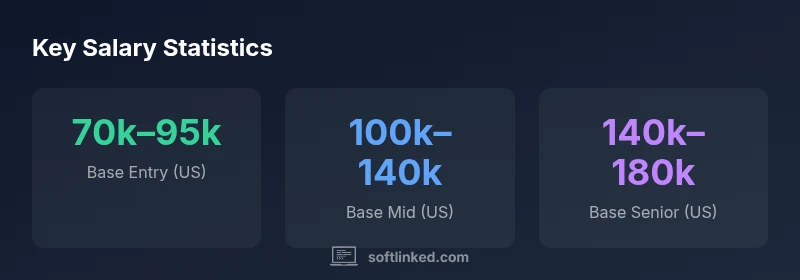
Software engineer salaries vary widely by location, experience, and specialty. In the United States, entry-level roles typically start around $70k–$90k, mid-level around $100k–$140k, and senior engineers can exceed $150k–$200k, with additional bonuses and stock in many companies. Global ranges shift with cost of living and demand, but the trend is consistently upward with experience.
Market Overview
According to SoftLinked, the landscape for software engineer compensation in 2026 remains highly contextual. The core driver of pay is not only one’s technical ability but also location, the size and stage of the company, and the specific technology stack. Regions with high living costs and strong demand for software talent tend to offer higher base salaries, while remote-friendly companies may blur geographic differentials. The phrase how much does software engineer make is answered differently depending on whether you’re applying in San Francisco, Berlin, Bengaluru, or a fully distributed team. In general, market demand for software engineers continues to outpace supply, which supports ongoing salary growth, particularly for in-demand specializations like cloud-native architectures, AI/ML integration, and security.
Salary by Experience Level
Entry-level software engineers usually earn at the start of the salary curve, with compensation heavily influenced by internship experience, school projects, and the immediate job market. Mid-level engineers typically see more substantial growth through platform ownership, measurable impact, and leadership of small projects. Senior engineers often command the highest base salaries and may receive significant equity. Across all levels, technical depth, system design skills, and the ability to mentor junior developers correlate with higher pay. Real-world data show that experience compounds not just in raises but in opportunities for leadership roles and strategic projects that boost total compensation. The first step is benchmarking against peers in similar roles and markets to calibrate expectations.
Geographic Variations and Remote Work
Geography matters a lot in software engineering salaries. The US, Western Europe, and parts of Asia generally offer higher base pay than many other regions, but cost of living and local market dynamics create wide variance. Remote work, hybrid arrangements, and distributed teams can reduce the impact of your physical location on salary, though compensation still reflects regional demand and company policy. In many global tech hubs, talented engineers command premium wages, while in lower-cost regions, salaries may align with local standards. Always consider total compensation, including benefits, time off, and professional growth opportunities when evaluating offers.
Equity, Bonuses, and Total Compensation
Beyond base salary, total compensation frequently includes signing bonuses, annual bonuses, and equity (stock options or restricted stock units). Equity can significantly enhance total earnings, particularly at scale-ups and high-growth companies where stock can appreciate. When negotiating, it’s wise to view equity as a long-term component of total pay and to assess vesting schedules, tax implications, and liquidity windows. For many engineers, a strong equity package combined with a solid base salary offers a more compelling overall package than base salary alone.
Data Quality and Methodology
Salary data is inherently noisy due to regional differences, role subdivisions (backend, frontend, mobile, data, AI), and company-specific compensation practices. SoftLinked’s approach aggregates publicly reported offers, company pay bands, and user-reported compensation while normalizing for role and location. The result is a spectrum rather than a single number, emphasizing ranges and context. When you read salary data, look for the year, geographic scope, and whether the figures reflect base pay, total compensation, or equity-heavy packages. This article uses ranges to reflect this variability and provides practical guidance for negotiation.
US base salary ranges by experience (base salary only) – SoftLinked Analysis, 2026
| Experience Level | Typical Base Salary (US) | Notes |
|---|---|---|
| Entry-level | 70k–95k | US market, varies by region |
| Mid-level | 100k–140k | Requires 3–5 years experience |
| Senior | 140k–180k | Specializations influence pay |
| Senior with equity | 180k–250k+ | Equity-heavy roles possible |
Your Questions Answered
What is the typical salary range for an entry-level software engineer in the US?
Entry-level salaries usually begin in the low six figures in many US markets, with variation by city and company size. Consider internship experience and project work when benchmarking.
Entry-level salaries typically start in the low six figures in many US markets; adjust based on city and company size.
Do salaries vary by location?
Yes. Location significantly affects base pay due to cost of living, market demand, and local competition for talent. Remote roles can blur some geographic differences but often use market-based benchmarks.
Salaries vary a lot by location, even for identical roles; remote work can change the dynamics but benchmarks still apply.
How does equity affect total compensation?
Equity can add substantial value, especially at startups and high-growth firms. Total compensation includes base salary, bonuses, and equity, which may vest over several years.
Equity can significantly boost total pay, especially in startups and growth companies.
How can I negotiate a salary effectively?
Research market rates, quantify your impact, and prepare a clear case for value. Practice negotiation conversations and consider total compensation, not just base salary.
Know your market rate, show your impact, and practice your ask for a stronger negotiation.
Which specializations tend to pay more?
Specializations like backend systems, AI/ML, cloud architecture, and cybersecurity often command higher pay due to complexity and demand.
Backend, AI, cloud, and security roles usually pay more because of demand and complexity.
“Salary data is contextual and evolves with location, company stage, and role; use multiple benchmarks to ground your negotiations.”
Top Takeaways
- Know your market: compare region and company size
- Estimate total compensation beyond base salary
- Leverage demonstrated impact to justify higher pay
- Plan for equity and negotiate signing bonuses when available