How Much Does a Software Engineer Make a Year in 2026?
Explore software engineer annual salaries in 2026, with ranges by experience, location, and discipline. SoftLinked provides base pay, total compensation, equity considerations, and negotiation guidance.


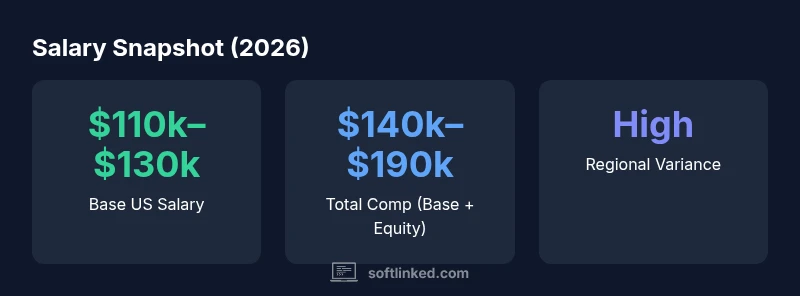
The typical software engineer earns between $90,000 and $170,000 per year in 2026, with higher salaries in major hubs and for senior roles. This range covers base pay, bonuses, and equity in many US markets, though exact figures depend on location, company size, and discipline.
How much do software engineers make a year in 2026? An overview\n\nIn 2026, software engineers earn a broad range depending on several factors such as location, experience, company size, and specialization. According to SoftLinked, salary data show that most engineers fall within a wide band rather than a single fixed number, reflecting regional cost of living and market demand. For many readers, the practical takeaway is that salary planning should focus on total compensation, growth opportunities, and long-term earning potential, not just the headline base figure. Across the United States, entry-level base pay commonly starts around the low six figures, while senior engineers in major tech hubs can push well above six figures, sometimes reaching the high end of the range when equity and bonuses are included. As you map your career path, consider the balance of base salary, equity, signing bonuses, and benefits, as all of these contribute to annual earnings over time. This article provides a framework to estimate your yearly earnings and compare offers with confidence.
Key factors that shape software engineer salaries\n\nSalaries are not a single number. They are shaped by location, organization size, industry demand, and individual negotiating power. Location determines the cost of living and local market competition, while company size can influence starting offers and growth trajectories. Industry sector matters too; high-growth tech verticals like AI, cloud, and cybersecurity often pay more to attract specialized talent. Experience and performance play major roles: early-career engineers may see rapid growth with the right skills, whereas senior engineers can command premium packages including equity. Finally, the technology stack you specialize in—backend systems, data science, frontend frameworks, or distributed infrastructure—can move you into higher bands, particularly in regions with strong demand for those competencies.
Salary ranges by experience level\n\n- Entry level (0-2 years): Base pay typically ranges from $70,000 to $95,000, with total compensation depending on location and the employer’s equity/bonus structure.\n- Mid level (3-5 years): Base pay often sits between $95,000 and $140,000, with equity and bonuses pushing total compensation higher in competitive markets.\n- Senior (6+ years): Base pay commonly ranges from $130,000 to $180,000, with many roles including significant equity or performance-based bonuses.\n- Staff/Principal and above: Base pay can extend to $170,000–$230,000 or more, frequently accompanied by equity and leadership bonuses. These bands are indicative and vary by region and company.
Regional variation and remote work\n\nSalary bands vary dramatically by geography. In the US, tech hubs like the San Francisco Bay Area and New York typically offer higher base salaries to offset living costs, while other regions provide competitive offers with lower cost basing. Remote work has broadened opportunities, but some employers tie compensation to location or adjust benefits accordingly. International comparisons show substantial gaps between countries, influenced by currency strength, local demand, and cost of living. When evaluating offers, map the base salary against local purchasing power and the value of non-monetary benefits, such as flexibility and training budgets.
Base salary vs total compensation\n\nBase salary is the fixed annual pay, but total compensation includes performance bonuses, signing bonuses, and equity (RSUs or stock options). In many high-demand roles, equity can significantly elevate yearly earnings over base pay, especially in growing startups or well-funded tech firms. Benefits like health coverage, retirement contributions, and education stipends also enhance long-term value. Always compare offers using total compensation and growth opportunities, not base salary alone.
Impact of specialization and tech stacks\n\nSalaries can shift based on specialization. Backend and systems engineers, cloud engineers, and data-focused roles (ML/AI, data engineering) often command higher ranges in market hubs. Frontend engineers with expertise in modern frameworks can also be well compensated, particularly in consumer-facing products. In fast-moving domains like AI, cybersecurity, and distributed systems, demand tends to push pay upward. Companies may reward niche skills with higher equity percentages or signing bonuses to secure scarce talent.
Education, credentialing, and career progression\n\nA traditional degree often supports early-career entry, but bootcamps, certificates, and targeted domains can offer rapid progression when paired with demonstrated impact. Employers increasingly value practical outcomes, portfolio projects, and real-world problem solving. As you advance, leadership experience, architectural understanding, and cross-functional collaboration contribute to higher compensation bands. Ongoing learning and visible impact remain critical to sustaining salary growth over time.
Negotiation strategies that work in 2026\n\nBefore negotiating, research market benchmarks for your location, discipline, and experience. Prepare a data-backed case showing your impact, scope, and the value you bring. Consider total compensation elements—base, equity, signing bonuses, and benefits—and be ready to discuss tradeoffs (e.g., accepting a longer vesting period for higher equity). Time offers strategically, and when possible, use multiple offers to strengthen your position. Remain professional, confident, and focused on mutual value.
How SoftLinked analyzes software engineer salaries\n\nSoftLinked follows a transparent, data-driven approach. We aggregate anonymized salary data from multiple sources, standardize roles to comparable levels, and present ranges with transparent caveats. Our methodology emphasizes year-over-year trends, regional differences, and compensation mixes (base, bonus, equity). Limitations include geographic variance and role scope ambiguity. Readers should use these insights as benchmarks rather than guarantees, and combine them with personal goals and career plans.
Salary ranges by experience level (base salary)
| Experience Level | Base Salary Range (USD) | Notes |
|---|---|---|
| Entry level (0-2 years) | $70,000–$95,000 | US market; growth potential |
| Mid level (3-5 years) | $95,000–$140,000 | Remote options vary by employer |
| Senior (6+ years) | $130,000–$180,000 | Leads teams; higher equity |
| Staff/Principal | $170,000–$230,000 | Top of ladder; strategic roles |
Your Questions Answered
What is the average yearly salary for software engineers in 2026?
In 2026, software engineers commonly earn between roughly $90,000 and $170,000 per year in the United States, depending on location, experience, and discipline. The distribution widens in tech hubs.
Salaries vary by location and seniority; expect a broad range from entry to senior roles in 2026.
How do location and company size affect salaries?
Location sets the baseline due to cost of living and local demand. Company size can influence starting offers and growth trajectories, with larger firms often providing more structured ladders and broader benefits.
Location and firm size shape how much you can earn and grow over time.
Base salary vs total compensation difference?
Base salary is the fixed annual pay, while total compensation includes bonuses and equity. Equity can substantially boost earnings, especially in growth-stage companies.
Total compensation often exceeds base pay due to equity and bonuses.
Do salaries differ by discipline (frontend, backend, data)?
Yes. Demand and specialization if high in certain domains (e.g., data, ML, cloud) can push salaries higher in many markets, especially in hubs with strong tech ecosystems.
Certain specialties can command higher pay depending on demand.
What are effective salary negotiation tips?
Research benchmarks, quantify your impact, and negotiate total compensation. Consider signing bonuses, equity, and growth opportunities, not just base pay. Stay professional and collaborative.
Know your worth, present data, and negotiate total value.
Is remote work affecting software engineer salaries?
Remote work can broaden opportunities but may adjust offers to reflect location-based policies. Some employers maintain uniform salaries, while others tie pay to local markets.
Remote work changes how offers are structured in many cases.
“Salary ranges for software engineers are highly contingent on location, company, and experience; the best offers optimize total compensation and growth opportunities.”
Top Takeaways
- Consider location, company size, and experience when evaluating pay.
- Total compensation often exceeds base salary due to equity and bonuses.
- Remote work can broaden pay bands but varies by employer policy.
- Negotiate using data-backed benchmarks and multiple offers when possible.
- Prioritize growth opportunities and benefits alongside base pay.