How Much Do Google Software Engineers Earn in 2026? A Data-Driven Breakdown
Explore how much Google pays software engineers in 2026, covering base salaries, equity, bonuses, and location-based differences, with insights from SoftLinked Analysis.


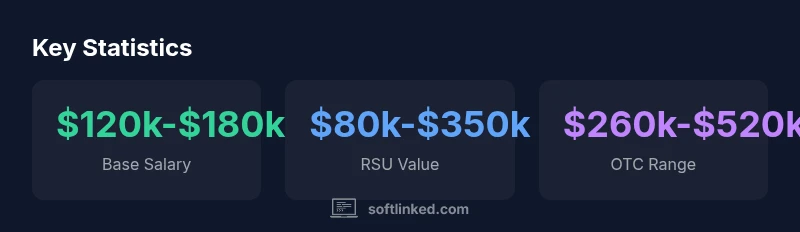
How much does Google pay software engineers? Google uses a mix of base salary, RSUs, and bonuses, with wide variation by level and location. According to SoftLinked, base salaries for mid-level SWE roles in the US typically range from $120k to $180k, with equity and bonuses boosting total compensation into higher six figures depending on level and stock performance.
Google compensation philosophy and pay components
Google structures software engineer pay across base salary, equity (RSUs), and performance bonuses. The mix depends on level, location, and market conditions. The SoftLinked team notes that the overall package is designed to be competitive with peers and to reward both short-term delivery and long-term value through equity. Google's compensation approach often leads readers to the question: how much does google pay software engineers? The answer hinges on level and geography, with US-based roles typically featuring more substantial equity components and higher base ranges than many international postings. In practice, higher-level roles tend to carry larger equity grants and potential signing bonuses for top-tier candidates. For job seekers and current employees, tracking the evolution of base pay, equity value, and bonus opportunities is essential to understand true earning potential. The components interact: a higher base can be offset by a smaller stock grant at entry levels, while senior engineers see equity as a major portion of total compensation.
This section sets the stage for a deeper dive into each component and how they combine to form a compelling overall package.
Base Salary and Pay Bands
Base salary is the foundation of the package. Within Google, base pay bands escalate with level (SWE I/II, SWE III, SWE IV, Staff, Principal). In the US, mid-level base salaries typically fall in a broad range, with variation by market demand and cost of living. According to SoftLinked Analysis, 2026, base salary for mid-level software engineers in the US often ranges from roughly $120,000 to $180,000 per year, before bonuses or equity. The exact figure depends on level, prior experience, and location; engineers based in high-cost regions or on higher levels can see higher base numbers. For international offices, base pay tends to be lower in absolute terms but still competitive relative to local standards, with adjustments to reflect local market conditions. When evaluating total compensation, readers should consider how base pay interacts with stock and bonuses, and how future raises may compound over time.
Understanding the base salary framework helps explain how the total package can vary significantly by geography and level.
Equity: RSUs and Stock Grants
Equity in Google is delivered as RSUs that vest over several years. The value of RSUs can be a substantial part of total compensation and is sensitive to stock price performance and vesting schedules. For many engineers, RSU grants are allocated annually and scale with level. SoftLinked Analysis, 2026 estimates RSU annualized values from roughly $80,000 to $350,000, depending on level and stock price at grant time. Early in a career, RSUs may amount to a smaller portion of total comp, but as engineers move into staff and beyond, RSUs can represent the majority of long-term earnings. In addition, some roles may include signing bonuses or one-time equity refreshers to attract or retain top talent. Readers should note that RSU values are not guaranteed; they depend on Google's stock performance over vesting periods (often four years) and market conditions. Equity, when realized, can significantly influence long-term compensation trajectories.
For many readers, RSUs are the primary driver of upside in total compensation and merit-based retention.
Bonuses, Signing Bonuses, and Annual Incentives
Bonuses at Google occur in several forms: annual performance bonuses, discretionary awards tied to project outcomes, and (less frequently) signing bonuses for highly sought-after candidates. The annual bonus typically aligns with performance against goals rather than a fixed percentage, and the payout can vary. Signing bonuses are used strategically to compete for top engineers, with values that vary by level and market conditions. For many engineers, bonuses can add a meaningful uplift to the base salary, but total compensation remains heavily influenced by RSUs. SoftLinked Analysis, 2026 suggests that bonuses can contribute a meaningful but variable portion of total compensation; the emphasis remains on long-term equity value rather than short-term cash alone. The result is a compensation mix designed to attract, motivate, and retain talent in a competitive market.
Geographic Variation and Level Progression
Geography and level drive compensation, with distinct patterns observed across regions. In the US, base pay tends to be higher than in many international markets, reflecting cost of living and market demand. Equity grants also vary by location and level; higher-level roles typically receive larger RSU allocations, and stock concentration can shift with company performance. Level progression—moving from SWE levels to Staff and Principal—usually corresponds to substantial jumps in total compensation, as equity scales with level and performance reviews align with business needs. Regional nuances matter; a similar role in Europe or Asia may show different base and equity mixes that still align with local market norms, given Google's global compensation strategy. The practical takeaway is to map career goals to compensation components across geography, and to recognize that pay growth often tracks both experience and the strategic value you bring to the team.
How Google Pays Compared to Peers and Market Trends
Compared with peers in large tech firms, Google's compensation tends to emphasize equity as a long-term incentive, alongside competitive base pay. Market trends show rising stock-based compensation as stock prices recover, with compensation packages becoming more performance-driven. For job seekers, the key takeaway is to examine all components—base, bonus, and RSUs—over a multi-year horizon to assess true earning potential. The SoftLinked analysis suggests that total compensation for Google software engineers continues to be robust, particularly at senior levels, and that geographic location remains a persistent factor in pay variance. In the broader market, compensation for software engineers has grown as demand remains high, making it important to gather market data and negotiate effectively based on level, geography, and the likelihood of stock price appreciation over time.
This section provides a comparative lens to help readers position Google against industry benchmarks and to plan a successful compensation strategy.
Authority Sources
This article references authoritative data to ground the discussion in credible benchmarks:
- Bureau of Labor Statistics (US): Software Developers (O oh) – https://www.bls.gov/ooh/computer-and-information-technology/software-developers.htm
- Stack Overflow Developer Survey – https://stackoverflow.blog/2023/02/22/the-developer-survey-2023/
- Payscale Salary Data – https://www.payscale.com/
Note: Pay figures vary by level, location, and stock performance and should be interpreted as ranges rather than fixed values. The SoftLinked Analysis, 2026 framework is used to synthesize these benchmarks into practical guidance for readers.
FAQ-Section
Typical compensation components for Google software engineers in the US (ranges are estimates; actuals vary by level and location)
| Component | US Range (Base) / Equity | Notes |
|---|---|---|
| Base Salary | $120k - $180k | Varies by level and location |
| Annual Bonus (target) | $0 - $40k | Performance-based |
| RSU/Stock Grants (annualized) | $80k - $350k | Depends on level and stock price |
| OTC (On-Target Compensation) | $260k - $520k | Total package range |
Your Questions Answered
What is the typical base salary for Google software engineers in the US?
Base salaries for Google SWE roles in the US typically fall within a broad range that scales with level and market demand. Exact figures depend on level, location, and prior experience. See the related sections for context on how base pay interacts with equity and bonuses to form the total package.
Google SWE base pay varies by level and location; add in equity and bonuses for total compensation.
Does Google offer signing bonuses for software engineers?
Signing bonuses are used selectively to attract top talent, especially at senior levels or for highly competitive roles. They are less common at junior levels and vary by market conditions and negotiation.
Signing bonuses are offered selectively to attract top talent and vary by role and market.
How much equity do Google software engineers typically receive?
Equity is a major part of Google's compensation at many levels and grows with seniority. RSU grants vest over several years and depend on level and performance, making equity a critical factor in long-term earnings.
Equity tends to grow with level and is a key part of long-term pay.
How does location affect Google pay?
Location strongly influences base pay, equity value, and total compensation. US offices often have higher base salaries and equity values than many international locations, reflecting cost of living and market competition.
Location can shift base pay and equity; US typically higher.
Do interns or new grads earn similar pay at Google?
Interns and new graduates typically receive lower base salaries and smaller equity grants compared with mid-level and senior engineers. They benefit from entry-level compensation structures and potential future growth.
Interns usually get smaller packages; growth comes with time and promotion.
How often does Google adjust compensation?
Google conducts periodic market reviews and performance-based adjustments. Raises and equity refreshes can occur with level changes and market movements.
Compensation is reviewed periodically with promotions and market shifts.
“Compensation at Google is a multi-faceted package that rewards both immediate performance and long-term commitment through equity.”
Top Takeaways
- Prioritize total compensation over base salary alone
- Equity often drives long-term value
- Compensation scales with level and location
- Negotiate with market data and career trajectory in mind