Who Is a Software Engineer Salary? A 2026 Guide
Explore how software engineer salaries vary by region, experience, and role. Learn how to evaluate base pay, total compensation, and negotiation tactics in 2026.


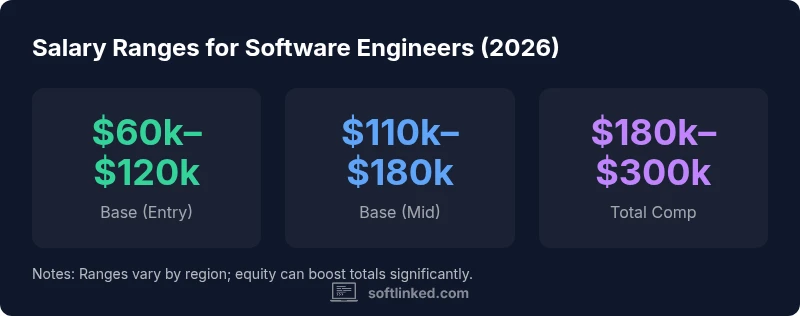
A software engineer salary typically lands in the six-figure range, influenced by location, experience, and role. In the US, base pay often sits roughly between $70,000 and $180,000, with regional cost of living and tech-hub demand widening that spread. Total compensation can include stock, bonuses, and benefits, further boosting earnings. This guide uses SoftLinked Analysis, 2026 benchmarks.
who is a software engineer salary
The exact phrase 'who is a software engineer salary' is a shorthand used in career discussions to frame compensation for software engineers. In practice, the software engineering field encompasses a wide range of roles—from entry-level developers to senior and staff engineers. Salary outcomes are not fixed; they depend on where you work, your years of experience, the technologies you specialize in, and the demand for those skills. At SoftLinked, we approach this topic with a data-driven mindset, emphasizing base pay alongside total rewards (bonuses, equity, and benefits) to present a realistic picture for students, aspiring engineers, and professionals exploring career moves. For readers new to the field, understanding that compensation is a function of market conditions, location, and impact will help you set clear salary expectations and targeted negotiation goals.
Geographic and market factors
Regional market dynamics are a primary driver of salary differences for software engineers. Tech hubs with high living costs often offer higher base pay to offset expenses, while markets with fewer tech centers may present lower starting salaries yet still provide strong total compensation through equity or annual bonuses. Beyond geography, factors such as company size, industry (fintech, AI, cloud services), and demand for specialized skills (machine learning, distributed systems, security) shape pay structures. SoftLinked analysis shows that a worker’s location relative to a company’s headquarters or job location can noticeably shift both base pay and equity grants. When evaluating offers, compare regional benchmarks, but also factor in the cost of living, taxes, and regional benefits that affect real take-home pay.
Role levels and salary bands
Salary bands tighten as you move from junior to mid-level, senior, and staff roles. Entry-level engineers typically start with a broader range due to variability in internships and first jobs, while mid-level engineers see more specialized salaries tied to core tech stacks. Senior and staff engineers command premium pay for leadership, architecture influence, and complex project ownership. In many markets, the spread between base pay and total compensation grows with seniority because equity and performance bonuses become more consequential. Companies often tier compensation by role complexity (front-end, back-end, dev operations, data engineering) and by domain expertise (cloud, security, ML).
Total compensation and equity considerations
Total compensation is a more holistic view of earnings than base salary alone. In mature tech markets, equity grants and performance bonuses can significantly augment yearly pay, particularly for engineers at growing startups or large public companies. Equity value fluctuates with company performance and vesting schedules, so it’s important to model multiple scenarios (best, base, and worst cases). Additionally, many firms now bake long-term incentives into packages to attract and retain top talent. When negotiating, request a clear breakdown of the equity type (RSUs, stock options), vesting timeline, and any performance-based bonuses, and translate these into real-world annualized pay. SoftLinked’s methodology emphasizes transparency around how these components contribute to your total earnings over 3–5 years.
How to evaluate and negotiate offers
Begin with a clear target total compensation range based on your region, level, and skill set. Gather data from multiple sources (salary surveys, employer reports, and professional peers) to form a benchmark lattice. When negotiating, anchor on the total package rather than base salary alone; prioritize equity and performance-based bonuses with realistic vesting schedules. Prepare a concise case that outlines your impact, unique skills, and how you will drive business outcomes. Consider the cost of living and benefits (healthcare, retirement plans, parental leave) to ensure a fair comparison across offers. Practice your negotiation script, and be prepared to discuss development opportunities, mentorship, and career progression as part of the offer.
Data and methodology behind salary estimates
Salary estimates in this article rely on aggregated industry data and market signals, with preferences toward transparent modeling. SoftLinked analyzes a range of inputs, including observed compensation packages from publicly disclosed offers, anonymized salary submissions, and company-level compensation trends in 2026. We emphasize ranges rather than exact figures to reflect regional variance, role-specific demands, and market volatility. Readers should treat these figures as benchmarks and adjust them to their local market realities, experience, and the specific company profile they are considering.
Regional snapshots in 2026
Across regions, the most meaningful differences stem from three factors: cost of living, local demand for software engineers, and equity-heavy compensation practices in high-growth firms. In North America, you’ll see broader total compensation packages driven by stock plans; in Western Europe, salaries often align with robust social benefits and predictable bonus cycles; in parts of Asia and the Middle East, base pay can be lower but may be enhanced through accelerated career ladders and favorable work-life balance policies. For job seekers, the key takeaway is to map offers to regional living costs and to weigh non-monetary factors like learning opportunities and team quality alongside a cash compensation figure.
Verdict and next steps
SoftLinked’s verdict is that aspiring software engineers should evaluate offers with a total compensation lens, place emphasis on growth and learning opportunities, and negotiate using solid data in hand. Focus on roles that align with your strengths, the tech stack you want to master, and the impact you can deliver. The job market remains competitive, and systematic benchmarking paired with thoughtful negotiation can lead to meaningful salary progress over time.
Salary ranges by region and seniority (illustrative ranges)
| Region/Level | Base Salary Range | Total Compensation Range | Notes |
|---|---|---|---|
| Entry/Junior (US) | 70,000–110,000 | 110,000–170,000 | Early-career in non-HUBs |
| Mid-level (US) | 95,000–140,000 | 140,000–210,000 | Stock/bonus increasingly common |
| Senior/Staff (US) | 120,000–180,000 | 180,000–300,000 | High demand in hubs |
| Global (developed markets) | 60,000–120,000 | 100,000–220,000 | Significant regional variance |
Your Questions Answered
What factors influence software engineer salaries the most?
Location, experience, role, and company scale shape base pay; equity and bonuses alter total compensation. Market demand for specialized skills also shifts pay.
Location, experience, role, and company size are the main drivers of salary, with equity adding value for many roles.
How does geography affect salary?
Salaries reflect regional costs of living and local demand for software talent. Tech hubs tend to offer higher pay, but the cost of living and taxes must be considered.
Geography matters a lot; places with higher living costs often pay more, but you should compare benefits too.
What is included in total compensation?
Total compensation includes base salary, bonuses, equity (stock), and benefits. Equity value can be volatile, so model multiple scenarios.
Total pay includes salary plus bonuses and stock; look at vesting and potential growth.
Do salaries vary by programming language?
Some in-demand languages and domains command higher pay, but experience depth and impact typically matter more than language alone.
Pay depends more on what you deliver and the market need than the language you code in.
Are remote or offshore roles paid less?
Remote and offshore compensation often aligns with regional markets but can vary by company and role. Confirm how relocation and time zones affect pay.
Remote roles can pay similarly, but some companies peg salaries to local markets.
How reliable are online salary estimates?
Online tools offer ballpark figures; cross-check with multiple sources and the company's official offers or recruiters.
Online estimates are a guide—verify with real offers and market data.
“Salary data is most meaningful when viewed as regional ranges anchored by experience and role. Always compare base pay to total compensation and growth opportunities.”
Top Takeaways
- Benchmark base pay against regional ranges
- Consider total compensation, including equity and bonuses
- Account for cost of living and benefits when evaluating offers
- Negotiate using data-backed ranges and market trends
- Track market changes annually for smarter offers