How to Get a Software Job: A Practical, Step-by-Step Guide
A thorough, step-by-step guide to landing a software job. Learn core skills, build a portfolio, network strategically, tailor applications, and master interviews with actionable steps and real-world examples. Includes templates, timelines, and authoritative resources.


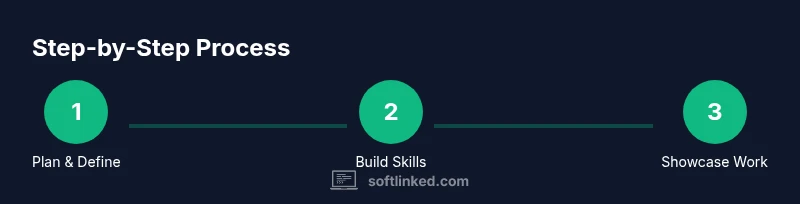
According to SoftLinked, you can land a software job by following a structured plan: build a strong foundation in programming, craft a standout portfolio, network strategically, tailor your resume, and practice interviews. Focus on in-demand skills, contribute to open source, and target roles that match your level. This guide breaks down concrete steps, timelines, and realistic expectations.
Understanding the Software Job Landscape
The software job market is broad, with roles spanning front-end, back-end, mobile, data engineering, DevOps, and beyond. For newcomers, entry points include junior developer positions, internship programs, and contract work that builds practical experience. The SoftLinked team notes that demand can vary by region, industry, and tech stack, but three fundamentals stay constant: strong problem-solving ability, consistent practice, and a portfolio that demonstrates real impact. In this section, you’ll map your strengths to the most viable paths, identify the skills that separate you from the crowd, and set realistic milestones for your first 6–12 months. By clarifying roles like junior frontend engineer or backend software engineer, you can tailor your learning plan and minimize wasted effort. The modern path often blends self-study with guided coursework, small projects, and deliberate networking to create a cohesive narrative that resonates with hiring managers.
Core Skills You Should Master
Begin with a solid foundation in algorithms, data structures, and problem solving. Languages you’ll frequently encounter include Python, JavaScript, Java, or C++, depending on your target domain. Version control with Git is non-negotiable, as collaboration and code review rely on it. You should also understand testing principles, debugging strategies, and basic software design patterns. As you grow, learn about databases, APIs, and cloud fundamentals. The goal is not to know every technology, but to be fluent enough to pick up new stacks quickly. Practice by implementing standard problems, participating in small open-source projects, and building a portfolio that proves your abilities under real constraints.
Crafting a Standout Portfolio
A compelling portfolio does more than list projects; it demonstrates impact, process, and learning. Include 3–5 projects that showcase different skills (web app, data handling, API design, etc.). Each project should have a concise README, clear goals, and explicit outcomes (metrics if possible). Host code on GitHub with clean commits and a professional LICENSE. A live demo or screencast can help recruiters see your work in action. Don’t ignore documentation: write a short “What I learned” section highlighting challenges faced and trade-offs you made. Finally, contribute to open-source or collaborate with peers to broaden your portfolio’s credibility.
Resume, LinkedIn, and Personal Brand
Your resume should be a precise, keyword-driven document that aligns with the roles you want. Use bullet points that quantify outcomes (e.g., reduced latency by 40%, increased test coverage by 25%). Tailor each resume and cover letter to the job description, and maintain a consistent online presence: updated LinkedIn, a well-organized GitHub, and an active portfolio site. Build a narrative that connects your projects to business impact, not just tech features. For your LinkedIn profile, emphasize roles, projects, and endorsements that reflect your strengths. Strong branding helps recruiters find you and understand your potential at a glance.
Networking and Mentorship: Your Hidden Levers
Networking often powers the fastest route into software teams. Attend local meetups, campus events, and virtual conferences to meet engineers and recruiters. Seek informational interviews to learn about team dynamics, common hiring practices, and technical expectations. Build a polite outreach cadence: a concise message that highlights what you’ve built and what you’re seeking. Consider finding a mentor who can review code, offer feedback on projects, and guide your interview prep. Referrals commonly lead to higher interview invite rates, so invest time in meaningful relationships rather than quick, mass outreach.
Strategic Job Search: Where and How to Apply
Adopt a targeted approach rather than blasting out applications to every listing. Start with clearly defined roles that match your skills and interests. Use company pages, reputable job boards, and alumni networks to identify opportunities. Customize your resume for each role, prioritizing the keywords and requirements stated in the listing. Create a simple tracking system to monitor applications, follow-ups, and interview stages. Consider internships and apprenticeships as legitimate entry points, especially if you are transitioning from another field or returning to tech after a break.
Interview Preparation: The Two Pillars
Technical interviews assess your problem-solving, coding fluency, and your approach to designing solutions. Behavioral interviews explore teamwork, communication, and adaptability. Build a practice routine that balances coding on whiteboard or editor, system design basics, and mock interviews. Start with easy problems to build confidence, then escalate to medium and hard challenges. For system design, study core components, trade-offs, scalability principles, and how to explain choices clearly. Mock interviews with peers or online platforms can yield practical feedback that accelerates improvement.
From Practice to Offer: Negotiation and Growth
Receiving an offer is just the start. Evaluate compensation in context: base salary, sign-on, equity, benefits, growth trajectory, and learning opportunities. Prepare for negotiations with market benchmarks and a clear sense of your minimum acceptable terms. If an offer feels weak, consider a counteroffer or continuing your search while negotiating a realistic growth plan. Beyond compensation, assess the team, tech stack, product impact, and mentorship possibilities. A thoughtful, evidence-based negotiation reflects confidence and a focus on long-term career progression.
12-Week Jumpstart: A Practical Plan
A focused 12-week plan can accelerate your readiness. Week 1–2: map target roles and identify skill gaps; Week 3–5: complete two projects and document outcomes; Week 6–8: build a polished portfolio and optimize your resume; Week 9–10: practice coding problems daily and do mock interviews; Week 11–12: apply strategically, network, and schedule mock interview sessions to close gaps before real interviews.
Common Pitfalls and How to Avoid Them
Don’t rely on one factor (e.g., only online courses) to land a job. A balanced approach combines practice with portfolio work and networking. Avoid generic resumes; tailor each application. Be wary of time-wasting cycles like chasing every new framework instead of solid fundamentals. Finally, organize your job search with a system that tracks progress and prompts consistent outreach. If something isn’t working after a few weeks, reassess your target roles and adjust your strategy.
Tools & Materials
- Laptop or desktop with reliable internet(Prefer modern specs; ensure updates and backup power)
- IDE/Code Editor (e.g., VS Code)(Install extensions for linting and debugging)
- GitHub account(Public repositories help employers gauge your code quality)
- Active accounts on LinkedIn and major job boards(Keep profiles up to date and engage with content weekly)
- Notebook or digital planner(Track goals, applications, and interview dates)
- Practice problem set (LeetCode/CodeSignal)(Schedule time blocks of 4–6 problems per week)
Steps
Estimated time: 6-12 months
- 1
Define target roles and required skills
Identify 2–3 roles you want (e.g., junior backend engineer, frontend developer, data-focused software engineer). List the core skills each role requires. This clarifies what you must learn first and which projects will strongest showcase your abilities.
Tip: Write a one-page target profile you can paste into your resume and LinkedIn summary. - 2
Audit your current skills and gaps
Take a self-assessment to map your existing strengths against target roles. Prioritize areas with the largest impact and fastest learning curves, such as data structures, version control, and a primary programming language.
Tip: Create a personal learning plan with weekly milestones and check-ins. - 3
Build a portfolio of 3–5 projects
Develop projects that demonstrate real-world usage, not just toy apps. Each project should have a public GitHub repo with a descriptive README, a live demo when possible, and metrics showing impact.
Tip: Ensure each project highlights a problem you solved, the technical approach, and outcomes. - 4
Polish your resume and online profiles
Create a concise resume (1 page for juniors, 2 pages for experienced). Tailor keywords to each role, and ensure your LinkedIn and GitHub reflect a cohesive narrative about your capabilities and growth.
Tip: Use action verbs, quantify results, and mirror language from job postings. - 5
Network strategically and seek referrals
Attend events, reach out for informational interviews, and request referrals from mentors or peers. Prepare a short pitch that communicates who you are, what you’ve built, and the kind of roles you’re pursuing.
Tip: Keep a running list of 5–10 potential mentors or connections to contact weekly. - 6
Apply thoughtfully with tailored messages
For each application, tailor your resume, write a targeted cover letter, and mention specific reasons you’re excited about the company and role. Track submissions and follow up after 1–2 weeks.
Tip: Avoid generic messages; reference the company’s product or mission directly. - 7
Prepare for interviews: coding and design
Practice common data-structure problems, simulate whiteboard sessions, and study basic system design concepts. Practice aloud and explain your reasoning clearly to demonstrate communication skills.
Tip: Use a timer during practice to build speed and reduce pressure during real interviews. - 8
Navigate offers and plan your growth
Evaluate compensation in context, consider growth opportunities, and set expectations for your first year. If needed, negotiate thoughtfully and seek feedback to guide future promotions.
Tip: Define non-negotiables before negotiations to avoid regret later.
Your Questions Answered
What is the fastest way to get a software job?
There isn’t a single fastest way, but a focused strategy works well: define target roles, build a relevant portfolio, network for referrals, tailor applications, and practice interviews. Consistency over time usually yields the best results.
The fastest path combines a focused role target, a solid portfolio, referrals from networking, tailored applications, and steady interview practice.
Do I need a degree to get a software job?
A degree can help, but it is not strictly required. Many employers value demonstrable skills, strong portfolios, practical projects, and interview performance more than formal credentials.
A degree helps some employers, but a strong portfolio and solid interview performance can open doors without one.
Python or Java first?
Start with one language that aligns with your target role. Python is good for rapid prototyping and data-focused work, while Java or C# are common in enterprise environments. Master the fundamentals first, then branch to related stacks.
Choose a language based on your target role; master fundamentals first, then learn related languages as needed.
How important is networking?
Networking significantly improves your chances of interview invitations and referrals. It helps you learn about opportunities, receive feedback, and build trust with potential managers.
Networking is crucial; it often leads to interviews and trusted referrals.
How should I prepare for a coding interview?
Practice a mix of problems across easy, medium, and hard levels. Focus on clarity of thought, efficient solutions, and explaining your approach aloud. Use timer-based practice to simulate real interview pressure.
Practice problems of varying difficulty and explain your reasoning as you code.
How do I negotiate salary offers?
Research market ranges, know your value, and prepare a respectful counter with concrete data. Consider total compensation, growth trajectory, and learning opportunities in addition to base pay.
Know your value, use data, and negotiate for total compensation and growth.
Watch Video
Top Takeaways
- Define clear target roles and map required skills.
- Build a publishable portfolio with measurable impact.
- Network strategically to uncover opportunities.
- Tailor resumes and profiles to each role.
- Practice interviews regularly to build confidence.