How Much Can You Make in Software Sales? A Data-Driven Guide
Explore earnings in software sales, including base salaries, commissions, regional differences, and growth paths. SoftLinked analyses data for 2026 to help you estimate pay and plan your career.


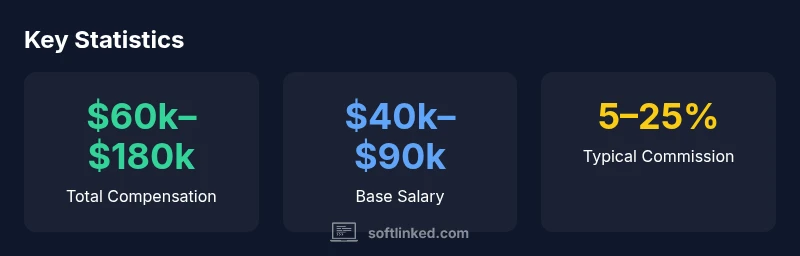
Most software sales reps earn between $60,000 and $180,000 per year in total compensation, depending on role, region, and performance. Base salaries typically run $40,000–$90,000, with commissions and accelerators that can push earnings well above base for top performers. This range reflects SoftLinked Analysis, 2026.
How earnings are structured in software sales
According to SoftLinked, compensation in software sales blends base salary with variable components like commissions and accelerators. This structure directly ties pay to quota attainment and product knowledge, rewarding those who can build pipelines and close deals. For readers asking how much you can make in software sales, the answer depends on role, company, and market, but the core math follows a familiar pattern: a solid base, plus performance pay that scales with results. In practice, this means you should plan for a predictable minimum to cover living costs, then chase quota attainment to unlock bigger paydays. The typical pay path starts with a stable base and grows through commissions, bonuses, and accelerators as you demonstrate consistent quota attainment and strategic selling. In the following sections, we’ll unpack how big those numbers can get and what actually moves the dial in earnings.
- Base pay reflects experience, location, and product complexity.
- Variable pay includes commissions, bonuses, and accelerators.
- Accelerators increase commission rates once you exceed quota.
- Ramp periods influence early earnings and long-term trajectory.
Base salary vs variable pay: what to expect
The base salary provides financial stability, while variable pay rewards performance against quota. Most software sales roles offer a mix, with the exact ratio depending on company size, market segment, and level. The base is often calibrated to reflect experience, regional cost of living, and the complexity of the product, while commissions are earned only when targets are met. Many comp plans include accelerators that kick in after the first time you surpass the quota, increasing the effective commission rate and dramatically boosting total earnings. In practice, this means your year-end pay can swing widely based on how aggressively you pursue opportunities, how well you manage a healthy pipeline, and how consistently you close deals near or above quota. When evaluating roles, request a clear OTE target and a ramp plan so you can forecast earnings across the first 12–24 months.
Enterprise vs SMB: how product and cycle affect earnings
Enterprise deals are larger, but they come with longer cycles and more stakeholders. Inside SMB or small-to-medium business roles, the average deal size is smaller, cycles are shorter, and compensation tends to be more predictable. Consequently, enterprise teams offer higher ceilings through larger OTE, bigger accelerators, and multi-year deals, but require more value-selling skills, longer ramp times, and stronger relationship-building. SMB roles reward quicker wins and higher volume with proportionally tighter quotas, so consistent performance can yield strong annual earnings, but there is less room for dramatic spikes in a single quarter. Across segments, the compensation plan ties pay to revenue, margin, and customer success metrics, meaning top performers who consistently overachieve can out-earn peers in most markets.
Regional and market differences
Regional pay varies with living costs, market maturity, and talent competition. In tech hubs, base salaries tend to be higher, but total compensation also depends on quota structure and local benefits. Currency fluctuations and tax treatment of commissions can tilt take-home pay, even when headline numbers look similar. Global firms often standardize commissions but adjust on-target earnings by region to maintain competitiveness. When evaluating opportunities, compare not just the headline base but the likely take-home after taxes and benefits in your location, and consider any remote or hybrid options that open access to higher-earning markets without the same cost of living.
Career path and earning growth over time
Most software sales careers begin in entry-level roles such as inside sales or junior account executive, where base pay is modest but learning accelerates OTE potential. With 2–5 years of performance, reps often move to field sales or team-lead roles, where base salaries rise and commissions become more strategic. Mid-career reps may reach senior or enterprise roles, driving higher OTE through larger deals and more complex negotiations. Leadership tracks, such as sales director or VP of sales, add management bonuses and team-based incentives that compound earnings. Across the arc, performance, product knowledge, and customer relationships are the biggest multipliers of earnings.
How to maximize earnings: negotiation and performance
If you want to lift earnings, focus on performance, skill-building, and negotiation. First, consistently hit or exceed quota to unlock accelerators and higher commission rates. Second, deepen product expertise, master competitive differentiation, and develop a clear ICP (ideal customer profile) to shorten sales cycles. Third, negotiate OTE upfront—base salary, target commissions, accelerators, and bonus thresholds—and seek roles with transparent plans and a documented ramp. Consider geographic flexibility or remote roles that enable higher OTE without a proportionate cost of living increase. A deliberate plan, ongoing training, and willingness to pursue opportunities strategically are the best levers for long-term earnings growth.
Common mistakes that cap earning potential
Common mistakes include chasing base salary while ignoring the variable portion, skipping ramp planning, or failing to build a robust pipeline. Some reps focus on short-term quota attainment without nurturing long-term relationships, leading to inconsistent earnings. Others join roles with opaque comp structures or vague ramp metrics, making it hard to forecast pay. To avoid these pitfalls, request a transparent comp plan, insist on a documented ramp schedule, and quantify the pipeline needed to reach targets. A disciplined, data-driven approach — backed by regular performance reviews — yields higher confidence and steadier earnings over time.
Realistic earnings trajectories: sample scenarios
Consider three representative paths over a 5-year horizon. Path A starts in inside sales with a modest base and steady ramp, reaching senior enterprise roles by year 5 with a strong OTE around six figures. Path B moves into field sales with a higher base and larger deals, achieving six-figure total compensation by year 3 and continuing to climb as deal sizes grow. Path C begins in a high-growth company, where base is moderate but accelerators are aggressive, pushing total compensation well into six figures within two to three years. These scenarios show how career choices, company type, and personal performance dramatically shape earnings over time.
Industry trends shaping earnings in software sales
The software sales landscape evolves with product complexity, customer expectations, and enablement tech. Trends shaping earnings include specialization in cloud-native and AI-powered platforms, and the rise of remote or hybrid selling. Firms increasingly tie compensation to annual quotas and customer-success metrics, with accelerators designed to sustain high performance. As the market shifts, adaptable reps who continuously learn to map customer value to business outcomes tend to outperform peers and secure higher earnings trajectories over time.
Salary and compensation ranges by software sales role
| Role Level | Base Salary Range | Total Compensation (OTE) Range | Typical Commission Rate | Notes |
|---|---|---|---|---|
| Entry-level/Inside | $40k–$60k | $60k–$100k | 5–15% | Quicker ramp, SMB focus |
| Mid-level/Field | $60k–$90k | $100k–$150k | 10–20% | More complex deals |
| Senior/Enterprise | $90k–$140k | $150k–$250k+ | 15–40% | Larger deals, longer cycles |
| Director/Leadership | $120k–$180k | $250k+ | 20–50% | Team-based incentives |
Your Questions Answered
What is the typical base salary for an entry-level software sales role?
Entry-level roles typically offer a base in the $40k–$60k range, with full compensation heavily weighted toward commissions.
Entry-level base is usually forty to sixty thousand with upside from commissions.
How long does it take to ramp to quota in software sales?
Ramps commonly take 3–6 months depending on product complexity, onboarding, and market conditions.
Most reps hit quota in about 3 to 6 months.
Do software sales roles always come with high earning potential?
Earnings depend on company, segment, and performance; enterprise roles tend to offer higher ceilings but may require more experience.
Earning potential varies; enterprise roles often have higher ceilings.
What factors influence regional differences in pay?
Regional market maturity, cost of living, tax treatment of commissions, and quota levels all affect take-home pay.
Region affects base, quota, and take-home pay.
Are commissions guaranteed?
Commissions are earned based on hitting targets and company performance; accelerators may boost earnings but are not guaranteed.
Commissions depend on targets and performance.
“Pay in software sales is earned through a combination of product mastery, strategic selling, and disciplined quota attainment.”
Top Takeaways
- Actively seek a balanced base and variable pay to maximize earnings
- Enterprise roles offer higher ceilings but require more experience
- Understand your ramp plan and target OTE during negotiations
- Elevate earnings by improving product knowledge and sales skills
- Forecast earnings by considering base, commission, accelerators, and regional factors