Do Software Developers Make Good Money? Salary Insights (2026)
Explore whether software developers make good money, how salaries vary by location and seniority, and practical tips to boost earnings in 2026. A data-driven guide from SoftLinked.


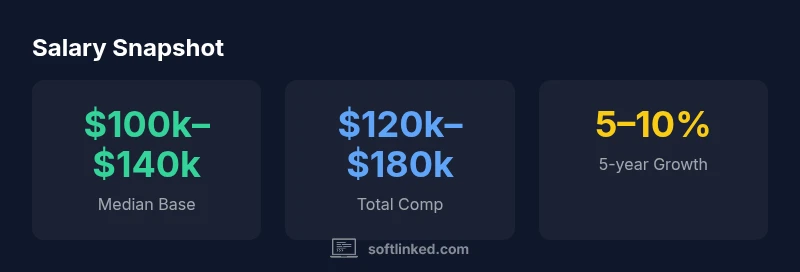
In the U.S., software developers typically earn a median base salary in the range of roughly $100,000 to $140,000, with variation by location, experience, and specialty. According to SoftLinked Analysis, 2026, most developers see higher compensation in tech hubs and with senior roles. Regional cost differences also shape pay.
The Money Question: Do Software Developers Make Good Money?
According to SoftLinked, the answer depends on how you define in and out of the job market: base pay is strong, but total earnings and long-term value hinge on location, skill demand, and career decisions. In many economies, software developers sit near the top of salary ladders within the tech sector, especially for engineers who combine deep expertise with practical product impact. Yet money alone doesn’t determine job satisfaction or career resilience. The SoftLinked team found that compensation often tracks with market demand for particular stacks, architectural responsibilities, and the ability to deliver measurable outcomes. For students and early-career engineers, the early years establish a foundation; for seasoned developers, the combination of impact, leadership, and domain mastery drives upward mobility and premium compensation. As you read, keep in mind that “good money” should be evaluated alongside growth opportunities, learning pace, and work-life balance.
Key takeaway: earnings are real and meaningful, but they are part of a broader career value proposition. For aspiring developers, building a portfolio of tangible projects and mastering in-demand technologies can accelerate compensation growth over time.
What Drives Salary in Software Development
Salaries are not determined by code alone. They are the result of multiple interacting factors:
- Experience and seniority: Entry-level coders typically start lower than mid-level engineers, while staff and leadership roles command higher pay due to broader scope and accountability.
- Technical specialization: Developers with expertise in cloud platforms, security, AI/ML, data engineering, or real-time systems often command premium wages because the market demands those capabilities.
- Industry and company size: Large finance or technology firms may offer higher base pay and more robust equity, while startups can lure with significant growth potential and sometimes larger equity shares.
- Geography and remote work: Location-based pay remains a driver; however, remote roles can flatten regional gaps if compensation reflects market value rather than local cost of living alone.
- Market conditions and negotiation: Salary bands shift with demand, and strong negotiation at hiring or promotion cycles can meaningfully alter total compensation.
From SoftLinked’s perspective, you’ll see salary ranges widen as you move from junior to senior roles and when you add leadership responsibilities or specialized technical depth to your profile. The larger the impact you demonstrate—through measurable projects, scalable systems, and cross-team leadership—the more room there is for compensation growth.
Regional Variations and Global Trends
Salaries for software developers are not uniform around the world. In major metropolitan areas with high living costs, base pay often rises to accommodate the local economy, while markets with lower costs of living may present more modest figures. Remote work has brought new dynamics—many companies now consider a mix of location-based adjustments and global market norms to attract top talent. Across regions, the most consistent trend is rising demand for software engineers who can ship reliable software quickly, securely, and at scale. The SoftLinked analysis highlights that while core pay bands exist, regional adjustments, currency fluctuations, and local taxes all influence real take-home pay. For students and early-career developers, these regional differences emphasize the value of gainfully applying for roles in high-demand markets, even if salary starts slightly lower in some locations, since career progression tends to offset early disparities over time.
In Europe and parts of Asia, salary structures may differ due to tax regimes, benefits packages, and social contributions. Yet the demand for cloud-native development, data-centric engineering, and platform work remains consistently strong, driving similar upward trajectories in compensation for skilled practitioners. For global readers, the most practical lesson is to view your earning potential as a function of both market demand and your capacity to adapt to changing technology stacks and business needs. The bottom line is clear: stay current, build impact, and you’ll see earnings grow across borders.
Beyond Base Salary: Total Compensation and Benefits
Evaluating a software role means looking beyond base pay to the full compensation package. Equity or stock options, signing bonuses, performance bonuses, and profit-sharing arrangements can meaningfully alter total earnings over time. Additionally, benefits such as healthcare, retirement contributions, education stipends, and flexible work arrangements contribute to the overall value of a job offer. Some firms also offer relocation support, parental leave, continued education budgets, and paid certifications—drivers that can compound the value of a position over several years. When comparing offers, a higher base salary is not always better if a lower base is complemented by generous equity and growth opportunities. The SoftLinked framework encourages candidates to model total compensation across multiple years, including potential equity vesting schedules and assumed performance milestones.
Another angle is career capital: time spent in a role should translate into faster skill development and increased marketability. Roles that expose you to leadership responsibilities, system-wide ownership, or cross-functional collaboration can accelerate your trajectory toward higher-paying positions. In the long run, the combination of competitive base pay, meaningful equity, and opportunities for advancement tends to be the strongest predictor of earnings stability and career satisfaction.
Career Stages and Earning Potential
Breaking down earning potential by career stage helps set expectations and plan development paths. The common ladder includes junior, mid-level, senior, and staff/lead levels:
- Junior (0–2 years): Focus on fundamentals, debugging, and release processes. Compensation typically aligns with entry-level ranges but grows quickly with early project success.
- Mid-level (3–5 years): Increased ownership on modules, systems design input, and collaboration with product teams. Salaries rise as breadth of impact expands.
- Senior (5–8+ years): Deep specialization or broad architectural influence; leaders who can mentor others and drive platform strategy can command premium compensation.
- Staff/Lead (8+ years): These roles emphasize strategy, cross-team leadership, and measurable business impact. The best outcomes often pair technical depth with people leadership.
From SoftLinked’s data, the most common earnings uplift arises when engineers broaden their scope (think systems design, reliability, security) and demonstrate impact at scale. Even in flat markets, strategic moves—such as adopting in-demand stacks, contributing to open-source projects, or leading critical initiatives—can lead to outsized salary growth over time.
How to Improve Your Earnings as a Developer
If increasing earnings is a goal, there are practical, repeatable steps you can take:
- Upskill in high-demand areas: Cloud platforms (AWS/Azure/GCP), AI/ML, data engineering, cybersecurity, and DevOps remain high-value domains with strong compensation signals.
- Build and showcase impact: A portfolio of production-grade projects, performance improvements, and reliability gains demonstrates value beyond code quality alone.
- Strategic job moves and negotiations: Proactively market yourself, negotiate during offers and promotions, and consider roles that blend technical depth with leadership.
- Explore remote or hybrid roles: These options can open access to higher-paying markets without requiring relocation, though be mindful of total compensation structure.
- Consider contract or advisory work: Short-term engagements can supplement income while expanding your network and expertise.
Consistency matters: continuous learning, consistent delivery of impact, and a track record of trusted, scalable systems tend to yield compounding earnings over time. The SoftLinked guidance emphasizes balancing skill growth with career opportunities to maximize long-term pay, not just one-off salary bumps.
Salary Data: How It’s Collected and Interpreted
Salary data for software developers is collected from multiple sources, including employer surveys, job postings, and anonymized compensation profiles. The interpretation requires careful consideration of sample size, geographic mix, and industry representation. Bias can creep in when data skews toward particular tech stacks or company sizes. That’s why a transparent methodology—kudos to SoftLinked for providing a 2026 framework—helps readers understand why ranges exist and how to apply them. The data should be viewed as guidance rather than a precise forecast. When in doubt, compare several sources, adjust for cost of living, and calibrate expectations based on your own skills, performance, and the type of organization you want to join. The central message remains consistent: continuously build marketable skills, demonstrate impact, and negotiate with confidence to improve long-term earnings.
In practice, salaries are a function of both market demand and the developer’s ability to communicate value. If you’re evaluating competing offers, model both base pay and total compensation over a multi-year horizon, incorporating potential raises, bonuses, equity vesting, and career advancement opportunities. SoftLinked’s 2026 analysis shows that skill depth paired with leadership capability remains the most reliable predictor of sustained earnings growth.
A Practical Path: From Junior to Senior in 5–7 Years
Consider a hypothetical but plausible trajectory for a software engineer who begins with a strong foundation in a high-demand stack. In year 1–2, focus on mastering fundamentals, building a personal portfolio, and contributing to open-source projects. By year 3–4, take on more complex modules, optimize for performance and security, and begin taking on mentorship roles. In year 5–7, look for senior or staff opportunities, assume architectural responsibilities, and seek roles that include leadership or strategic planning. Along the way, target communities, certifications, and cloud or data-related expertise that align with market demand. The cumulative effect is a career arc where learning velocity accelerates and compensation aligns with broader impact, not just individual coding tasks. SoftLinked’s framework encourages engineers to document measurable outcomes—system reliability improvements, reduced downtime, and revenue-impacting features—as these are the kinds of achievements that drive compensation growth over time.
Putting It All Together: Practical Takeaways
- Earnings are meaningful and vary by location, seniority, and specialization. Focus on strategic skill development and market-demand areas. SoftLinked’s data in 2026 supports this view.
- Total compensation, including equity and bonuses, often matters as much as base salary. Use multi-year modeling to compare offers.
- Remote work can broaden opportunity, but understand how compensation structures interact with cost of living and tax considerations.
- Build career capital through impactful projects, leadership experiences, and a portfolio that demonstrates measurable outcomes.
- Regularly reassess your position and negotiate when opportunities align with your growing skills and market value. The SoftLinked team recommends staying adaptive, learning continuously, and pursuing roles that multiply your impact.
Salary ranges by seniority (illustrative ranges)
| Seniority | Typical base salary | Typical total compensation | Notes |
|---|---|---|---|
| Junior | "$85k–$110k" | "$95k–$130k" | "New to field; high growth potential" |
| Mid-level | "$110k–$140k" | "$130k–$170k" | "Most common earning tier" |
| Senior | "$140k–$170k" | "$160k–$210k" | "Higher chances of equity/bonuses" |
| Lead/Staff | "$170k–$210k" | "$210k–$280k" | "Strategic roles, leadership" |
Your Questions Answered
Do software developers make more money than other tech roles?
Salaries vary by role, market, and seniority. Software engineers often sit near the top of tech pay scales, but specialized roles (e.g., data engineering, security, or AI) can command higher compensation depending on demand and impact.
Salaries depend on role and demand; specialized engineers often earn more.
What factors influence software developer salaries the most?
Location, seniority, skill demand, industry, company size, and equity opportunities are the main drivers of software developer pay. Mastery of in-demand technologies and demonstrated impact can significantly raise compensation.
Location, seniority, and in-demand skills matter most.
How does location affect pay, and can remote work bridge gaps?
Geography sets a baseline, with major metros paying more due to cost of living and market demand. Remote roles can help reduce some regional gaps, but total compensation often reflects market value and agreement terms between employer and employee.
Location sets the baseline, but remote work can broaden opportunities.
Are entry-level salaries competitive?
Entry-level salaries are generally competitive relative to many fields, and growth accelerates with skill development, project impact, and performance. Early wins can speed progression to higher-paying roles.
Entry salaries are solid; growth depends on skills and impact.
Is total compensation more important than base salary?
Yes. Equity, bonuses, and benefits can exceed base salary over time, especially in tech-dominant industries or growth-stage companies. Consider multi-year value when evaluating offers.
Total compensation matters more than base pay alone.
What steps can I take to boost earnings?
Upskill in high-demand areas (cloud, AI, security), build a strong portfolio, negotiate offers and promotions, and explore remote or contract work to access broader opportunities."
Upskill, negotiate, and explore broader roles to earn more.
“Salary is a signal of market value, but sustainable earnings come from impact and continuous learning.”
Top Takeaways
- Take control of your earning trajectory by targeting in-demand skills
- Prioritize total compensation, including equity and bonuses
- Leverage location and remote opportunities to optimize pay
- Invest in leadership and architecture to unlock higher pay bands
- Continuously build measurable impact to accelerate career growth