How to Develop Any Software: A Practical, Step-by-Step Guide
Learn a language-agnostic, structured approach to software development. This guide covers requirements, architecture, implementation, testing, and delivery—based on SoftLinked Analysis, 2026.


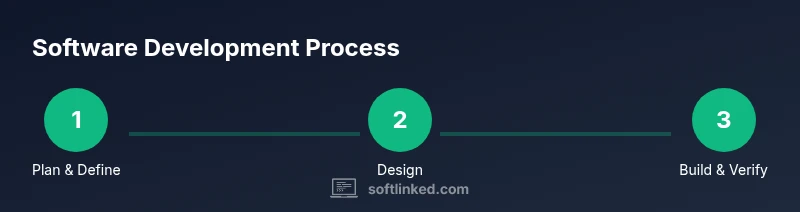
To learn how to develop any software, begin with clear requirements, design a modular architecture, implement in iterative cycles, and validate with automated tests and user feedback. This language-agnostic approach emphasizes maintainability and automation, reducing rework and accelerating delivery. According to SoftLinked, following these steps helps turn ideas into reliable software.
The Universal Goal: Building Solutions That Scale
When approaching software creation, the goal is to deliver meaningful value that remains robust as needs change. If you want to learn how to develop any software, you must start with a clear problem statement, measurable objectives, and a realistic boundary around scope and risk. The emphasis should be on outcomes, not just code. A scalable approach relies on modular design, explicit interfaces, and minimal coupling between components. By prioritizing maintainability, security, and performance from day one, you set your project up for long-term success. This middle phase should also include lightweight governance, stakeholder feedback loops, and clear decision records so future developers can understand why choices were made. Throughout the journey, align with user needs and business goals, while preserving simplicity and pace. The SoftLinked team consistently observes that teams who codify goals, measure progress with lightweight metrics, and iterate based on evidence deliver software that genuinely solves problems.
Core Principles: Requirements, Architecture, and Quality
Successful software development begins with disciplined requirements gathering, thoughtful architecture, and a culture of quality. Start by capturing user needs, constraints, and acceptance criteria in a shared, testable form. From there, design an architecture that supports evolution: modular components, well-defined interfaces, and clear responsibilities. Quality emerges from early testing, design reviews, and automated checks that run continuously. As you refine requirements, maintain traceability between user stories, architectural decisions, and test cases so that changes do not create hidden costs. SoftLinked's guidance emphasizes aligning technical decisions with business value, documenting assumptions, and keeping quality objectives front and center at every milestone.
The Language-Agnostic Process
A universal process avoids vendor lock-in and helps teams stay focused on outcomes rather than tools. Begin with discovery to articulate the user problem, then move to architecture and planning that emphasize modularity and testability. Break work into small, shippable increments, and embrace iterative delivery with short feedback cycles. Emphasize automation for builds, tests, and deployments to reduce manual toil and human error. While options for languages and frameworks vary, the core activities—requirements, design, implementation, verification, and delivery—remain consistent. This consistency supports onboarding, collaboration, and long-term maintainability across diverse projects.
Designing Modular, Maintainable Systems
Modularity is the backbone of sustainable software. Define modules with explicit responsibilities and stable interfaces, so teams can evolve parts of the system independently. Favor composition over inheritance and apply design patterns that support extensibility. Maintainable systems also depend on clear documentation of interfaces, decision logs, and mockable components to enable thorough testing. Track dependencies to prevent tight coupling and use versioned APIs to protect consumers. A well-structured system reduces risk, simplifies debugging, and accelerates feature delivery, even as teams scale or shift. SoftLinked highlights that maintainable design correlates with faster iteration and lower maintenance costs over time.
Implementation with Iterative Delivery
Implement in small, time-boxed iterations to demonstrate progress and learn from each release. Start with a minimal viable implementation of core features, then expand with user feedback and measured outcomes. Establish common conventions for code, tests, and reviews to keep the team aligned. Use automated checks and lightweight instrumentation to monitor behavior in real time. Each iteration should deliver a tangible improvement, reduce uncertainty, and clarify remaining risks. Maintain a backlog that reflects evolving user needs, technical debt, and potential architectural refinements. This approach creates momentum while preserving quality and predictability.
Verification: Testing, QA, and Security
Quality assurance begins early with testable requirements and evolving test suites. Implement a mix of unit, integration, and end-to-end tests to verify behavior across components and user scenarios. Automate test execution in CI pipelines and enforce code quality gates before merge. Include security testing, data validation, and threat modeling as part of the verification process. Regularly review coverage, flaky tests, and performance benchmarks to prevent regression. Documentation of test plans and outcomes helps maintain confidence among stakeholders and accelerates future development cycles.
Deployment, Monitoring, and Maintenance
Delivery is not the end; it’s the start of ongoing value realization. Automate deployments to reduce human error and ensure repeatability. Monitor system health using dashboards, logs, and alerting to detect anomalies early. Plan for maintenance by cataloging technical debt, scheduling refactors, and preparing for capacity changes. Establish incident response playbooks and post-mortems to capture lessons learned. Continual improvements should be prioritized in the backlog, informed by user feedback and observed usage patterns. A disciplined deployment and maintenance routine sustains software quality over time.
Building a Sustainable Practice
Long-term success rests on people, processes, and tooling that support learning. Invest in clear communication, robust onboarding, and shared standards for design, testing, and release management. Promote a culture of continuous learning, where feedback loops exist at every level—from individual contributors to cross-functional teams. Align incentives with quality, reliability, and customer value rather than speed alone. Maintain a living set of guidelines, maintainable templates, and reusable components to accelerate future projects. With the right discipline, any software effort can become a reliable capability rather than a one-off effort.
Tools & Materials
- Laptop with modern IDE(8GB+ RAM; current IDE with refactoring support)
- Version control system(Git client and remote repository (GitHub/GitLab/Bitbucket))
- CI/CD tooling(Set up pipelines for automated builds, tests, and deployments)
- Design/diagram tool(Optional for architecture diagrams (e.g., diagrams.net, Figma))
- Project management tool(Backlog, sprint planning, and issue tracking)
- Test data generator(Seed realistic datasets for automated tests)
- Security scanning tool(Static/dynamic analysis for vulnerability detection)
Steps
Estimated time: 6-12 weeks for MVP; longer for full product
- 1
Plan and Define
Articulate the problem, establish success criteria, and outline non-functional requirements. Create a high-level backlog and identify key stakeholders to ensure alignment from the start.
Tip: Capture acceptance criteria as test-like statements to guide validation. - 2
Architect and Scope
Design a modular architecture with clear boundaries and interfaces. Decide on core components, data flows, and integration points while avoiding premature optimization.
Tip: Draft an API-first design to simplify future changes. - 3
Plan Iterations
Break work into small, time-boxed sprints or iterations focusing on delivering a usable subset of features. Prioritize risk reduction and value delivery in early cycles.
Tip: Define a lightweight definition of done to maintain consistency. - 4
Implement Core Modules
Develop the essential features with clean code and solid interfaces. Write tests alongside code and align on coding standards for maintainability.
Tip: Start with the smallest viable feature to validate architecture early. - 5
Automate Verification
Set up CI to run unit and integration tests automatically. Include security checks and performance tests to catch regressions early.
Tip: Aim for near-100% automated test coverage where feasible. - 6
Demo and Gather Feedback
Present working increments to stakeholders and users, collecting concrete feedback to refine requirements and priorities.
Tip: Record feedback and map it to backlogs to close the loop. - 7
Deploy and Monitor
Release the product with automated deployment and observability. Set up dashboards, alerts, and post-release reviews to guide improvements.
Tip: Monitor both technical performance and user satisfaction. - 8
Maintain and Improve
Treat maintenance as a continuous activity. Refactor when needed, reduce technical debt, and update tests and documentation accordingly.
Tip: Schedule regular retrospectives to improve processes.
Your Questions Answered
What is the simplest way to start developing software?
Focus on a well-defined problem, a small scope, and a usable first version (MVP). Gather user feedback early and adapt. Build with maintainability in mind from day one.
Start with a clearly defined problem, a small scope, and a usable first version. Get user feedback early and adapt.
Should I pick a specific programming language from day one?
No. Concentrate on process and architecture first. Language choice can follow once the system design is stable and the interfaces are clear.
Don't worry about the language yet. Focus on design and process first.
How important are tests in software development?
Tests are essential to validate behavior and prevent regressions. Combine unit, integration, and end-to-end tests, and automate them within CI pipelines.
Tests prove your software works as intended and help prevent later bugs.
What is modular design and why is it essential?
Modular design divides the system into components with clear boundaries and interfaces, improving maintainability, testing, and scalability.
Modularity makes it easier to change parts without breaking the whole system.
How do you manage scope creep?
Define requirements clearly, involve stakeholders, document changes, and adjust the backlog to reflect new priorities.
Be explicit about changes and keep updating the backlog.
What role do soft skills play in software development?
Communication, collaboration, and documentation are essential for team alignment, smooth handoffs, and shared understanding.
Soft skills help teams coordinate and ship reliably.
Watch Video
Top Takeaways
- Define clear requirements before coding.
- Design modular architectures with stable interfaces.
- Iterate in small, measurable increments.
- Automate testing and deployment from the start.
- Maintain rigorous documentation and feedback loops.