How to Work as a Software Engineer: A Practical Guide
Learn how to work software engineer with practical steps, core skills, project-building, interview prep, and career strategies tailored for aspiring developers.


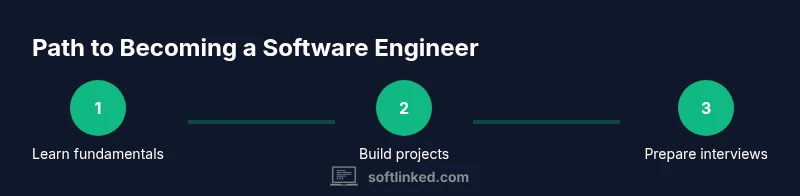
To work as a software engineer, start with strong programming fundamentals, select a practical learning path, and build hands-on projects. Focus on data structures, algorithms, version control, debugging, and collaboration. This guide outlines practical steps—from education choices to portfolio construction and interview prep—designed to help you move from learner to contributing software engineer.
how to work software engineer: why this guide matters
The journey to becoming a software engineer isn't about memorizing a single recipe; it's about building a reliable toolkit you can reuse across projects. How to work software engineer effectively starts with a clear target and a plan you can execute weekly. According to SoftLinked, the most successful learners frame their effort around small, verifiable milestones and regular reflection on what worked and what didn't. This approach helps you move from theory to practice, turning abstract concepts like algorithms and data structures into tangible outcomes. In this guide, you will find a practical blueprint that covers learning paths, project work, collaboration, and interview prep—so you can progress with confidence rather than overwhelm. Whether you're a student, a career switcher, or a curious professional, the goal is to maximize hands-on practice while steadily expanding your theoretical foundation.
Core competencies every software engineer must master
Software engineers need a solid mix of problem-solving, coding, and communication. At the heart are core competencies like programming proficiency in at least one mainstream language, understanding data structures and algorithms, and practical software design principles. You should also be comfortable with version control, debugging, testing, and code reviews. Beyond code, focus on systems thinking, reliability, performance considerations, and maintainability. Finally, collaboration and clear communication are essential to turn ideas into shared software artifacts. SoftLinked emphasizes that proficiency grows fastest when you practice building small, real projects and seek feedback from peers and mentors.
Education paths: formal, informal, and hybrid options
There isn't a single required path to becoming a software engineer. Formal routes such as computer science degrees offer foundational theory, structured mentorship, and recognized credentials. Informal routes—bootcamps, self-study, and online courses—can be equally effective if paired with consistent practice and portfolio work. A hybrid approach combines structured coursework with hands-on projects and OSS contributions. The key is to map learning objectives to concrete outcomes, like a portfolio piece or a live demo, and to set milestones aligned with job-market demands. This section helps you pick a path that fits your schedule, budget, and learning style while keeping your long-term goals in view.
Hands-on projects that accelerate learning
Projects are the fastest way to translate theory into practice. Start with small programs that solve tangible problems, then incrementally increase complexity. Suggested starter projects include a command-line tool, a simple REST API, and a front-end app that consumes an API. Each project should showcase essential skills: clean code, testing, documentation, and version control history. As you progress, tackle more complex systems like a microservice, a database-backed application, or a side project that demonstrates problem-solving at scale. Document choices, trade-offs, and results to create compelling portfolio entries.
Gaining real-world experience: internships and open-source contributions
Real-world experience helps you apply learning to production environments. Internships offer structured exposure to teams, code reviews, and feedback loops. Open-source contributions are another powerful channel to prove you can work in a distributed codebase. SoftLinked Analysis, 2026, shows that internships and OSS contributions correlate with faster job-readiness signals and improved collaboration skills. Start by fixing small issues, then move to meaningful features or documentation enhancements. Communicate clearly about your changes and seek feedback from maintainers to accelerate growth.
Building a standout portfolio: what to include and how to present it
A strong portfolio tells a cohesive story about your abilities and impact. Include a brief bio and a goals statement, followed by 3–6 projects that demonstrate breadth and depth. For each project, describe the problem, your approach, the tech stack, your specific contributions, and measurable outcomes. Provide links to live demos and Git repositories, and include tests, CI setup, and user documentation where possible. A polished portfolio should reflect thoughtful design, consistent naming, and a clean commit history that shows progression and learning.
Resume, LinkedIn, and online presence: polishing your professional brand
Your resume should highlight practical impact over theoretical knowledge. Emphasize projects, internships, OSS contributions, and quantified outcomes. On LinkedIn and GitHub, showcase pinned projects, maintain a concise bio, and post regular updates about learning milestones and code reviews. Build a network by commenting on others’ work, contributing to discussions, and participating in developer communities. A cohesive online presence helps recruiters see your trajectory and commitment to growth.
Interview readiness: coding interviews, design questions, and behavioral fit
Interview preparation blends algorithm practice with system design and soft-skill simulations. Allocate time for daily coding problems, mock interviews, and reviewing past projects. For system design, study scalable architectures, trade-offs, and real-world constraints. Behavioral prep should center on storytelling about teamwork, conflict resolution, and learning from failure. Consistent practice over weeks yields confidence, clarity, and a stronger performance in both technical and non-technical rounds.
Collaboration and team dynamics in software projects
Software engineering is inherently collaborative. Success depends on clear requirements, robust communication, and respectful code reviews. Establish efficient workflows with task boards, pull request guidelines, and regular stand-ups. Learn to give constructive feedback and to listen actively to teammates. Building empathy for designers, product managers, and QA engineers helps you deliver higher-quality software while maintaining a healthy team culture.
Career growth: specialization, leadership, and lifelong learning
As you gain experience, you’ll identify areas to specialize, such as backend, frontend, DevOps, data engineering, or security. Develop leadership skills by mentoring juniors, driving project outcomes, and influencing architectural decisions. Lifelong learning means staying current with tools, languages, and patterns. Set quarterly learning goals, track progress, and revisit your career plan to ensure your path remains aligned with market needs and personal aspirations.
Mindset, routines, and staying resilient as you grow
The most durable software engineers cultivate a growth mindset, consistent practice, and disciplined habits. Establish routines like daily coding time, weekly project reviews, and regular health checks to avoid burnout. Build resilience by seeking feedback, embracing failures as learning opportunities, and maintaining work-life balance. With the right mindset and steady effort, you’ll sustain momentum across changing technologies and teams.
Tools & Materials
- Laptop with IDE installed(A modern setup on Windows/macOS/Linux with a comfortable keyboard)
- Code editor/IDE(Examples: VS Code, JetBrains IDEs)
- Web browser(Chrome/Edge/Firefox for debugging and docs)
- Version control system(Git with a hosting service (GitHub/GitLab/Bitbucket))
- Notes/documentation tool(Notebooks or a note-taking app for decisions and reflections)
Steps
Estimated time: 8-12 weeks
- 1
Define your target software engineering role
Clarify whether you want to be a backend, frontend, full-stack, or specialized engineer. Write down the functional domains you’re most excited about and set a concrete outcome for your first project that aligns with that role.
Tip: Create a 3-month goal with 2 measurable milestones you can show in a portfolio. - 2
Set up your development environment
Install a stable IDE, configure a starter project, and ensure version control is ready. Verify your environment by compiling a small hello-world program and pushing it to a public repo.
Tip: Use a consistent workspace setup across machines to avoid friction during transitions. - 3
Choose a learning path and gather resources
Pick a practical learning track (e.g., algorithm fundamentals, system design basics, and a language stack relevant to your target role). Collect quality resources and commit to a weekly study plan.
Tip: Limit to 2–3 high-quality sources to avoid fragmentation and overwhelm. - 4
Build your first guided project
Complete a guided project that demonstrates end-to-end development: requirements, design, implementation, testing, and documentation. Ensure the project has a public repo and a runnable demo.
Tip: Document decisions and trade-offs you considered during development. - 5
Start a personal project and document progress
Initiate a project aligned with your interests and potential real-world impact. Maintain a changelog, issue tracker, and weekly progress summaries to build a narrative for interviews.
Tip: Publish incremental updates (weekly) to show momentum. - 6
Create a portfolio and publish code
Curate 3–6 projects showing variety and depth. Include problem statements, architecture diagrams, test coverage, and deployment notes. Provide links to live demos and source code.
Tip: Highlight your specific contributions and measurable results in each project. - 7
Practice interview skills regularly
Set aside time for daily coding problems, system-design sketches, and mock interviews. Review solutions and solicit feedback from peers or mentors.
Tip: Record yourself explaining solutions to improve clarity and pace. - 8
Apply strategically and seek feedback
Target roles that align with your portfolio and practice applying with tailored resumes and cover letters. After interviews, request feedback to refine your approach.
Tip: Track applications and feedback to guide future improvements.
Your Questions Answered
What does a software engineer do on a daily basis?
A software engineer designs, implements, tests, and maintains software systems. They collaborate with teammates, review code, fix bugs, and iterate on features based on user feedback and business goals.
Software engineers design, implement, test, and maintain software, collaborating with teammates and responding to feedback.
What education is typically required to become a software engineer?
Many software engineers have a computer science or software engineering degree, but alternatives like bootcamps and self-study with strong portfolios can also qualify you for roles. Employers often favor demonstrated skills over credentials.
A degree helps, but a strong portfolio and practical projects can also open doors.
How long does it take to become proficient?
Proficiency grows with consistent practice over months to years. A focused 3–6 month period can establish a solid foundation, while mastery develops gradually through diverse projects and real-world experience.
Expect several months of steady practice to build solid fundamentals; true mastery takes longer.
Do I need to specialize or can I stay generalist?
Both paths exist. Generalists can contribute broadly across teams, while specialists excel in deeper areas. Your choice should align with interests, market demand, and long-term career goals.
You can start generalist and then specialize as you gain interests and market needs.
Which languages should I start with?
Start with languages popular in your target role (e.g., Python or JavaScript for beginners, plus a systems language like C++ for performance-focused roles). Master one language deeply before expanding to others.
Pick a language aligned with your goals, then deepen mastery before adding more.
How important is a portfolio versus a resume?
A portfolio often speaks louder than a resume for developers, showing real work and impact. The resume should guide recruiters and reference key projects, but the portfolio is where your skills shine.
Your portfolio demonstrates real ability; the resume summarizes it for recruiters.
Watch Video
Top Takeaways
- Define a clear goal and milestone-driven plan
- Prioritize hands-on projects with real impact
- Build a cohesive portfolio and online presence
- Prepare for interviews with steady practice