How to Make a Software Engineer: A Step-by-Step Guide
Learn how to make software engineer skills through a structured plan: fundamentals, practice projects, and interview prep. A SoftLinked guide on learning paths and portfolios.


By following this guide, you’ll learn how to become a software engineer: start with core programming concepts, pick a learning path, and build a portfolio that demonstrates real projects. You’ll need time, dedication, a solid foundation in CS basics, and hands-on practice with modern languages and tools. This practical plan helps you gain skills employers value for entry-level roles.
Why becoming a software engineer matters
In a technology-driven world, software engineers design, build, and maintain the systems behind apps, websites, and devices. If you’re asking how to make software engineer, this path centers on mastering code, learning systems thinking, and delivering reliable software. According to SoftLinked, a fundamentals-first approach accelerates learning by anchoring you in core concepts before chasing flashy frameworks. By focusing on problem solving, you gain transferable skills—debugging, clean design, collaboration—that stay valuable across companies. This guide outlines a practical, step-by-step plan to become a software engineer, not just a coder. It emphasizes building a portfolio, practicing with real data, and preparing for interviews. The goal is to help you gain confidence and traction, whether you aim for startups or established teams.
Core foundations every aspiring software engineer should learn
A strong software engineer starts with fundamentals. Focus on core programming concepts, data structures, and algorithms because they unlock efficient problem solving and scalable design. Build fluency in a language you enjoy (e.g., JavaScript, Python, or Java) and learn the basics of object-oriented and functional paradigms. Understand how computers run code, what a database is, and how networks enable communication. Practice debugging, testing, and refactoring to keep code maintainable. Version control with Git is essential for collaboration and tracking changes. As you progress, begin to connect concepts with small projects to reinforce memory and see how ideas apply in real-world software.
Educational paths and how to choose one
There are multiple routes to become a software engineer. A traditional computer science degree provides depth and recognition, but bootcamps, MOOCs, and self-directed study can also prepare you well if paired with hands-on projects. Consider your learning style, time availability, and career goals. The SoftLinked team notes that practical projects and consistent practice often outperform theory alone, especially for beginners. Whichever path you choose, schedule steady study blocks, seek feedback, and track progress to ensure you are learning how to make software engineer skills effectively.
Practical learning plan: 0-12 month roadmap
Begin with a solid foundation in programming, then progressively build projects that demonstrate you can ship code. Start by learning one language thoroughly, then expand to data structures, algorithms, and version control. Create small projects weekly, increasing complexity as you grow. Integrate debugging, testing, and documentation early. In the middle months, contribute to open-source or collaborate with peers to simulate real-world teamwork. Finally, assemble a portfolio that showcases a mix of personal projects, code samples, and a clear narrative of your learning journey. This roadmap embodies the essence of how to make software engineer skills tangible and portfolio-ready.
Building a compelling portfolio and resume
A strong portfolio is your best advocate. Include several projects that show problem-solving, code quality, and usability. Describe the problem, your approach, the tech stack, and outcomes with concrete results or metrics where possible. Host code on GitHub and deploy live demos when feasible. Your resume should highlight relevant projects, languages, tools, and any internships or collaboration experiences. Craft concise bullet points that quantify impact (e.g., reduced load times, improved reliability) and tailor them to each job you apply for. A well-crafted portfolio is central to turning learning into a career, especially for entry-level roles.
Gaining real-world experience: internships, open source, freelancing
Formal internships aren’t the only path to experience. Contributing to open-source projects helps you learn collaboration, reviews, and project maintenance. Look for beginner-friendly issues to build confidence while expanding your network. Freelancing or paid undergrad projects can provide client-facing experience and a real deadline. Build a small freelancing portfolio tied to your strongest skills and keep a log of your contributions. The blend of practical work and learning is crucial for progressing from a student mindset to a confident software engineer.
Mastering interview prep for software engineering roles
Interview prep blends coding, system design basics, and behavioral questions. Practice common algorithm problems to improve problem-solving speed, then study data structures and complexity trade-offs. Learn to design simple systems, think aloud, and justify architectural choices. Prepare portfolio anecdotes that illustrate collaboration and impact. Beyond technical competence, refine communication skills, ask thoughtful questions, and demonstrate a growth mindset. This balanced preparation is a key driver in making you a compelling candidate for software engineering roles.
Tools, languages, and best practices to stay current
Stay current by focusing on a core set of languages (such as Python or JavaScript) while exploring another language periodically. Use Git for version control, continuous integration basics, and testing frameworks to ensure robust code. Practice clean coding, documentation, and unit tests. Leverage online communities, official docs, and reputable curricula to guide continued learning. A consistent habit of applying new knowledge to real projects helps ensure you’re always improving as a software engineer.
Common pitfalls and how to avoid them
Avoid common traps like chasing the newest framework without mastering fundamentals, neglecting debugging discipline, or neglecting a portfolio. Don’t skip the basics of data structures and algorithms; they underpin many interview questions. Start with small, achievable projects to build confidence, then gradually increase complexity. Maintain a steady study routine, seek feedback, and avoid burnout by setting realistic goals and taking breaks when needed.
Tools & Materials
- Laptop or desktop computer(Reliable hardware; comfortable keyboard; stable internet)
- Code editor (e.g., VS Code)(Install language support extensions and linters)
- Git and GitHub account(Essential for version control and collaboration)
- Programming language environment (e.g., Python/JavaScript)(Set up runtime, package manager, and sample projects)
- Online learning subscriptions / books(Optional but helpful for structured guidance)
- Portfolio hosting (GitHub Pages, Netlify)(To showcase projects and demos)
Steps
Estimated time: 6-12 months
- 1
Define learning goals
Clarify which software engineering path you want (web, mobile, systems, AI). Set measurable milestones and a realistic timeline to stay motivated.
Tip: Write your goals down and review them weekly to stay accountable. - 2
Learn core programming concepts
Choose a language and master syntax, control structures, functions, and basic data types. Practice small problems to reinforce concepts.
Tip: Use daily coding drills to build mental fluency. - 3
Master data structures & algorithms
Study arrays, linked lists, stacks, queues, trees, graphs, and common algorithms. Focus on problem-solving patterns rather than memorization.
Tip: Annotate solutions with time and space trade-offs. - 4
Start building projects
Apply what you learn by building real projects. Start small, then iterate with new features and improvements.
Tip: Document your process and decisions in README files. - 5
Learn version control
Use Git to track changes, branches, and collaborative workflows. Practice pulling, merging, and resolving conflicts.
Tip: Commit frequently with meaningful messages. - 6
Prepare a portfolio
curate a portfolio with 3-6 projects that demonstrate breadth and depth. Include a short narrative for each project.
Tip: Highlight problems solved and results achieved. - 7
Gain real-world experience
Seek internships, open-source contributions, or freelance work to apply skills in a team setting.
Tip: Ask for code reviews to accelerate learning. - 8
Ace interviews
Practice coding challenges, review system design basics, and prepare behavioral stories that show collaboration and resilience.
Tip: Explain your reasoning aloud during practice interviews.
Your Questions Answered
What is the fastest path to becoming a software engineer?
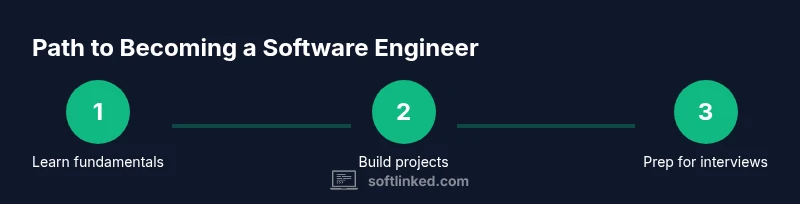
There is no single fastest path. A structured plan that combines fundamentals, practical projects, and interview practice typically yields steady progress. Choose a path that fits your learning style and commit to consistent practice.
There isn't one fastest route, but consistent practice with fundamentals and projects speeds things up.
Do I need a computer science degree to become a software engineer?
A CS degree helps some roles, but many engineers succeed via bootcamps, online courses, and self-study when paired with a strong portfolio and real projects. Employers increasingly value demonstrable skills over credentials alone.
A degree can help, but a strong portfolio often matters more for many roles.
What should be in a software engineer portfolio?
Show 3-6 projects that demonstrate problem solving, code quality, and real-world usefulness. Include brief descriptions, tech stack, and links to the live app and source code.
Include a few solid projects with clear descriptions and links to code and demos.
How important are algorithms and data structures?
Algorithms and data structures form the backbone of problem solving in interviews and real work. Invest time building intuition and ability to apply patterns to new problems.
Algorithms are essential for interviews and core problem solving.
Is freelancing a viable way to start?
Freelancing can jumpstart practical experience and client-facing skills, but it may be isolating. Start with small gigs, build your portfolio, and seek mentorship to stay on track.
Yes, freelancing can help build experience, but pair it with learning and mentorship.
Watch Video
Top Takeaways
- Define a clear path toward software engineering.
- Balance theory with practical projects.
- Build a portfolio that tells a story of growth.
- Practice interview skills alongside coding.
- Iterate and seek feedback regularly.