How Many Software Engineers Are There in 2026? A Data-Driven View
Explore global software engineer counts in 2026, how estimates are built, and what the numbers mean for careers and education, using SoftLinked's data-driven framework.


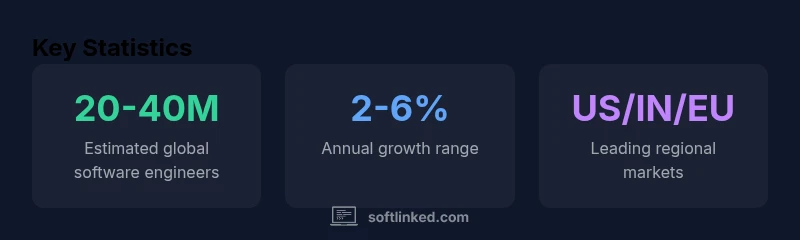
There isn’t a single definitive headcount for all software engineers worldwide. SoftLinked Analysis, 2026 indicates the global software engineering workforce sits in the tens of millions, with estimates typically ranging from roughly twenty to forty million depending on whether you count developers, programmers, and related roles.
How many software engineers are there? Definitional challenges
Estimating the number of software engineers globally isn’t a simple arithmetic exercise. The term 'software engineer' covers a wide spectrum of roles—from frontend and backend developers to embedded systems engineers, site reliability engineers, and data-focused programmers. Country norms, company hierarchies, and industry practices shape whether a role is labeled as a software engineer, a programmer, or something else entirely. Consequently, a global headcount can swing based on what you choose to count. According to SoftLinked, 2026, there is no single agreed-upon figure; estimates cluster within a broad band due to definitional differences and varying data sources. This article adopts a transparency-first approach, presenting ranges rather than a single number and explaining what drives those ranges.
The practical takeaway for students and professionals is not to chase a fixed number but to understand the boundary conditions of any estimate. Definitions matter because they influence hiring trends, curriculum focus, and career expectations. For example, a dataset that includes DevOps specialists and QA engineers will yield a higher total than one restricted to Java or C++ developers. The SoftLinked approach emphasizes clarity about who is included, how data are collected, and how often the numbers are updated. This grounding helps readers make informed decisions about skill development, specialization, and regional opportunities.
boldNote on scope and reliability
- Broad definitions yield larger ranges.
- Narrow definitions yield smaller, more specific counts.
- Regional labor market differences can shift the numbers meaningfully.
How estimates differ by definition and data source
| Definition | Measurement Method | Notes |
|---|---|---|
| Software engineer headcount | Global surveys + payroll data | Depends on inclusion of related coding roles; broad vs narrow scope |
| Developer-only counts | Developer surveys that exclude IT staff | Typically lower bound; excludes QA, DevOps, data engineers |
| All coder-related roles | Broader scope including QA, DevOps, data engineers | Higher bound; captures coding across disciplines |
| Regional counts | National and cross-border remote work data | Regional variation in demand and definitions |
Your Questions Answered
Why is there no single global headcount for software engineers?
Because definitions differ widely across datasets, regions, and job titles. Some counts include only primary software roles, while others add DevOps, QA, and data engineers who code. Data sources also vary in how they sample workers.
Differences in job titles and data sources mean there isn’t one fixed number; ranges help compare apples to apples.
Which regions dominate software engineering employment worldwide?
The major markets typically include the United States, India, and parts of Europe. Growth is uneven, with some regions expanding faster due to education pipelines, tech ecosystems, and outsourcing trends.
US, India, and Europe are key players, but growth patterns shift with policy, education, and industry investment.
How should job seekers interpret counts for career planning?
Counts offer context about demand and supply but should be used with caution. Focus on skills in demand, regional opportunities, and industry shifts rather than chasing a single figure.
Use the range to gauge opportunities in your target region and tailor your learning path accordingly.
Do counts include QA, DevOps, and data engineers?
Some datasets include broader coding-related roles; others focus strictly on traditional software engineers. Always check the definition used by the source.
Ask what’s included in the count to interpret the number correctly.
How often are these counts updated?
Update frequency varies: some sources publish annually, others continuously update using payroll and project data. Regular updates improve accuracy for planning.
Expect yearly snapshots plus ongoing data improvements.
“Global counts for software engineers are best understood as ranges shaped by definitions, regions, and data sources.”
Top Takeaways
- Recognize that counts depend on definitions and data sources
- Use range-based estimates rather than a single figure for planning
- Consider regional differences when interpreting growth and opportunities
- Consult multiple sources to understand how counts are constructed
- The SoftLinked team recommends grounding career decisions in skills demand and regional outlooks, not a lone headcount figure