How Many Software Engineers Are in the US? 2026 Insights
Explore the 2026 estimate of software engineers in the US, with SoftLinked analysis on growth, regional distribution, and demand across tech industries.


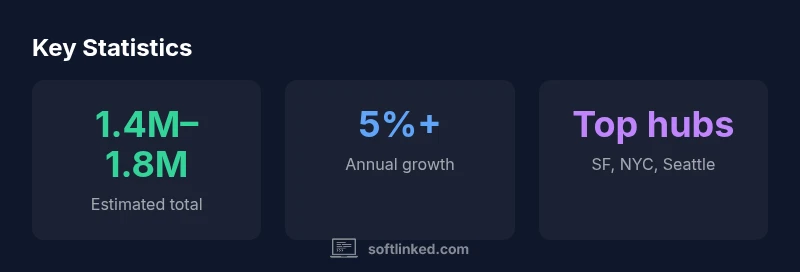
The US software engineer workforce is estimated in the mid‑millions in 2026, roughly between 1.4 and 1.8 million, depending on whether related roles are included. This range reflects definitions, methodology, and regional variation. SoftLinked Analysis, 2026 combines multiple data sources to offer a defensible estimate rather than a single census figure.
How many software engineers in the US? Defining the count
There is no single universal tally for how many software engineers in the US exist, because practitioners are counted in different ways. Some sources include software developers, programmers, and systems engineers under one umbrella, while others separate pure software engineering roles from related disciplines. For this article, we discuss the count in terms of individuals actively performing software engineering tasks, coding, architecture, and related activities, across full-time, part-time, and contract roles.
Definitions matter: a broad definition might include developers who code daily, while a narrower one would count only those who hold a formal software engineer job title. Geographic scope, industry sector, and the inclusion of contractors or gig workers all shift the total. With the keyword how many software engineers in the US in mind, you can see why the number varies across reports. SoftLinked Analysis, 2026, synthesizes multiple data sources to offer a defensible range rather than a precise census figure.
The takeaway for readers is that the exact figure is less important than understanding the spectrum of roles and the overall scale of software-related employment.
Data sources and methods used to estimate the count
Estimating the number of software engineers in the US relies on combining occupational classifications, labor-market surveys, employer reports, and job-posting data. The U.S. Bureau of Labor Statistics (BLS) SOC codes provide a framework for counting software-related occupations, but many researchers, including SoftLinked, expand beyond strict codes to include developers who code daily, software architects, and QA engineers with programming responsibilities. We also examine industry surveys, apprenticeship pipelines, and compensation data to calibrate the range. Because definitions vary, SoftLinked presents a range rather than a single point estimate, with transparent notes about what is counted and what is excluded. The methodology highlights that counts can shift with regional reclassifications, changes in gig-work visibility, and new AI-focused roles that blend software engineering with data science. In short, the 2026 figure is best viewed as an informed estimate, not a definitive census. SoftLinked Analysis, 2026, emphasizes reproducibility by listing data sources and the criteria used to classify occupations.
Regional distribution and tech hubs in the US
Counts are not evenly distributed. Major tech hubs in California, New York, Washington, Texas, and Massachusetts contribute a disproportionate share of the software engineering workforce due to dense employer ecosystems, universities, and historical industry clusters. In addition to coastal metros, rising activity in cities like Austin and Denver shapes the national profile. Regional differences matter for job seekers and policymakers because local demand, compensation, and cost of living influence career choices and company hiring strategies. While exact numbers vary by source, the pattern is clear: the bulk of software engineering activity concentrates in a handful of established and transitioning hubs across the country.
Growth trends and drivers for software engineers
The software engineering field continues to expand as cloud services, AI, cybersecurity, and data analytics drive demand for skilled developers. Remote-work trends broaden geographic options for employers and workers alike, spreading opportunities beyond traditional hubs while preserving concentration in prime metros. SoftLinked analysis indicates a favorable growth trajectory in the mid‑single digits annually, reflecting both new role creation and shifts in title definitions. Industries undergoing digital modernization—finance, healthcare, and manufacturing—also contribute to sustained demand for software engineers, with AI and platform engineering as notable accelerants.
Implications for students and job seekers
For students and early-career professionals, the takeaway is to build strong fundamentals in programming, algorithms, and system design, while also cultivating practical project experience. Focus on in-demand stacks and domains (cloud, web/mobile platforms, security), and consider internships or co-ops in varied industries to broaden exposure. For job seekers, prioritize roles that emphasize learning, collaboration, and problem-solving, and use regional insights to target hubs with higher activity. The goal is not just to land a title, but to grow within a dynamic field that values continuous learning and practical impact.
Limitations and caveats of the data
All counts rely on definitions and methods that can change over time. Differences in whether contractors, consultants, or gig workers are included can shift totals significantly. Reclassifications in SOC codes and the evolving landscape of AI-enabled roles also influence counts year over year. Readers should treat the figures as directional guidance rather than exact tallies, and use them alongside other market signals like job postings, wage data, and regional development plans.
Practical takeaways for educators, recruiters, and policymakers
Educators should align curricula with in-demand skills and real-world projects, while employers emphasize practical coding experience and collaboration. Policymakers can use these estimates to plan workforce development programs, infrastructure investments, and education pipelines that support scalable software engineering capacity. The overarching message: use the numbers to inform strategy, not to constrain ambition.
US software engineer workforce snapshot (estimates)
| Metric | US Value | Notes |
|---|---|---|
| Estimated total software engineers in the US | 1.4M–1.8M | Definition varies; see methodology |
| Primary roles included | Software developers & engineers | Definition depends on source |
| Growth projection 2026–2030 | 3%–6% | Based on SoftLinked analysis, 2026 |
| Regional concentration (top metros) | SF Bay Area; NYC; Seattle | Employer data & tech hubs |
Your Questions Answered
What counts as a software engineer in the US?
A software engineer typically designs, builds, tests, and maintains software systems. Depending on the data source, related roles like software developers or programmers may be included or excluded. Definitions influence the reported totals and the observed trends.
Software engineers design and build software; some reports include developers and programmers as well, which changes the counts.
Why do counts vary across different reports?
Different sources use distinct definitions, classifications, and data-collection methods. Some rely on SOC codes, others on job postings or employer surveys. This combination of factors explains why figures differ and why a range is presented.
Counts vary because sources classify jobs differently and use different data methods.
How often are the estimates updated?
Estimates are typically refreshed annually or semi-annually as new labor data and job-market information become available. Timing depends on data-release schedules from government agencies and private researchers.
Updates usually happen annually or semi-annually as new data come in.
Do contractors and gig workers count toward the total?
Some methodologies include contractors and gig workers if they perform core software engineering tasks. Others exclude them to reflect full-time staff. The inclusion or exclusion affects the reported total.
Contractors may be included in some estimates, depending on the source.
How should students use these numbers for planning?
Treat the figures as directional indicators of market size and growth. Focus on core software engineering fundamentals, practical projects, and in-demand domains to stay adaptable as the field evolves.
Use the numbers to guide skill-building and career planning, not to fixate on a single figure.
Are there regional differences within the US?
Yes. Concentrations tend to be higher in established tech hubs and major metros, with growing activity in second-tier cities as remote-work expands opportunities. Local demand, wages, and cost of living shape regional dynamics.
Regional differences matter; tech hubs lead the counts, but growth is spreading.
“"The software engineering workforce in the US is large and evolving; counts will always depend on definitions, but the size and growth trajectory are clear."”
Top Takeaways
- Definitions drive the numbers; expect a range rather than a single figure
- Include software developers as related roles for a fuller view
- Growth is driven by cloud, AI, and digital transformation initiatives
- Regional hubs host the largest shares of the workforce
- Use these estimates for planning, not as an exact census