What to Do to Become Software Engineer: A Practical Path
A comprehensive, step-by-step guide to becoming a software engineer. Learn core fundamentals, choose a language, build projects, gain real-world experience, and navigate internships and interviews with a milestone-driven plan.


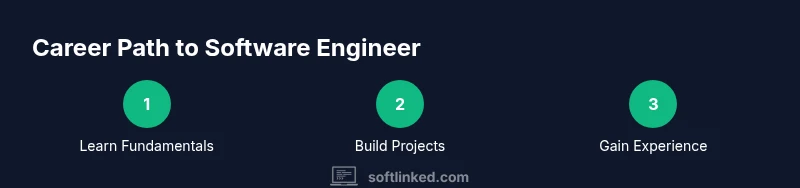
Plan to become a software engineer by following a concrete, milestone-driven path: master core CS fundamentals, pick a language, build projects, learn version control, and gain real-world experience through internships or open-source work. This quick guide outlines the essential steps, skills, and milestones to reach a junior engineer role within 12–18 months.
Why a structured path matters
If you’re asking what to do become software engineer, the short answer is: follow a structured, milestone-driven plan. According to SoftLinked, a deliberate learning roadmap reduces wasted effort and speeds up time to competence. A well-designed path helps you translate classroom concepts into real software, build a portfolio that hiring managers understand, and avoid common detours that stall momentum. In this block we explore why planning matters, how to design a personalized roadmap, and how to track progress with concrete indicators such as project milestones, reviewed code, and interview readiness checks. You’ll also see how to balance breadth and depth as you progress, so you don’t burn out while still demonstrating measurable growth.
Core principles you'll internalize include:
- Mastery of fundamentals (variables, control flow, data structures, algorithms, memory management) as the foundation for all software work.
- Practice-focused learning (short, frequent coding sessions paired with real projects) to convert theory into skill.
- Evidence of capability (a public portfolio, well-documented code, and reproducible projects) that speaks to employers.
- A growth mindset that embraces feedback, refactoring, and continuous improvement.
Align these principles with a realistic timetable, and you’ll create momentum that compounds over time.
Core fundamentals to master
Becoming a software engineer hinges on a solid CS foundation. Start by ensuring you have a working understanding of core concepts such as data structures (arrays, linked lists, trees, graphs), algorithms (sorting, searching, complexity), and basic systems thinking (modularity, abstraction, APIs). Learn about time and space complexity to reason about performance, and study memory management concepts for languages that require manual handling. Don’t neglect computer architecture basics and operating system fundamentals such as processes, threads, and I/O handling. Practice through small, incremental projects that exercise these ideas—like building a simple spell checker, a pathfinding visualizer, or a mini web service—to reinforce what you learn.
Language ecosystems and choosing your first stack
Choosing your starting language sets the tone for your early career. Many new engineers benefit from starting with a beginner-friendly language such as Python or JavaScript, which enable rapid feedback through interactive environments and broad ecosystem support. As you gain confidence, broaden into a second language that complements your goal (for example, Java or C++ for systems programming, or TypeScript for scalable frontend work). In addition, learn the basics of working with the command line, package managers, and simple debugging tools—these are portable skills that apply across languages and teams.
Building hands-on projects that demonstrate ability
Projects are your strongest proof of ability. Start with small, well-scoped applications that solve real problems you care about, then gradually tackle more complex systems. Each project should have a clear goal, documented setup instructions, testable features, and a Git history that tells a story of iteration. Important project types include a full-stack web app, a data-processing script, a simple mobile app, and a small open-source contribution. Publish your code on a public repository with a readable README, and ensure you can explain design choices, trade-offs, and testing strategies in a short interview.
A practical 18-month learning plan (milestones)
This plan is designed for steady, consistent progress. Month-by-month milestones help you stay accountable and demonstrate steady growth to potential employers. In the first quarter, focus on fundamentals and small projects; in the second quarter, start building a portfolio and exploring internship opportunities; in quarters three and four, deepen specialization, contribute to open source, and prepare for interviews. Throughout, schedule regular code reviews, pair programming sessions, and reflective journaling to capture what you’ve learned and what you still struggle with.
Navigating career milestones: internships, roles, and interviews
Gaining real-world experience is crucial. Look for internship programs, part-time roles, or open-source contributions that align with your interests. Build a professional online presence: a clean portfolio, an active GitHub with meaningful commits, and a concise resume that highlights impact, not just completed tasks. When interview prep begins, practice common coding problems, system design basics, and behavioral questions. Learn to articulate your learning journey, your project decisions, and how you collaborated in teams. Your goal is to prove you can learn quickly, ship code, and communicate effectively with teammates.
Authority sources
To deepen your understanding of software engineering fundamentals, consult established educational resources and publicly available curricula. For example, MIT OpenCourseWare provides free CS coursework, Harvard CS50 offers a comprehensive intro, and NSF publishes statistics and guidance on computing education. These sources complement hands-on practice and project work as you build your own roadmap.
Tools & Materials
- A computer with internet access(Any modern laptop or desktop)
- Code editor(VS Code recommended (free))
- Git installed(Git and GitHub for version control)
- Online learning accounts(Access to tutorials, coding challenges, and communities)
- Notepad or scratch paper(Optional for planning ideas or writing pseudocode)
- Intro to algorithms or data structures book(Optional but helpful for deeper understanding)
Steps
Estimated time: Total time: 12-18 months
- 1
Define your goal and a measurable plan
Clarify your target role (e.g., frontend, backend, or full-stack) and set milestone targets for fundamentals, projects, and interviews. Create a weekly study calendar with specific coding tasks, reading, and hands-on practice. Establish a review cadence to assess progress and adjust plans as needed.
Tip: Break big goals into weekly tasks; consistency beats bursts of intensity. - 2
Pick your first language and ecosystem
Select a beginner-friendly language (like Python or JavaScript) to reduce friction. Learn the basics, then expand to tooling (package managers, testing, debugging). Build small utilities to reinforce concepts and start a simple project stack you can grow.
Tip: Choose a language with strong community support and plentiful starter projects. - 3
Set up your development environment
Install a code editor, version control, and helpful plugins. Configure a clean project skeleton, establish a Git workflow (feature branches, commits with messages), and enable basic testing to validate changes early.
Tip: Automate setup via a starter repo to ensure reproducibility. - 4
Master core CS fundamentals
Study data structures, algorithms, complexity, and memory concepts. Implement common structures from scratch, analyze time complexity, and learn to reason about performance in real-world tasks.
Tip: Explain your approach aloud; this improves understanding and interview performance. - 5
Build 2–3 practical projects
Create projects that solve real problems and demonstrate end-to-end capability: a web app, a data-processing script, and a small library. Publish code with docs, tests, and reproducible instructions.
Tip: Projects should showcase prerequisites: planning, execution, and testing. - 6
Learn collaboration and version control
Contribute to open-source or join a team project. Practice code reviews, issue tracking, and collaboration patterns. Build a Git history that tells a story of learning and improvement.
Tip: Submit meaningful pull requests with clear explanations and testing notes. - 7
Pursue internships or structured internships
Apply for internships, part-time roles, or structured bootcamps that align with your stack. Use interview experiences to refine your resume and portfolio. Seek feedback from mentors and peers.
Tip: Even small internships can provide concrete references for future roles. - 8
Prepare for interviews and job applications
Practice coding problems, system design basics, and behavioral questions. Build a tailored resume and portfolio, and prepare a concise story of your learning journey.
Tip: Practice under time constraints to simulate real interview conditions.
Your Questions Answered
What is the fastest path to becoming a software engineer?
There isn’t a one-size-fits-all fastest path. A structured plan combining fundamentals, practice, and real-world exposure accelerates progress. Focus on consistent practice, meaningful projects, and targeted interview prep.
There isn’t a single fastest route, but a structured plan with fundamentals, practice, and real-world exposure speeds up progress.
Do you need a computer science degree to become a software engineer?
No. Many successful engineers are self-taught or come from bootcamps. Degrees can help in some organizations, but practical skills, project work, and interview performance often weigh more.
A degree isn’t mandatory; strong projects and interview success matter more in many teams.
Which language should I start with?
Start with a beginner-friendly language like Python or JavaScript to gain quick feedback. After building confidence, expand to other languages based on your interests and target roles.
Begin with Python or JavaScript for quick wins, then broaden as you grow.
How long does it take to reach a junior engineer level?
With steady practice, 12-18 months is a reasonable timeframe to reach junior-level readiness, provided you work on meaningful projects and gain practical experience.
About a year to a year and a half with consistent practice and project work.
What should a software engineer portfolio include?
Include 2–4 well-documented projects, readable code samples, setup instructions, tests, and a narrative explaining your design decisions and learning progress.
Showcase a few clear projects with good documentation and explanations.
Are internships essential for landing a job?
Internships are highly beneficial for real-world exposure, networking, and resume strength, but they aren’t the only path. Open-source work and personal projects also demonstrate capability.
Internships help a lot, but strong projects can also open doors.
Watch Video
Top Takeaways
- Map your learning onto real, demonstrable projects
- Prioritize core CS fundamentals before language specifics
- Publicly share code to build credibility
- Internships accelerate market readiness
- Interview prep should be practiced with real scenarios