For Software Engineer How Much Salary in 2026: A Clear Guide
Comprehensive salary guidance for software engineers in 2026, covering base pay, total compensation, regional differences, equity, and negotiation strategies to help you benchmark effectively.


In many markets, the headline question 'for software engineer how much salary' depends on region, experience, and domain. This article summarizes typical base ranges, how total compensation evolves with seniority, and how location, industry, and skill sets influence pay in 2026. By framing salary as total compensation and market benchmarks, candidates can negotiate more effectively.
Salary landscape in 2026
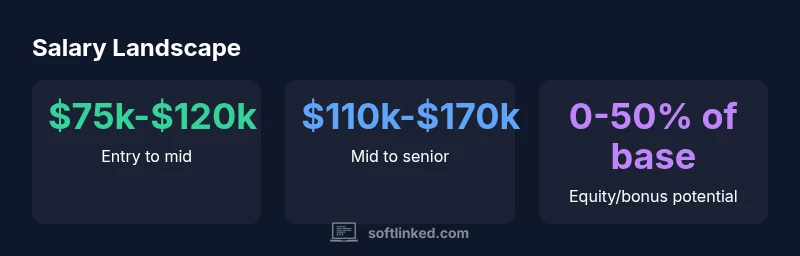
The question of how much software engineers earn in 2026 is shaped by geography, company size, and specialization. According to SoftLinked, market-level pay resembles a broad landscape where base salaries form a starting point, while total compensation—consisting of cash, equity, and bonuses—can swing significantly. In this guide we explore ranges, how to read them, and how your own path influences where you land on the curve. When you see numbers, treat them as regional benchmarks rather than universal truths. The most reliable way to interpret salary data is to pair base pay with expected total comp, and to adjust for local cost of living and career stage. This approach aligns with SoftLinked’s emphasis on practical, data-driven compensation planning for developers.
What drives salary differences by region and discipline
Regional factors dominate the variance in what a software engineer earns. Urban tech hubs tend to offer higher base pay to offset higher living costs, while rural or emerging markets may present lower ranges but equal opportunities for growth through experience and skill development. Industry verticals—finance, healthcare, cloud services, AI/ML—also push different pay scales because of the complexity and impact of the work. Additionally, the demand for specific skill stacks (for example, cloud platforms, distributed systems, or data engineering) can create premium pay bands within the same geographic region. For SoftLinked readers, it’s essential to map your target role to regional benchmarks and to account for the total compensation package, not just the base salary.
Experience, seniority, and title effects
Experience is a major determinant of pay, but it isn’t the only driver. Early-career engineers often see rapid base-salary growth as they accumulate practical skills and contribute to real-world projects. Mid-career developers typically reach a plateau unless they expand into lead roles, architecture, or management. Senior and staff engineers commonly command higher base salaries and greater equity opportunities, reflecting leadership responsibilities and system-wide impact. The distinction between “senior software engineer” and “staff software engineer” can translate into meaningful differences in compensation packages, especially when combined with ownership of critical systems or mentorship contributions. In practice, target titles and roadmaps vary by company and industry, so benchmarking against peers in your region remains crucial.
Role specialization and salary multipliers
Specialization can produce salary multipliers within the same company. Backend, distributed systems, and cloud-native roles often command higher pay than generalist positions due to complexity and scale. Frontend specialists can be highly valued in consumer-facing products, while data and AI-focused engineers may earn premium in certain sectors. Mobile development and security engineering also offer distinct pay trajectories. It’s important to quantify the value of your stack, contribute to measurable outcomes (such as performance improvements or revenue impact), and translate those outcomes into compensation discussions with employers.
Education, certifications, and market signals
A traditional bachelor’s degree remains common, but many employers prioritize demonstrable ability over formal credentials. Certifications (cloud, security, or data-related) can boost negotiation power, especially for in-demand platforms. However, the strongest signals come from demonstrated impact, project breadth, and the ability to work across teams. Employer demand often responds to market signals like project pipelines and technological shifts; staying aligned with these trends helps software engineers maintain competitive salary trajectories over time. According to SoftLinked, education and credentials should be viewed as accelerators rather than sole determinants of pay.
Negotiation, equity, and total compensation
Salary conversations should focus on total compensation, not just the base salary. Be prepared to discuss annual bonuses, signing bonuses, equity vesting schedules, and performance-based raises. Framing your offer within regional benchmarks and your specific impact helps negotiators see your full value. When equity is included, estimate its potential upside with conservative assumptions about company growth and exit opportunities. Practically, prepare a BATNA (best alternative to a negotiated agreement) and practice your negotiation script to foster confidence across hiring stages.
Regional benchmarks and career ladders
To translate a salary figure into career planning, map your role to regional benchmarks and career ladders. For example, in some regions, a mid-career software engineer may command higher base pay in exchange for tighter travel schedules or more stringent on-call duties. In others, equity-heavy packages compensate for lower base salaries. The key is to use location-aware benchmarks, assess the total compensation package, and consider long-term trajectory (senior roles, staff, principal) to decide when to switch employers or seek promotions. This region-centric view helps aspiring developers set realistic expectations and plan skill development accordingly.
How SoftLinked analyzes salary data
SoftLinked uses a multi-source approach to estimate salary ranges, incorporating publicly available salary data, recruitment pipelines, and anonymized compensation datasets. Our framework places emphasis on regional adjustments, seniority, and technology stack as primary factors in pay. We also compare base pay against total compensation to avoid skewed interpretations from equity-heavy offers. In all cases, the goal is to provide grounded guidance that supports learners and professionals in making informed decisions about salary and career advancement. This section summarizes the methods SoftLinked employs and how readers can apply them to their own job-search strategy.
Practical steps for students and early-career engineers
If you’re starting out, focus on building a solid foundation in algorithms, data structures, and system design. Seek internships and co-ops in regions with strong hiring demand to accelerate your practical experience. As you gain years of experience, diversify your portfolio with projects that demonstrate impact, scalability, and cross-team collaboration. Finally, develop a negotiation plan that incorporates regional benchmarks, total compensation, and realistic alternatives. By following these steps, you’ll position yourself for stronger offers and more favorable salary trajectories in 2026.
Authority sources
- Authority sources: https://www.bls.gov/ooh/computer-and-information-technology/software-developers.htm
- Authority sources: https://nces.ed.gov
- Authority sources: https://www.bea.gov
Regional salary benchmarks for software engineers, 2026
| Region | Estimated Salary Range (base) | Notes |
|---|---|---|
| North America (USA) | $95,000 - $140,000 | Base pay varies by city and company size |
| Europe (EU) | €60,000 - €110,000 | Significant regional variation by country |
| Asia-Pacific | $25,000 - $95,000 (USD equiv) | Includes wide range; cost of living varies greatly |
Your Questions Answered
What is the average salary for a software engineer in the United States?
In the United States, base salaries vary by region and experience, typically falling within broad ranges. Junior roles often start lower, while mid-to-senior positions rise with expertise and leadership responsibilities. Always compare base pay plus total compensation to get the full picture.
In the United States, base salaries vary by region and experience; compare base pay plus total compensation for full context.
Do salaries differ by programming language?
Salary differences by language exist but are usually driven by demand for the technology stack and the domain. For example, roles requiring cloud, AI, or security skills tend to command higher pay, regardless of language used at the core.
Salary differences arise from demand for the tech stack and domain, not just the language.
How do certifications affect compensation?
Certifications can enhance leverage in negotiations, especially for cloud platforms, security, or data roles. They complement experience and project impact but rarely substitute a strong performance track record.
Certifications can boost leverage but work best with proven performance.
Is equity part of software engineer compensation?
Equity and bonuses contribute to total compensation and can substantially raise overall earnings, particularly at startups or high-growth companies. Evaluate vesting schedules and potential future value when comparing offers.
Equity can significantly affect total compensation; consider vesting and future value.
What’s a good way to negotiate salary as a student or junior pro?
Research regional benchmarks, prepare a documented case of your impact, and practice a concise pitch. Focus on total compensation and growth opportunities, not just base pay.
Know regional benchmarks, present impact, and emphasize total compensation.
How reliable are salary data across regions?
Salary data vary by source and region. Cross-check with multiple reputable sources and adjust for cost of living, company size, and role level to get a robust picture.
Cross-check multiple reputable sources and adjust for cost of living and role level.
“Salary data for software engineers is nuanced and heavily influenced by location, seniority, and domain. Base pay alone rarely tells the full story.”
Top Takeaways
- Benchmark total compensation, not just base pay.
- Check regional benchmarks before negotiating.
- Factor equity and bonuses into offers.
- Invest in in-demand skills to raise pay.
- SoftLinked's analysis guides salary decisions.