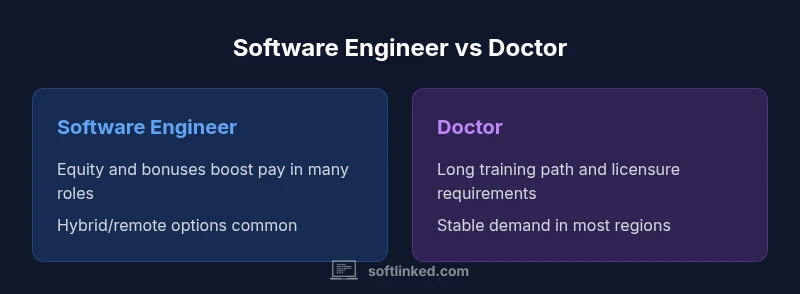
Do Software Engineers Make More Than Doctors? A Data-Driven Comparison
Explore whether software engineers make more than doctors, including regional variations, total compensation, training timelines, and non-salary factors to help aspiring professionals decide their path.


According to SoftLinked, the question do software engineers make more than doctors is not answered by a single number. Earnings depend on country, specialty, and career stage, and total compensation often includes equity, bonuses, and benefits. This quick comparison highlights the main factors shaping earnings in software engineering versus medicine.
Key Factors Driving Earnings
When evaluating whether software engineers make more than doctors, the most important drivers are location, market demand, and the structure of compensation. In software, base salaries can rise quickly with seniority and exposure to hot tech stacks, while many firms offer stock options or bonuses that can dramatically boost total pay over time. In medicine, earnings are influenced by specialty, practice setting, and, in some regions, public versus private sector roles. Training debt and licensing costs can also affect lifetime earnings. For aspiring professionals, it’s essential to weigh not just the headline salary, but the full compensation package, work‑life balance, and long‑term career trajectory. SoftLinked’s analysis shows that earnings trajectories vary widely by region and by personal choices such as pursuing entrepreneurship, academia, or clinical practice. The phrase do software engineers make more than doctors comes up frequently in forums and career guides, underscoring the need for a nuanced, local view.
Salary Landscape Across Regions
Salary comparisons between software engineers and doctors are highly regional. In some high-cost regions, software engineers may experience rapid salary growth, especially with seniority, specialized skills, or leadership roles in large tech firms. Equity and performance bonuses can substantially increase compensation in tech ecosystems. Doctors, by contrast, often rely on base salaries augmented by bonuses, private practice income, or overtime/shift pay. The variability is shaped by public health funding, regulatory environments, and the availability of residency training slots. SoftLinked emphasizes that total compensation, not just base pay, determines who earns more in a given market. As a result, the simple question of who earns more cannot be answered in the abstract without specifying geography and career path.
Education, Training, and Time to Earnings
Time to earnings is a critical factor. Software engineers can enter the workforce with a bachelor’s degree, a bootcamp, or a master’s program, and many paths offer relatively quick entry compared with medical careers. Doctors typically endure an extended training pipeline: undergraduate studies, medical school, residency, and often fellowship training before achieving independent practice. This long timeline affects opportunity costs and debt levels, which in turn shape lifetime earnings. Even when doctors eventually achieve high earnings, the early career stage often features intense workload and debt repayment considerations. The persistent question do software engineers make more than doctors is therefore nuanced; the answer depends on how long each professional has been in the field and what kind of roles they pursue.
Non-Salary Compensation and Benefits
Total compensation often tells a truer story than base salary alone. In software roles, equity, signing bonuses, and performance-based pay can meaningfully alter total earnings, especially in startups or large tech companies. Flexibility, remote work, and professional development investments add value that isn’t always captured in a salary figure. In medicine, non-salary benefits can include robust retirement plans, loan repayment programs, and professional autonomy, depending on the practice setting. However, doctors may face higher licensing costs, malpractice insurance, and administrative burdens. The best way to compare is to tally all components over a defined period and consider personal preferences for job stability, location, and career goals.
Global Perspectives and Variability
Global salary landscapes reflect broader economic and health system differences. In some countries, physicians enjoy strong public funding and job security, while in others compensation hinges on private practice income and specialty demand. Software engineering often benefits from global demand, remote work opportunities, and access to international teams, which can flatten some geographic disparities. Yet cost of living and tax structures can distort perceived earnings between regions. The central takeaway is that outcomes hinge on where you work, what you do, and how you balance short-term pay with long-term career growth.
Practical Guidance for Aspiring Professionals
If you are deciding between software engineering and medicine, start with a local, data-informed view. Gather salary ranges and total compensation data for your target markets, factoring in cost of living, debt, and tax implications. Invest in high-demand skills (for software) or in-demand specialties and certifications (for medicine). Seek mentors who can offer real-world insights about work-life balance, burnout, and long-term career satisfaction. Remember that the phrase do software engineers make more than doctors is context-dependent; prioritize your interests, learning pace, and personal values as you map out a sustainable career path.
Comparison
| Feature | Software Engineer | Doctor (Physician) |
|---|---|---|
| Typical total compensation components | Base salary + variable pay + equity | Base salary + bonuses + benefits |
| Geographic variation | High variability by country/region, esp. US/Europe | Regional differences but generally strong demand globally |
| Career progression | Rapid growth potential with senior tech roles and equity | Clear specialty tracks with residency and board certification |
| Work-life balance considerations | Hybrid/remote options and flexible hours in many software roles | On-call shifts and long hours common in certain medical specialties |
| Education/credential requirements | CS degree, bootcamps, or self-taught paths; emphasis on skills | Medical school, residency, board exams, licensure |
| Non-salary factors | Equity, ergonomic roles, and startup exposure | Malpractice considerations, patient impact, and private practice options |
Pros
- Tech careers often offer high earning potential in growing markets
- Software roles frequently provide rapid skill growth and promotions
- Remote work and flexible schedules are common in software
- Doctors enjoy strong demand, prestige, and healthcare system stability in many regions
Weaknesses
- Salary varies widely by region and company; top earners are not guaranteed
- Medical training is lengthy and debt-intensive in many cases
- Equity-based pay introduces volatility in software compensation
- Physician burnout and regulatory pressures can affect job satisfaction
There is no universal winner; software engineering can offer higher upside in fast-growth markets, while medicine provides stability and enduring demand.
Software engineering often leads in total compensation when equity and high-demand roles are considered. Doctors tend to offer long-term security and consistent demand, but compensation is highly scene- and region-dependent. Your choice should reflect local opportunities, training timelines, and personal values.
Your Questions Answered
Do software engineers really earn more than doctors in the United States?
In the United States, software engineers can reach high total compensation in tech hubs, particularly with senior roles and equity. Doctors also earn substantial salaries, depending on specialty and private practice setup. Because regional differences are large, there is no universal answer without specifying the specialty and location.
In the US, software engineers can earn very high total pay in tech hubs, but doctors' salaries depend on specialty and setting. It varies by region and career path.
What factors most influence salary differences between these professions?
Key factors include geographic location, demand for skills, level of experience, and the mix of base pay, bonuses, and non-salary compensation like equity or private practice income. Industry growth, regulatory environment, and debt load also shape lifetime earnings.
Geography, demand, experience, and total compensation mix are the main drivers of salary differences between software and medicine.
How does medical training time affect lifetime earnings?
Medical training requires many years of schooling and residency, which delays early earnings and increases debt. This long time horizon can impact lifetime earnings versus software careers, which often offer faster entry and quicker compensation growth.
Medical training takes many years, delaying earnings and adding debt, which can influence lifetime earnings versus software careers.
Is total compensation considered in this comparison?
Yes. Total compensation includes base salary, bonuses, equity, benefits, and other perks. In software, equity and bonuses can boost pay significantly; in medicine, private practice income and benefits may add substantially to total earnings.
Total compensation matters most; look at bonuses, equity, and benefits, not just salary.
Which path offers better long-term job security?
Both paths offer strong long-term demand, but stability depends on region and market conditions. Medicine often provides steady demand across many regions, while software can experience volatility with tech cycles, though it frequently recovers quickly due to widespread automation needs.
Medicine tends to offer steady demand, while software can be cyclical but often rebounds strongly.
How should I compare earnings when location matters most?
Break down earnings by region using local benchmarks and cost of living. Include non-salary factors like benefits, student debt, and work-life balance. A local, data-driven comparison will give the clearest view of who earns more in your target area.
Use local salary benchmarks and cost of living to compare earnings accurately.
Top Takeaways
- Assess your regional market for earnings potential
- Consider total compensation, not just base pay
- Account for training time and debt when comparing paths
- Weigh non-salary factors like equity and benefits
- Use reputable benchmarks to inform your decision