How to Get Started as a Software Tester
Learn how to start a career in software testing with a practical, beginner-friendly plan. This SoftLinked guide covers fundamentals, hands-on practice, portfolio building, and strategies to land your first testing role.


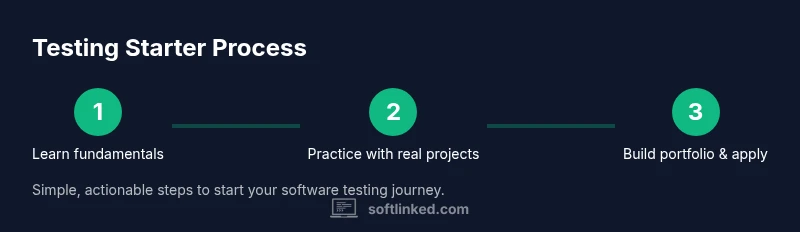
This guide helps you begin a testing career by building core skills, practicing on real projects, and presenting your work. You’ll follow a practical plan with steps, tools, and portfolio ideas to reach an entry-level testing role. From day one you’ll learn how to design tests, report bugs, and communicate with developers, testers, and product teams. This approach helps you demonstrate value quickly.
What is software testing and why it matters
Software testing is the process of evaluating a software product to identify defects, ensure quality, and verify that it meets user needs. It spans many activities, from planning and designing tests to executing them and analyzing results. For aspiring testers, understanding the broader role—how testing fits into the software development life cycle (SDLC) and the software testing life cycle (STLC)—is essential. According to SoftLinked, a structured, fundamentals-first approach helps beginners progress faster by building confidence through small, repeatable practice cycles. This means you’ll learn to distinguish between functional and non-functional testing, choose appropriate test techniques, and communicate findings clearly to engineers and product owners.
In practical terms, software testing lowers risk and improves product outcomes. Even in small teams, testers help ensure features work as intended, edge cases are considered, and release quality remains high. Your early focus should be on learning to think like a tester: ask probing questions, plan scenarios, and document observations with steps to reproduce. By grounding your work in real-world examples, you’ll develop a mindset that serves you across many testing domains.
Core skills every tester should develop
A strong foundation in testing starts with a blend of analytical thinking, communication, and discipline. Core skills include understanding the SDLC and STLC, mastering test design techniques (equivalence partitioning, boundary value analysis, and decision tables), and knowing how to write clear bug reports. You should also become proficient with basic defect tracking, test case management, and the ability to prioritize tests based on risk. Practical experience comes from observing how users interact with software, which helps you create meaningful test scenarios. SoftLinked analysis shows that testers who combine methodical thinking with practical execution tend to learn faster and produce more reliable results. In time, you’ll expand into automation basics and exploratory testing, but start with solid manual testing practice to build credibility and confidence.
Key habits to develop include documenting every step precisely, reproducing bugs exactly as reported, and maintaining versioned notes of your test results. Regular practice with real projects—open-source or student projects—will help you build a portfolio that demonstrates your growing competencies to potential employers.
Building a learning plan that fits you
The most effective learning plan is tailored to your goals, timeline, and available resources. Begin by outlining your target role (manual tester, automation tester, or a hybrid) and set a realistic schedule for the next 6–8 weeks. Break topics into weekly milestones: testing fundamentals, test design techniques, bug reporting, and basic tools. Use a mix of free online courses, official documentation, and hands-on projects to reinforce concepts. As you progress, track your mastery with small, tangible artifacts—sample test cases, bug reports, and a concise weekly digest of what you learned.
SoftLinked recommends starting with core concepts and gradually layering in automation concepts as you gain confidence. Keep a learning journal to capture insights, questions, and noticed gaps. This approach makes it easier to show progression to mentors or potential employers and to adjust your plan as you learn more about your interests within testing.
Practical exercises to practice testing
Hands-on practice is the fastest way to gain competence. Start with guided exercises that cover common features or simple applications, then move to real-world projects. For each exercise, write a brief test plan, execute test cases, and document any defects you find with clear steps to reproduce and expected results. Practice exploring what happens when inputs are invalid, when requirements are unclear, or when performance constraints are tight. Over time, you’ll build a searchable artifact collection: test cases, bug reports, and screenshots that illustrate your testing thinking. SoftLinked’s guidance emphasizes repeating small exercises to solidify fundamentals while gradually introducing new testing techniques and domains.
As you practice, seek feedback from peers in study groups or online communities. Use their input to refine your bug reports and test cases, and keep your notes organized for easy sharing with mentors or hiring managers.
Setting up your beginner-friendly toolkit
A lightweight, reliable toolkit helps you stay organized and productive. Start with a computer and reliable internet, plus essential software: a bug-tracking tool, a simple test case management sheet, a notebook for jotting ideas, and a few sample projects to test. Create a dedicated workspace to minimize distractions and schedule regular practice sessions. Document all findings in a consistent format so you can build a cohesive portfolio. You don’t need fancy tools to begin; what matters is consistent, repeatable practice and clear communication. SoftLinked emphasizes a fundamentals-first toolkit that scales as you grow.
How to get your first testing role
Getting your first role requires demonstrating practical ability and a growth mindset. Build a small portfolio of bug reports, test cases, and test plans from your practice projects. Use open-source projects or student assignments to gather hands-on evidence of your testing approach. When applying, tailor your resume to highlight testing activities, communication skills, and problem-solving experiences. Prepare to discuss how you designed tests, identified risks, and collaborated with developers to fix defects. Networking and joining entry-level QA communities can accelerate your job search, as peers often share opportunities and feedback that lead to real interviews. SoftLinked suggests focusing on observable outcomes, like reduced defect leakage or improved feature clarity, to make your case compelling.
Common myths and how to overcome them
Many beginners believe testing is only about finding errors, or that you must be a coding expert to start. In reality, testing requires critical thinking, documentation, and collaboration. You don’t need perfect code skills to begin; you can learn automation concepts later and still be an excellent tester. Overcoming these myths involves practicing transparent communication, building a portfolio of quality-focused work, and seeking mentorship. By reframing testing as a discipline that improves software quality and user experiences, you’ll approach interviews with confidence and clarity.
Tools & Materials
- Computer (laptop or desktop) with internet access(Reliable device for exploring tools and recording test results)
- Bug tracking tool account(Examples include Jira, Trello, or GitHub Issues)
- Test case management sheet(A simple spreadsheet is fine to start)
- Sample project or open-source repository(Use beginner-friendly projects with clear issues)
- Notebook for notes(Jot ideas, observations, and patterns)
Steps
Estimated time: 6-8 weeks
- 1
Define your tester goal and scope
Clarify whether you want manual testing, automation, or a hybrid path. Set a realistic 6–8 week plan with weekly milestones and a concrete portfolio target.
Tip: Write down your goal and a weekly milestone to stay accountable. - 2
Learn core testing concepts
Study SDLC, STLC, testing types, and basic test design techniques. Build a foundational vocabulary you can use in conversations with peers and hiring managers.
Tip: Use official course materials and create cheat sheets for quick reference. - 3
Set up your testing environment
Install essential tools: bug tracker, simple test case sheet, and a sample app to test. Create a dedicated workspace to stay focused.
Tip: Keep a separate project folder with templates for reports and tests. - 4
Practice with guided exercises
Work on small, real-world tasks; document steps to reproduce, expected outcomes, and impact. Build a growing library of artifacts.
Tip: Follow a standard bug report template to ensure consistency. - 5
Build a portfolio
Compile bug reports, test cases, and test plans from your practice projects. Host them in a simple online portfolio to showcase your approach.
Tip: Include screenshots and a brief narrative for each artifact. - 6
Seek feedback and iterate
Join study groups or online communities, share your reports, and incorporate feedback. Use critiques to sharpen your communication.
Tip: Ask specific questions to get targeted feedback on your reports. - 7
Apply for roles and prepare for interviews
Target entry-level QA roles. Prepare to discuss your testing decisions with concrete examples from your portfolio.
Tip: Practice explaining how your tests mitigate risk and improve user experience.
Your Questions Answered
What does a software tester do on a daily basis?
A tester designs and executes test cases, tracks defects, communicates findings to the team, and collaborates with developers to clarify requirements. Daily routines often include reviewing requirements, updating test artifacts, and reporting status.
Testers design and run tests, log defects, and share results with the team. They also review requirements and communicate clearly with developers.
Do I need coding knowledge to start testing?
You can start with manual testing and fundamental test design without coding. Learning basic automation concepts later is helpful, but not required for many entry‑level roles.
You can begin with manual testing, and you can learn automation later as you grow.
How long does it take to become proficient?
Proficiency grows with deliberate practice and project experience. A solid foundation often forms within a few months, with automation skills developing over the next several months as you engage with real projects.
It varies, but you can build a solid foundation in a few months with consistent practice and project work.
What’s the best way to practice testing?
Engage with real projects, document reproducible bugs, and write concise test cases. Use open-source projects to simulate real workflows and get feedback from peers.
Practice on real projects and get feedback from peers to improve your reports.
How can I land my first tester job without experience?
Focus on building a credible portfolio, showing your process, and highlighting collaboration and problem-solving. Networking in QA communities can connect you with opportunities that don’t require extensive prior experience.
Show your process in a strong portfolio and network in QA communities to find opportunities.
Should I target manual testing or automation first?
Start with manual testing to learn fundamentals and user perspectives. Add automation later to enhance productivity as you gain confidence and interest in coding.
Begin with manual testing, then add automation when you’re ready to grow your skillset.
Watch Video
Top Takeaways
- Define a clear testing goal and timeline
- Master fundamentals before automation
- Document with consistent, reproducible steps
- Build a portfolio of real artifacts
- Seek feedback and iterate