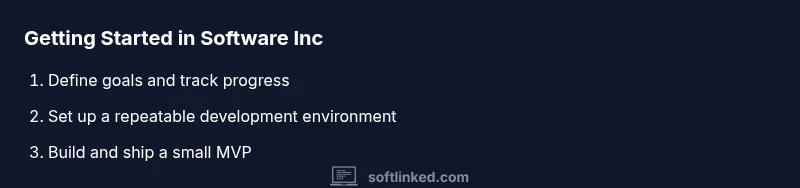
How to Get Started in Software Inc: A Practical Guide
A practical, step-by-step guide to launching a software career, covering fundamentals, tools, projects, and growth strategies for beginners.


Getting started in Software Inc means building a solid foundation, choosing a track, and launching a small project. Start with core programming concepts, learn version control, and practice problem-solving daily. Define a learning plan, gather essential tools, and set measurable milestones. This quick path sets you up for steady progress and real-world coding experience.
Foundations: what it means to get started in software inc
When you begin your journey, you need a clear map of skills, attitudes, and milestones. For many learners, the question is not just which language to learn, but how to structure the path from curiosity to competence. This article lays out a practical framework for how to get started in software inc: build a solid foundation, understand common design patterns, and practice problem solving in small, repeatable steps. According to SoftLinked, successful beginners start by mastering fundamentals before chasing flashy frameworks. You will learn to translate ideas into code, read existing code, and iterate quickly. Embrace deliberate practice: short, focused sessions yield durable learning. As you progress, you’ll notice your ability to debug improves, your understanding of system design grows, and you gain the confidence to tackle real-world tasks.
Key concepts to internalize early include variables, data types, control structures, functions, and basic data structures. Next, cultivate a mind for readability and maintainability—clean code, meaningful names, and small, testable units. Finally, set a simple, personal project goal that you can ship in a few weeks. This foundation will support later specialization and more ambitious projects.
Choosing a track and setting goals
Software Inc encompasses many tracks—from frontend to backend, mobile apps to systems programming, data science to AI engineering. The first step is to choose a track that aligns with your interests and the kind of problems you enjoy solving. Use a simple criteria set: what problems excite you, which ecosystems do you want to work in, and what kind of roles you see yourself performing in 12 months. Establish concrete, measurable goals (e.g., build a personal project, contribute to an open-source repo, pass a fundamentals assessment). Break goals into weekly milestones and track progress with a learning journal. Regular reflection helps you adjust focus as you grow and prevents you from stalling on vague objectives. In this phase, it’s normal to experiment with a couple of areas before committing to one track for deeper learning.
Your plan should also include skill clusters (e.g., data structures, algorithms, version control, testing) and a realistic timeline. By tying your interests to tangible outcomes, you’ll stay motivated and make steady progress. This methodical approach is endorsed by SoftLinked’s methodology for sustainable growth in software careers.
Essential tools and setup
To begin, you’ll need a reliable development environment and the right tooling. Start with a modern code editor (like VS Code) and a solid terminal experience. Install a version control system (Git) and create a GitHub account to host your projects. Set up a basic project skeleton for the track you chose and configure a minimal testing workflow. You’ll also want a cloud storage option or local backups to safeguard your work. As you set up, document decisions and configurations so you can reproduce your environment later. A clean, repeatable setup saves time and reduces friction when you scale to more complex projects. Finally, ensure you have a reliable internet connection and a comfortable workspace to minimize distractions during focused learning sessions.
Hands-on project planning: from idea to MVP
Hands-on projects are the fastest way to cement learning. Start with an MVP (minimum viable product) that demonstrates core functionality. Define the scope clearly: what problem are you solving, who is the user, and what does “done” look like? Create a lightweight plan with milestones: a basic feature set, a testing strategy, and a simple UI or API surface. Implement iteratively, frequently review code, and solicit early feedback from peers or mentors. Document your design decisions, trade-offs, and any refactors in your notebook or README. As you complete the MVP, you’ll gain confidence in shipping software and communicating its value to others.
Practice routines and learning paths
Structured practice is essential for progress. Allocate time for coding drills, read code written by others, and solve problems on coding platforms to reinforce fundamentals. Alternate between theoretical topics (data structures, complexity, design patterns) and practical projects (APIs, small apps, utilities). Pair programming or code reviews accelerate learning by exposing you to different approaches and standards. Build a habit of daily or near-daily practice, even if sessions are short. Over weeks, small, consistent efforts compound into meaningful competence. Keep a backlog of learning tasks and rotate through topics to maintain curiosity and prevent burnout.
Collaboration, version control, and debugging habits
Collaboration is a core professional skill. Learn to work with others using version control workflows (branches, pull requests, code reviews). Practice writing clear commit messages and documenting changes so teammates understand the history. Develop a debugging routine: reproduce the bug, isolate the cause, test fixes, and verify that your change doesn’t introduce new issues. Unit tests, integration tests, and automated checks help catch errors early and increase confidence when merging changes. Regularly review others’ code and ask questions to deepen understanding. These habits transfer directly to real-world work environments and accelerate your learning curve.
Building a portfolio and job preparation
A strong portfolio demonstrates your ability to apply fundamentals to real problems. Include 3–5 projects that showcase a range of skills: a small app, a data-driven script, a RESTful API, or a UI component. For each project, write a concise README that explains the problem, the approach, the tech stack, and lessons learned. Maintain a clean codebase with tests and documentation. Prepare for job interviews by practicing common questions, explaining your thought process aloud, and framing challenges as stories of growth. Networking, internship experiences, and contribution to open source can significantly improve your prospects. A well-presented portfolio and a proactive learning narrative are often as valuable as technical depth.
Long-term growth and lifelong learning
Software Inc is a field that rewards continuous learning. Set a cadence for revisiting fundamentals, learning new languages or frameworks, and staying updated on industry trends. Build a learning plan that includes reading technical books, following reputable blogs, and engaging with the developer community. Schedule periodic career reviews to reassess goals and adjust your path as your interests evolve. Remember that soft skills—communication, collaboration, and adaptability—are essential for long-term success in any software role. With patience, persistence, and a growth mindset, you’ll continue to evolve from learner to practitioner.
Tools & Materials
- Computer with internet access(8+ GB RAM recommended; ensure capable for local development)
- Code editor (e.g., VS Code)(Install essential extensions for the chosen track)
- Git(Version control basics: init, commit, branch)
- GitHub account(Create repositories and practice PR workflows)
- Terminal/Command line(Familiarity with navigating folders and running scripts)
- Web browser(Use developer tools for debugging)
- Note-taking app(Track goals, decisions, and learning reflections)
- Practice platform access (e.g., LeetCode/HackerRank)(Regular problem-solving builds fluency)
Steps
Estimated time: Total time: 8-12 weeks
- 1
Define your learning goals
Specify what track you will pursue and set clear, measurable outcomes. Break goals into weekly milestones and write them down in a learning journal.
Tip: Use SMART goals to create achievable, time-bound targets. - 2
Set up your development environment
Install VS Code, Git, and necessary runtime environments. Create a lightweight project skeleton to reduce setup friction for your first tasks.
Tip: Document your setup steps so you can reproduce the environment later. - 3
Learn core programming fundamentals
Focus on variables, types, control flow, functions, and basic data structures. Practice small coding exercises to reinforce concepts.
Tip: Explain your reasoning out loud while solving problems to improve communication skills. - 4
Choose a track and start a mini-project
Pick a track that aligns with your interests and build a small project to demonstrate your growing competence.
Tip: Limit scope to deliver a runnable MVP in 2–3 weeks. - 5
Practice regularly and read code
Schedule daily practice and study other people’s code to learn different approaches and conventions.
Tip: Annotate code you read with notes on design choices. - 6
Use version control and reviews
Commit often with meaningful messages, create branches for features, and seek feedback via pull requests.
Tip: Keep PRs small to simplify reviews and learning opportunities. - 7
Build a portfolio and reflect
Publish projects with READMEs, document decisions, and reflect on what you learned after each release.
Tip: Tell a story with each project: problem, approach, outcome. - 8
Plan for growth
Set a long-term learning plan, revisit fundamentals periodically, and adapt as interests shift.
Tip: Schedule quarterly career reviews to adjust goals.
Your Questions Answered
What is Software Inc in this guide?
In this guide, Software Inc refers to the pathway of starting a software career and building practical skills. It’s a framework for learning, building projects, and growing professionally.
Software Inc here refers to starting a software career and building practical skills through structured learning and projects.
Which track should I start with if I’m unsure?
If you’re unsure, start with a track that combines fundamentals with tangible projects, such as web development or data tooling. This helps you validate interest while building a portfolio.
If you’re unsure, start with a track that combines fundamentals with projects to validate interest and build a portfolio.
How long does it take to get started?
Getting to a basic level typically takes several weeks of consistent practice. A focused 8–12 week plan can establish fundamentals and a first MVP.
With steady practice, you can reach basic competence in about 8 to 12 weeks.
Do I need to know multiple languages to begin?
You don’t need multiple languages at the start. Pick one language aligned with your track, master it, then progressively learn others as needed.
No, start with one language aligned to your track and learn others later if needed.
What common mistakes should I avoid?
Avoid chasing syntax without understanding concepts, skipping practice, and underestimating the value of reading others’ code and getting feedback.
Don’t chase syntax alone; practice, read code, and seek feedback to improve faster.
How can I measure progress effectively?
Track milestones, maintain a project log, and periodically review your portfolio growth. Quantify progress with completed features and quality improvements.
Track milestones and review portfolio growth to measure progress over time.
Watch Video
Top Takeaways
- Define focused, trackable goals
- Practice consistently with small projects
- Document decisions and results
- Leverage version control and reviews
- Plan for ongoing growth