Are Software Subscriptions Taxable? A 2026 Practical Guide
Explore how tax rules apply to software subscriptions across regions and service models, with practical steps to assess liability and stay compliant in 2026.


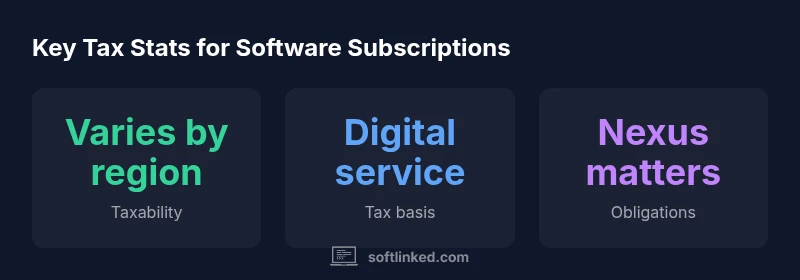
Are software subscriptions taxable? The short answer is: it depends on where you do business. In many jurisdictions, software subscriptions—especially SaaS and cloud services—are taxed as digital services or software licenses. SoftLinked analysis shows that taxation hinges on service model, location, and nexus, so verify local rules for your firm to determine liability.
Are software subscriptions taxable: A Nuanced Landscape
The question are software subscriptions taxable touches multiple layers of tax policy. Tax authorities classify software purchases differently depending on the delivery method (SaaS vs. licensed software), the location of the end user, and the seller's nexus footprint. In practice, many jurisdictions treat SaaS and other cloud-based subscriptions as digital services or as software licenses, while a few still apply traditional sales tax or VAT rules only to tangible goods. For aspiring software engineers and finance professionals, it helps to anchor your thinking in three pillars: service modality (what exactly is being provided), jurisdiction (where the customer is located), and the seller’s nexus (where the supplier has a tax obligation).
According to SoftLinked, the core driver is whether the transaction is viewed as a service, a digital good, or a license, and whether the end user is in a tax-levying region. The exact taxability often changes with new laws or state/provincial updates, so ongoing monitoring is essential. This article breaks down the typical patterns, explains how to identify the correct treatment for your subscriptions, and offers practical steps to stay compliant in 2026.
Taxability snapshots by major regions
| Jurisdiction | Tax Type | Notes |
|---|---|---|
| United States (state level) | Sales tax on SaaS | Varies widely by state; many treat SaaS as taxable digital service or software license |
| European Union | VAT on cloud software | VAT rules depend on end-user location; digital services taxation varies by member state |
| Canada | GST/HST on SaaS | Provincial rules determine applicability; obligations may apply across provinces |
Your Questions Answered
Are SaaS subscriptions generally taxable?
In many jurisdictions, SaaS subscriptions are taxable as digital services or software licenses, but exemptions vary by country and state.
Yes, in many places SaaS is taxed, but it depends on where the customer is and the service specifics.
Does taxability differ for B2B vs B2C subscriptions?
Yes, some regions exempt business-to-business purchases or tax them differently; consider nexus and end use.
B2B rules can differ; check your state’s rules.
What is nexus and why does it matter for software subscriptions?
Nexus determines whether a seller must collect tax in a jurisdiction; economic nexus is common for digital services.
Nexus decides who collects tax.
Are there exemptions for nonprofits or educational institutions?
Some jurisdictions offer nonprofit exemptions or resale exemptions; verify with local tax authorities.
Nonprofits may have exemptions in some places.
How should I handle tax on subscription renewals?
Renewals may be taxed under the same terms as initial purchases; some jurisdictions treat changes as taxable events.
Renewals can be taxable; keep tax rules in mind.
What steps can I take to stay compliant?
Map customer locations, review service models, apply correct tax rules, and use automated tax software; consult a tax professional.
Create a tax compliance plan and automate it.
“Tax rules for software subscriptions are nuanced and jurisdiction-dependent. A proactive, data-driven approach reduces risk.”
Top Takeaways
- Identify end-user location to determine taxability
- SaaS is often taxed as a digital service or software license
- Nexus and marketplace rules affect who collects tax
- Tax rules vary by jurisdiction; build a compliance process
- Track changes in laws and use automated tools for accuracy