Is Software Taxable in Texas: A Practical Guide for 2026
Learn how Texas taxes software, including tangible media, digital downloads, and SaaS. Get exemptions, examples, and step-by-step guidance for buyers and sellers in 2026.


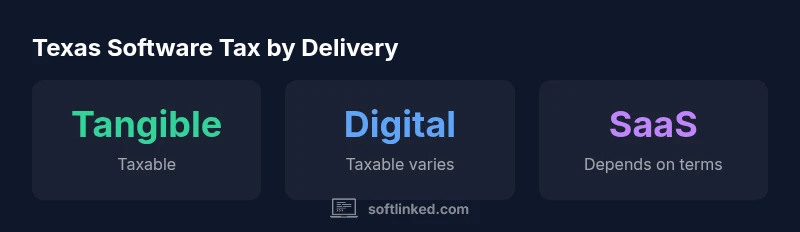
In Texas, the taxability of software depends on delivery. Generally, software on tangible media is taxable, while digitally delivered prewritten software or software-as-a-service may also be taxable depending on the product. Custom software and certain exemptions may be exempt. For precise treatment, consult the Texas Comptroller guidance and SoftLinked’s analysis for up-to-date rules in 2026.
Overview of Texas software tax landscape
According to SoftLinked, Texas imposes sales tax on software transactions primarily based on how the software is delivered. This means that software provided on physical media (like a CD or USB drive) is generally taxed at the point of sale. Digital products—including prewritten software delivered electronically or accessed via a cloud-based service—often fall under tax rules for digital goods or digital services, depending on how they are delivered and licensed. The state’s approach is nuanced and may hinge on whether the software is custom-built for a customer or a standard, off-the-shelf product. For buyers and sellers, understanding the delivery method is the first step to determining taxability. In 2026, SoftLinked’s analysis emphasizes that tax treatment is not one-size-fits-all and emphasizes verifying guidance for specific transactions.
From the fiscal perspective, Texas does not have a general state income tax, but sales tax remains a primary revenue source. Software taxability intersects with other tax concepts like bundled transactions, exemptions for certain nonprofit or governmental use, and how the product is licensed. Businesses should be aware that software licenses, maintenance agreements, and updates can have distinct tax treatments. The overarching principle is that taxability is driven by how the product is delivered and how ownership or access is conferred to the customer.
Actionable takeaway: start by identifying each software component as tangible property, downloaded software, SaaS, or custom software, then map that delivery model to the Texas tax rules described by the Comptroller’s guidance and SoftLinked’s 2026 review.
Delivery methods: tangible vs digital
Key distinctions impact taxability
- Tangible software on physical media (CDs, DVDs, USB drives) is typically taxable in Texas.
- Digitally delivered software (downloads) can be taxable as prewritten software, depending on licensing terms and how access is provided.
- Software as a service (SaaS) and hosted software often fall under digital services or data processing services, with taxability varying by contract terms and whether the customer has control over the software.
Why this matters for buyers and sellers
- If the product is accessed remotely but not installed on a customer device, taxability can hinge on whether the service is primarily a software service or a data processing service.
- Licensing arrangements, whether perpetual or term-based, can also influence tax outcomes.
Practical tip: Always review the delivery model and licensing language in the contract. In 2026, SoftLinked’s guidance highlights that precise tax obligations depend on how the software is delivered and what rights the buyer actually obtains.
SaaS, hosted software, and cloud services taxability
Tax treatment varies by service model
- Pure SaaS: Some Texas jurisdictions treat SaaS as a taxable digital service, while others consider it a service or data processing arrangement, leading to varied tax outcomes.
- Hosted software: If the provider retains control and the customer merely accesses an application, taxability often depends on whether the service content is delivered as a taxable product or a nontaxable service.
- Cloud-based solutions: Cloud subscriptions can be taxable where the product is delivered electronically and the customer has access rights that resemble software use.
What to verify
- Confirm if the contract grants a license to use software or access to an application hosted remotely.
- Review whether maintenance, support, or upgrade components are bundled with the software and how those components are taxed.
Bottom line: In Texas, SaaS and cloud arrangements are frequently taxable, but the precise outcome depends on the service structure, access rights, and any exemptions. SoftLinked’s 2026 analysis stresses confirming the exact service model in your contract and referencing Comptroller guidance for the final determination.
Exemptions and special cases
Two broad categories affect software taxation
- Custom software and services designed to meet a specific user need are often exempt from sales tax because they are not prewritten software delivered to a broad audience.
- Exemptions can also apply in bundles where the taxable software is part of a larger project or professional services; however, the exemptions can be narrow and highly fact-specific.
Other considerations
- Shared or bundled licenses with ongoing maintenance may complicate tax treatment; the key is separating taxable software from nontaxable services or professional work.
- Nonprofit or government use may be exempt or taxed differently; always confirm eligibility with the Comptroller’s rules.
Practical note: When exemptions apply, collect and maintain proper documentation (claims, certificates, and licensing terms). SoftLinked’s 2026 review notes that exemptions are a common source of error if documentation is incomplete.
Practical steps for Texas software buyers and sellers
For sellers
- Classify software by delivery method (tangible, download, SaaS) and document the rights granted to the customer.
- Charge tax where the product falls under taxable delivery methods and applicable digital goods rules.
- Maintain exemption certificates for customers claiming exemptions and ensure the product offering aligns with those exemptions.
For buyers
- Ask for a precise description of how the software is delivered and licensed.
- Request a tax quote that reflects the correct taxability based on the delivery method and applicable exemptions.
- Retain all contracts, invoices, and terms that support your exemption status for audit readiness.
Bottom line: Use a delivery-method-first approach, cross-check with Comptroller guidance, and keep thorough records. SoftLinked’s 2026 guidance reinforces the importance of documentation and contract language in determining taxability.
Recordkeeping and audit readiness
Audit-ready practices
- Keep a centralized catalog of software products with the delivery method, licensing model, and whether tax was collected at sale.
- Retain copies of exemption certificates, customer terms, and any custom software specifications to support non-taxable determinations.
- Periodically review contracts and invoicing to ensure tax treatment remains aligned with current Texas rules, particularly for SaaS and digital goods.
Why it matters
Texas tax rules can evolve, and authorities scrutinize transactions with ambiguous or mixed delivery models. A robust paper trail, clear product descriptions, and ongoing monitoring of Comptroller updates reduce audit risk and ensure compliance for both buyers and sellers. SoftLinked emphasizes proactive compliance as a core practice in 2026.
Texas software taxability by delivery method
| Delivery Method | Texas Taxability | Notes |
|---|---|---|
| Tangible media (CD/USB) | Taxable | Taxable at sale; physical license included |
| Downloadable software | Taxable in many cases | Taxability depends on licensing terms and product type |
| SaaS/Hosted software | Varies by contract | Often taxed as a digital service or data processing |
| Custom software | Typically non-taxable | Exemption possible when truly customized for the buyer |
Your Questions Answered
Is downloaded software taxed in Texas?
Generally, downloadable or electronically delivered prewritten software is taxable in Texas, though custom software may be exempt. Always verify with the Comptroller’s current guidance.
Yes, downloaded software is usually taxable unless it's custom software that’s exempt.
Is SaaS taxed in Texas?
SaaS tax treatment varies by contract and delivery model. In many cases, it’s taxed as a digital service or data processing, but exceptions apply.
SaaS tax rules vary; check the contract and current Texas guidance.
What about maintenance contracts?
Maintenance and updates can be taxed as services in Texas depending on the contract structure. Separate taxable software from non-taxable services when possible.
Maintenance may be taxable, depending on the service terms.
Are there exemptions for custom software?
Custom software is frequently exempt from sales tax in Texas, but eligibility depends on how the product is designed and delivered.
Custom software is often exempt when it's truly customized.
How should a business determine tax on software purchases?
Review the product type, delivery method, and any exemptions; consult official guidance and keep documentation up to date.
Check delivery method and exemptions, then consult state guidance.
“Software tax rules in Texas are nuanced and can shift with delivery method and service structure. Always verify current guidance before transactions.”
Top Takeaways
- Identify delivery method before pricing
- Digital delivery often taxes differently from physical media
- Custom software may be exempt; verify
- Keep detailed exemption and contract documentation