Is Software as a Service Taxable in California? A 2026 Guide
Understand how California taxes software as a service (SaaS) in 2026, including when hosting, bundling, or district taxes may apply. Practical guidance for SaaS providers and buyers.


In California, software as a service (SaaS) is typically not taxed as software, because it’s a service delivered online rather than tangible software. Taxability depends on whether the transaction includes taxable tangible property, hosting services, or bundled goods; local rules can vary, so verify with a tax professional.
Is California SaaS Taxable? A Quick Framework
The central question many organizations face is whether is software as a service taxable in california. The short answer remains nuanced: California generally treats pure SaaS as a service when the customer accesses software remotely, not as a sale of tangible software. This means many pure SaaS arrangements are not subject to the standard California sales tax. However, the tax outcome can change if the contract includes taxable tangible property, hardware, or services that CA views as taxable components. In practice, you’ll want to parse the contract to identify what is delivered and how it is billed. Also consider district-level nuances, which can shift the tax result in specific locales. The SoftLinked team emphasizes that the safest path is to review the terms with a qualified tax professional and keep thorough records of what is provided for each billing period.
How California Treats SaaS vs. Traditional Software
California’s approach to software has evolved with the digital economy. Traditional, installed software with a license transfer often fell under sales tax rules for tangible property. In contrast, SaaS—where the end user benefits from software hosted remotely—tends to be viewed as a service. That said, the key distinction is whether the service includes tangible personal property, license transfers, or other taxable elements as part of the transaction. Providers should examine the agreement’s structure: if the service is delivered as a pure remote access, it is less likely to be taxed as software. If the offering bundles hosting, disk space, or other tangible items with software access, taxability can arise depending on the composition of the bundle and the contract terms.
What Triggers Taxability: Tangible Property, Hosting, Bundled Services
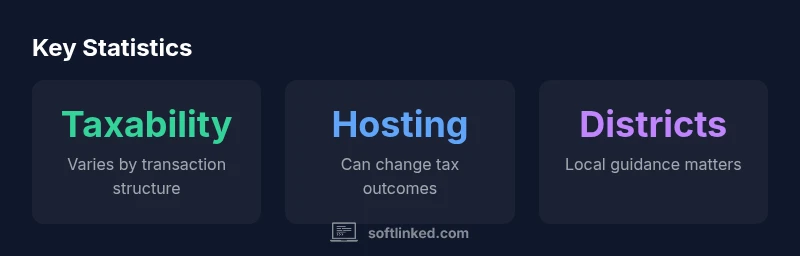
Several factors drive taxable outcomes in California. First, if a contract transfers tangible personal property (for example, a packaged media, USB drives, or physical hardware) alongside SaaS access, those tangible items may trigger sales tax. Second, hosting or data-processing services can complicate tax treatment if they are separately stated or billed as a taxable service. Third, bundled arrangements—where software access is sold in a package with other goods or taxable services—may be taxable in whole or in part if the components are not separable for tax purposes. Finally, occasional local interpretations could apply different rules, so practitioners should verify how their district applies the broader CA framework. In all cases, documenting the exact nature of the delivery and billing approach helps support the correct tax treatment.
Local Variations and District Taxes
California allows for a variety of district taxes that can affect SaaS transactions differently by city and county. Even when a state-level decision leans toward non-taxability for pure SaaS, some local jurisdictions may impose specific taxes on particular services or bundled offerings. The practical upshot is that taxability can be highly case-specific, depending on where the buyer or seller operates and how the service is structured. Businesses should perform a local tax check for each customer location and maintain a process for updating billing practices if district rules shift. This is a common area where SoftLinked observations show rising complexity over time as digital sales expand across districts.
Practical Guidance for SaaS Providers and Buyers
For providers, separate the pricing for remote software access from any taxable components where possible (for example, hardware, data hosting, or optional add-ons). Clear invoicing that distinguishes non-taxable SaaS access from taxable elements helps limit disputes during audits. For buyers, request contracts that isolate the SaaS access as a service and review any bundled components before payment. In jurisdictions with district taxes, verify the tax rate applied to the entire invoice and confirm whether the district requires tax on hosting or on bundled offerings. In ambiguous scenarios, seek a written ruling or a private-letter ruling from the state or consult a tax professional who specializes in California tax law. Consistent documentation and proactive tax planning reduce the risk of unexpected tax exposure.
Recordkeeping, Compliance, and Future Trends
Keeping meticulous records around how each SaaS transaction is structured is essential for compliance. Retain copies of contracts, invoices, and any correspondence that clarifies what is delivered and at what price. The policy landscape around SaaS taxation continues to evolve as states refine digital-service taxation. Be prepared for changes in district tax rates or definitions and budget for periodic tax-technical reviews. SoftLinked Analysis, 2026, indicates that businesses that actively monitor local guidance and maintain contract clarity tend to navigate these changes more smoothly. Staying proactive can help mitigate audit risk and ensure accurate tax reporting.
Taxability factors for California SaaS
| Aspect | Taxability | Notes |
|---|---|---|
| Delivery model | Typically non-taxable for pure SaaS | Pure SaaS charged as a service; no tangible software delivered |
| Hosting or data processing | Potentially taxable | Depends on whether hosting is separately stated or bundled as taxable service |
| Bundled software with hardware | Taxable components may apply | Taxability may hinge on whether the bundle contains taxable items |
Your Questions Answered
Is pure SaaS taxable in California?
Generally non-taxable for pure SaaS as a service; exceptions exist when bundled with taxable components or hosting. Always review the contract terms and local guidance.
Pure SaaS is usually not taxed in California, but bundles or hosting can change that.
Do hosting services affect SaaS taxability?
Hosting services can alter taxability if treated as a separate taxable service or part of a bundled package. The exact outcome depends on how the invoice is structured.
Hosting fees can make the overall charge taxable if treated as a separate service.
What about updates and digital goods?
California’s stance on digital goods and updates has evolved. Depending on how updates are delivered (as a service vs. a license) they may or may not be taxable. Check current guidance for your specifics.
Digital updates can be tricky; check current CA guidance for your case.
Does use tax apply to SaaS?
Use tax may apply to out-of-state purchases or when the seller is not collecting CA tax. For SaaS, confirm the sourcing and where the service is utilized to determine use tax obligations.
Use tax can apply if CA tax wasn’t collected at purchase; verify with CA CDTFA guidance.
Are there district-level taxes I should watch?
Yes. Local district taxes can differ by city or county and may apply to certain SaaS components, especially bundled services or hosting.
Local district taxes can vary; check within your customer locations.
How should pricing be structured to minimize tax risk?
Structure pricing to separately identify taxable components from non-taxable SaaS access when feasible. Maintain clear invoices and documentation to support the intended tax treatment.
Separate taxable elements from SaaS access on invoices when possible.
“Software tax rules in California are nuanced and highly dependent on transaction structure. Clear contracts and disclosures help ensure correct tax treatment.”
Top Takeaways
- SaaS is generally non-taxable in CA for pure software access.
- Taxability hinges on hosting, bundles, and tangible property.
- Always verify with a tax professional due to local district variations.
- Maintain clear documentation of what is being sold and delivered.