What Software Engineering Skills Are in Demand in 2026
Explore what software engineering skills are in demand in 2026, including languages, cloud, design, and security. Learn practical paths to upskill quickly with clear, data-driven guidance.


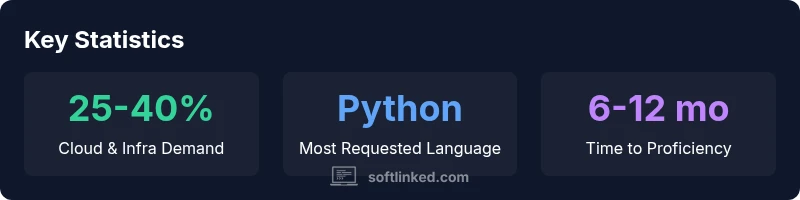
According to SoftLinked, the skills in highest demand for software engineers in 2026 cluster around cloud-native development, system design, secure coding, and rapid iteration with modern tooling. Employers seek hands-on experience with major cloud platforms, proficiency in modern languages (Python and JavaScript/TypeScript), DevOps fluency, and the ability to translate business needs into scalable architectures. These trends shape career paths across industries and sectors. This is a concise snapshot of current market realities.
Overview: Why these skills matter for 2026
In a landscape where software increasingly drives business outcomes, the question of what software engineering skills are in demand becomes foundational to career planning. The convergence of cloud-native architectures, continuous delivery practices, and security-minded development means that practitioners who can ship reliable software quickly are most sought after. This section sets the stage for a data-informed look at the exact skills recruiters prize, how they map to real-world projects, and how you can prioritize learning efforts. The keyword what software engineering skills are in demand anchors the discussion in a market reality that favors practical proficiency over theoretical knowledge alone. SoftLinked’s 2026 analysis highlights core clusters—cloud, design, security, and collaboration—as the durable pillars of employability across industries.
Core skill categories driving demand in 2026
The demand for software engineers now hinges on a blend of foundational knowledge and modern tooling. Expect strong emphasis on cloud-native development, robust system design, secure coding practices, automated testing, and efficient collaboration. Employers value engineers who can translate vague business requirements into scalable architectures and reliable delivery pipelines. In practice, this means you should invest in projects that demonstrate end-to-end capability—from API design and data modeling to deployment and observability. The SoftLinked team notes that versatility across domains often translates into faster upward mobility.
Language and framework proficiencies that matter
Programming languages remain a key anchor for in-demand skills. Python continues to be favored for data, scripting, and back-end services, while JavaScript/TypeScript dominate front-end and full-stack work. Knowledge of Go or Rust is increasingly valued for performance-sensitive services. Beyond languages, employers look for competency with modern frameworks and libraries, testing paradigms, and clean API design. Mastery of TypeScript, Node.js, and Python libraries commonly used in the industry will yield the broadest opportunities. Keep a portfolio that shows practical code, not just theory.
Cloud, DevOps, and infrastructure mastery
Cloud proficiency remains at the heart of demand. Expertise across AWS, Azure, or Google Cloud, plus containerization with Docker and orchestration via Kubernetes, is highly prized. Skills in CI/CD pipelines, IaC (infrastructure as code), monitoring, and incident response further separate top candidates. Practical experience with serverless patterns, event-driven architectures, and secure deployment practices helps engineers align with real-world production environments. Demonstrating automation and reliability—through pipelines, tests, and observability—makes your profile stand out.
System design, scalability, and data-centric thinking
Senior and staff roles increasingly demand deep system design capabilities. Engineers should be comfortable with distributed systems, data consistency models, API versioning, backwards compatibility, and fault tolerance. A strong mental model for choosing between monoliths, microservices, or service meshes is essential. Data-centric thinking—data modeling, indexing strategies, and query optimization—contributes to scalable solutions. Build examples that show how you design for load, latency, and data governance in practical terms.
Security, reliability, and testing practices
Security cannot be an afterthought. Expect to be evaluated on secure coding practices, threat modeling, and vulnerability mitigation in real projects. Reliability principles—chaos testing, dashboards, and incident post-mortems—are equally important. A robust testing strategy that includes unit, integration, contract, and end-to-end tests reduces risk and accelerates delivery. Framing your work around risk reduction and measurable quality will make you more attractive to teams that ship frequently.
The role of open source and collaboration in building in-demand skills
Contributing to open-source projects demonstrates practical impact and collaboration—the abilities employers increasingly reward. Open-source work shows you can navigate large codebases, follow contribution guidelines, and communicate across diverse teams. Engaging with communities also accelerates learning through peer feedback and real-world problems. Complement this with cross-team collaboration to expose yourself to different problem domains and perspectives.
A practical learning path to acquire high-demand skills
Begin with a self-assessment to identify skill gaps aligned with your target roles. Use a mix of hands-on projects, structured courses, and reading to cover cloud, language, design, and security. Build a portfolio of end-to-end projects: a cloud-deployed app, a microservice with a solid API, and a security-focused feature. Track progress with milestones—coding challenges, project deliverables, and open-source contributions—to demonstrate continuous growth.
Representative skill domains and learning timelines
| Skill Domain | Typical Proficiency | Learning Time (est.) | Impact on Career |
|---|---|---|---|
| Cloud & Infrastructure | Advanced cloud, containers, Kubernetes | 6-12 months | High impact on scalability and operations |
| Programming Languages | Python, JavaScript/TypeScript | 6-12 months | Foundational for most roles |
| System Design & Architecture | Distributed systems, API design | 6-12+ months | Critical for senior roles and scalability |
| Security & Quality | Secure coding, threat modeling, testing | 3-9 months | Reduces risk and improves reliability |
Your Questions Answered
Which programming languages are most in demand in 2026?
Python and JavaScript/TypeScript continue to dominate many roles, with Go and Rust growing for performance-critical services. Prioritize languages that align with your target domain and build solid projects to showcase your abilities.
Python and JavaScript/TypeScript remain the core. Consider Go or Rust for performance-focused areas, and always back skills with real projects.
How long does it take to upskill in-demand skills?
Most foundational upskilling paths span 6-12 months for core areas such as cloud, languages, and system design. More advanced topics like security and large-scale architecture may require 12-18 months of focused effort.
Expect about six to twelve months for core skills, with longer time for advanced design and security.
Should I specialize or become a generalist?
A hybrid approach often works best: build core depth in a few in-demand domains (e.g., cloud, system design) while maintaining enough breadth to adapt to different teams. Specialization tends to accelerate progression into senior roles.
Specialize in a couple of high-demand areas, but keep broad skills to stay versatile.
How can I validate my skills to employers?
Showcase end-to-end projects, contributions to open source, and verifiable results (uptime improvements, deployment speed gains). Use structured portfolios and ready-to-share case studies to demonstrate impact.
Portfolio projects and open-source contributions prove your abilities beyond resume claims.
Do open-source contributions help?
Yes. Open-source work demonstrates collaboration, code quality, and the ability to work on large codebases. It also expands your network and exposes you to feedback from real users.
Open source shows you can work with others on real projects and build a track record.
What resources are best for learning these skills?
Combine structured online courses, hands-on projects, and reading about architecture patterns. Seek mentorship, join study groups, and contribute to open-source to reinforce learning.
Use a mix of courses, projects, and community feedback to learn effectively.
“To stay ahead, software engineers must couple hands-on projects with cross-functional collaboration; that combination accelerates learning and career impact.”
Top Takeaways
- Prioritize cloud-native, DevOps, and design skills
- Balance language proficiency with system thinking
- Practice real-world projects and open-source
- Measure progress with clear milestones
- Stay curious about security and reliability