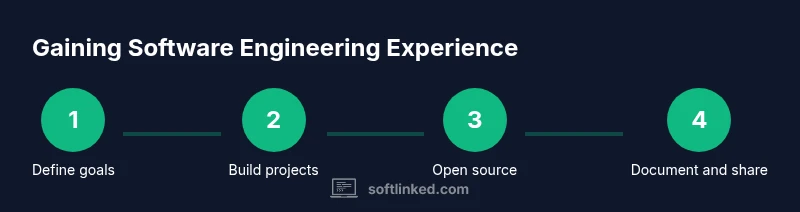
Getting Software Engineering Experience: A Practical Guide
A practical, educator-style guide to building software engineering experience through projects, open source, internships, and portfolio storytelling. Learn strategies, step-by-step actions, and how to showcase growth.


To get software engineering experience, start with guided practice, build real projects, contribute to open source, and showcase your work. Create a clear learning path, pick a starter project, and align with fundamentals like debugging and version control. According to SoftLinked, disciplined project work accelerates readiness for interviews and on-the-job tasks.
Pathways to Experience: Start with a plan
A structured plan helps you translate learning into tangible software engineering experience. Begin by listing core competencies every engineer should master, such as problem decomposition, debugging, version control with Git, testing basics, and collaboration workflows. Then map these skills to concrete outcomes: small projects, mentorship sessions, and written reflections. SoftLinked's guidance emphasizes linkage between learning goals and real work: your plan should show what you will build, how you will measure progress, and when you will demonstrate results. Create a 3- to 6-month roadmap with milestones, not vague intentions. Use a learning journal to log daily practice, code snippets, and decisions. This habit makes it easier to discuss your growth in interviews and on resumes. The plan also helps you avoid common traps—jumping from one topic to another without applying knowledge tends to stall progress.
Build Real Projects That Matter
Projects are the best evidence of ability. Start with small, focused tasks that demonstrate a complete loop: design, implement, test, and deploy or share. Examples: a personal budgeting app, a RESTful API client for a public service, a CLI tool, or a small front-end dashboard. Prioritize quality over quantity; aim to ship a Git-tracked feature that solves a real problem. As you work, write tests, add meaningful commit messages, and document the API or interface. Keep a changelog and README that explain the problem, your approach, decisions, trade-offs, and how to run and test the project. This process builds confidence for interviews and provides material recruiters can review quickly. If possible, publish your code to a public repository to demonstrate collaboration and openness to feedback.
Open Source, Internships, and Mentorship
Contributing to open source exposes you to real-world codebases and collaboration. Start with beginner-friendly issues labeled good first issue, then gradually tackle more complex tasks. If internships are available, apply strategically to roles that emphasize learning and contribution rather than perfect portfolios. Seek mentors who can review code, provide feedback, and connect you to opportunities. SoftLinked Analysis, 2026 notes that mentorship accelerates skill transfer from theory to practice, helping you bridge the gap between classwork and professional expectations. Build a small, repeatable workflow for submitting patches: fork, branch, commit, push, and create a clear pull request with a description. This makes it easier for mentors to offer guidance and for future employers to assess your process.
Document Your Journey: Portfolios, READMEs, and Reflections
Documentation is your best salesperson. Build a portfolio site or a clear GitHub profile that highlights your projects, the problems solved, your approach, and outcomes. For each project, include a short problem statement, architecture overview, key design decisions, and a link to the code with a brief readme. Add a personal reflection on what you learned and what you would do differently next time. Writing case studies helps recruiters understand your thinking and communication skills. Keep your resume tailored to the roles you want, emphasizing practical experience, tool proficiency, and measurable results. Regularly update your portfolio as you complete new work and refine existing projects.
Networking and Feedback Loops
Networking isn't just collecting contacts; it's building relationships that yield feedback and opportunities. Attend campus talks, hackathons, local meetups, and online developer communities. Share your work early and be open to critique; request code reviews and pair programming sessions. Practice mock interviews with a friend or mentor, focusing on explaining your decisions, trade-offs, and approach. Regular feedback changes your practice from generic to targeted improvement. Use blogs or short videos to articulate your learning journey; this signals commitment to growth and helps future employers understand your strengths.
Consistency, Time Management, and Realistic Goals
Consistency matters more than bursts of activity. Set aside fixed blocks of time each week for practice, project work, and reflection. Use time-boxed goals and visible milestones to stay motivated. If progress stalls, simplify projects, break tasks into smaller steps, and celebrate small wins. SoftLinked emphasizes sustainable pacing: steady, thoughtful practice beats marathon sprints, especially for beginners. Build resilience by scheduling rest and diversifying practice (algorithms, debugging, documentation) so you stay motivated over the long term.
Tools & Materials
- Computer with internet access(A reliable workstation with a modern browser and editor.)
- Git installed and configured(Set up user.name, user.email; sign up for GitHub.)
- Code editor (e.g., VS Code)(Install helpful extensions for language stacks you use.)
- Account on a code hosting platform(GitHub or GitLab to publish projects.)
- Portfolio hosting option(GitHub Pages, Netlify, or similar.)
- Learning resources(Curated tutorials, courses, books, or mentorship access.)
Steps
Estimated time: 3-6 months
- 1
Define learning goals
Identify core software engineering competencies you want to master in the near term. Align these goals with industry needs by mapping them to concrete projects and measurable outcomes. Write each goal as a tangible deliverable, so you can demonstrate progress in interviews.
Tip: Set S.M.A.R.T. goals and document how you will measure success. - 2
Set up a productive development environment
Install Git, your preferred editor, and a local runtime. Configure linting and testing basics, and create a starter repository to track your work. Establish a naming convention for branches and commits to keep history clear.
Tip: Document your environment setup so you can reproduce it later. - 3
Choose a starter project and plan milestones
Pick a small, meaningful project that you can complete in a few weeks. Define milestones such as MVP, beta, and polish stages, and attach criteria for success. Create a project brief that includes problem statement, tech stack, and non-functional requirements.
Tip: Start with a narrow scope and build toward a complete feature. - 4
Build iteratively with tests and documentation
Develop in small increments, write tests for new functionality, and keep API or interface documentation up to date. Commit frequently with meaningful messages and maintain a changelog. Regularly run tests to catch regressions early.
Tip: Aim for a shippable feature with tests and documentation in each iteration. - 5
Contribute to open source or seek an internship
Submit patches to beginner-friendly issues and escalate to more complex tasks as you grow. If internships exist, apply to roles highlighting your learning plan and ability to contribute. Seek mentors who can review your code and connect you to opportunities.
Tip: Create a simple patch-review workflow to make feedback actionable. - 6
Practice interviews and system design basics
Allocate time for mock interviews focusing on problem solving, trade-offs, and communicating your approach. Practice explaining your projects clearly, including architecture, decisions, and testing strategies. Include at least one system design discussion for scalable thinking.
Tip: Record yourself explaining decisions to improve clarity and pacing. - 7
Showcase your work with a portfolio
Curate a portfolio that highlights problem statements, approach, outcomes, and learning. For each project, provide run instructions and links to code. Keep your resume aligned with practical experience and the tools you used.
Tip: Keep your portfolio fresh by adding new projects and refining prior ones.
Your Questions Answered
What counts as software engineering experience?
Experience includes real projects you designed and built, code contributions, internships, and documented reflections that demonstrate problem solving, collaboration, and tool proficiency. It’s not limited to paid roles—well-documented personal projects and open source work also count.
Experience includes projects you built, code contributions, internships, and well-documented reflections that show your problem solving and collaboration abilities.
How long does it take to gain software engineering experience?
There is no single timeline. It depends on how consistently you practice, the complexity of your projects, and how effectively you document and share your work. Focus on steady progress and tangible outcomes rather than chasing a fixed period.
There’s no fixed timeline; steady, intentional practice with tangible outcomes matters most.
Should I focus on a specific language or stack?
Start with a manageable stack that aligns with your goals and the roles you want. Master core concepts (data structures, algorithms, debugging, testing) before expanding to multiple languages. Demonstrate versatility by applying concepts across stacks rather than chasing a single language.
Begin with a manageable stack, master fundamentals, and show flexibility by applying concepts across technologies.
Is unpaid work acceptable for gaining experience?
Yes. Open source contributions and internships can build experience and credibility. Ensure you frame the work clearly on your portfolio and resume, highlighting impact and learning outcomes.
Open source contributions and internships can count; present impact clearly on your portfolio.
How should I present my experience to recruiters?
Lead with outcomes and concrete results. Use project stories that cover problem, approach, decisions, and learning. Provide links to code, README explanations, and a concise summary of the tools used and the skills demonstrated.
Lead with outcomes, tell project stories, and provide code links and tool details for quick review.
Watch Video
Top Takeaways
- Define a clear, achievable plan
- Build real projects to demonstrate skill
- Contribute to open source or internships for exposure
- Document and showcase your journey
- Seek feedback and stay consistent