Software Engineering Income in 2026: A Data-Driven Guide
Explore how software engineering income varies by experience, location, and specialization. Learn salary ranges, total compensation, and career strategies to grow earnings in 2026.


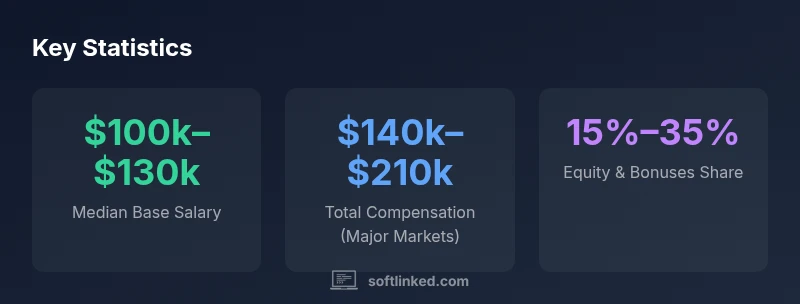
Software engineering income varies widely by region, role, and experience. In the United States, median base salaries typically run in the $100k–$130k range, with total compensation often higher in major tech hubs. Senior roles and in-demand specializations can push earnings well beyond six figures, especially when equity and bonuses are included. Compensation structures often differ by company size, remote work policies, and equity packages.
Understanding software engineering income
According to SoftLinked, software engineering income is a function of skill depth, market demand, and the value delivered to customers. Income is not a single number but a portfolio of cash pay, annual bonuses, stock options, and benefits. In 2026, the pathway to higher earnings is less about a single jump and more about stacking value: mastering high-demand domains, taking on leadership responsibilities, and showing measurable impact on product outcomes. This means investments in learning, project outcomes, and stakeholder communication pay off financially over time. Aspiring engineers should view income as a multi-faceted goal: build skills, demonstrate impact, and navigate the right opportunities that pair compensation with career growth.
Key drivers of earnings
Several threads consistently shape software engineering income: location and cost of living, company size and stage, technology stack and domain, and personal negotiation strategy. Regional market gaps can widen or compress pay bands; remote work can expand opportunity but may still align compensation with local benchmarks. Specializations such as cloud engineering, data platforms, AI/ML, and security typically command premium due to higher demand. Performance-based raises and promotions can accelerate salary growth, while equity-heavy offers may raise total compensation significantly in startups or scale-ups. Finally, early-career engineers who focus on tangible impact (clear metrics, successful releases, reduced downtime) tend to see faster salary progression.
Regional variation and cost of living
Salary alone does not tell the full story. In high-cost regions, base salaries often skew higher to offset living expenses, whereas in lower-cost regions, base pay may be lower even if workload and responsibilities are similar. Remote positions complicate this dynamic further, enabling access to markets with higher compensation without relocating. Total compensation in markets with high demand for engineering talent—such as major metropolitan areas—frequently includes more performance bonuses and equity, which can substantially widen the earnings gap compared with non-remote roles in other regions. When evaluating offers, always compare total compensation and cost of living adjustments across multiple markets.
Roles and experience: how income scales
Income generally scales with experience, responsibility, and leadership. Entry-level engineers often begin with solid base salaries that reflect market demand in their region, with modest equity or bonuses. Mid-level engineers typically see meaningful jumps as they own features end-to-end, mentor teammates, and influence architectural decisions. Senior engineers and staff-level roles command premium for strategic impact, system reliability, and cross-team leadership. High-demand roles (front-end, back-end, platform, data engineering) in cloud-native ecosystems tend to carry higher pay bands, especially when combined with leadership duties or architectural influence. As you move up, compensation increasingly ties to the business value you create rather than only the hours you code.
Specializations that command premium
Not all software engineering specializations carry the same paycheck. AI/ML, cloud engineering, cybersecurity, data engineering, and large-scale distributed systems are among the top-paying domains due to complex problem spaces and high impact. By contrast, generalist roles may offer solid base salaries but less dramatic jumps unless paired with leadership or strategic responsibilities. Building a portfolio of impact—such as scalable systems, data pipelines, or secure architectures—helps justify higher compensation. Upskilling in in-demand stacks (such as Kubernetes, Terraform, or distributed databases) often yields tangible salary bumps and better negotiating positions when changing roles.
Non-salary components and total compensation
Total compensation often dwarfs base salary in high-demand markets. Equity grants, stock options, signing bonuses, relocation stipends, and comprehensive benefits contribute significantly to earnings. Companies may also offer learning budgets, wellness stipends, and remote-work allowances that add value without appearing as direct cash pay. When evaluating offers, consider vesting schedules, anticipated company performance, and potential liquidity events. A compelling compensation package may include a mix of cash, equity, and long-term incentives that align with your risk tolerance and career goals.
Strategies to increase earnings
To actively raise software engineering income, adopt a structured plan: (1) identify high-demand domains and compatible roles; (2) acquire in-demand skills through targeted projects or certifications; (3) build a track record of measurable impact; (4) expand your professional network and seek mentorship; (5) practice salary negotiations with market benchmarks and a clear value case; (6) pursue roles with generous total compensation, including equity and performance bonuses. Regularly update your resume and portfolio to reflect impact, not just responsibilities. Finally, consider exploring opportunities at companies known for strong compensation philosophies and transparent pay bands.
Case scenarios: translating salary bands into real offers
Scenario A: A mid-level backend engineer in a high-demand city, with 4–6 years of experience, targets a base salary around the mid-point of the market with a 15% equity component. Scenario B: A senior AI/ML engineer working remotely with a global team negotiates a higher base plus a performance-based bonus, leveraging a strong portfolio of model deployment and production-grade systems. Scenario C: A cloud security engineer in a major tech hub negotiates base pay plus significant equity and a signing bonus due to critical expertise and scarce supply. In each scenario, the focus is on total compensation, career impact, and long-term growth rather than base pay alone.
Preparing for salary discussions: practical steps
Effective salary discussions start with thorough market research and a well-structured value case. Gather salary data from multiple sources, account for location and company size, and prepare concrete examples of impact (revenue, uptime, user growth). Practice a confident, collaborative tone and propose a staged plan for raises tied to milestones. Don’t assume a single number will satisfy; seek alignment on total compensation, benefits, and learning opportunities. Finally, plan your negotiation around your timing (performance reviews, promotions, or new-role offers) to maximize leverage.
],
dataTable
captions
Salary ranges by experience level
| Experience Level | Base Salary Range | Total Compensation Range | Notes |
|---|---|---|---|
| Junior/Entry (0-2 yrs) | $60k-$90k | $90k-$120k | Location and company size drive variance |
| Mid-level (3-5 yrs) | $90k-$120k | $120k-$170k | Specialization boosts pay |
| Senior (6+ yrs) | $120k-$180k | $170k-$260k | Leadership roles can include equity |
Your Questions Answered
What is the typical base salary range for entry-level software engineers?
Entry-level software engineers usually see base salaries in the six-figure range depending on location, with potential growth as you onboard and gain project experience. Additional compensation often comes from signing bonuses or equity in startups. Salary growth accelerates with proven impact and responsibility.
Entry-level salaries are typically in the six-figure range, varying by location and company size.
How does location impact software engineering income?
Location strongly affects base pay due to cost of living and market demand. Tech hubs typically offer higher base salaries, but remote roles can reduce regional disparities. Always assess total compensation, not just the base salary.
Location matters a lot; big tech hubs pay more, but remote roles can help widen options.
What is total compensation in software engineering?
Total compensation includes base salary, bonuses, equity, and benefits. In many firms, equity can form a meaningful portion of annual earnings, especially in startups or scale-ups. Consider both cash and long-term value when evaluating offers.
Total compensation means salary plus bonuses, equity, and benefits.
Do salaries vary by specialization within software engineering?
Yes. Specialties like AI/ML, cloud, data engineering, and security tend to command higher compensation due to demand and impact. Building expertise in high-demand domains can accelerate salary growth.
Specializations with high demand can boost pay.
How can I negotiate a higher salary?
Research market rates for your role and location, prepare a value-based case, and practice negotiation conversations. Seek alignment on total compensation, not just base pay, and consider staged increases tied to performance.
Know your market value and present a solid case for your impact.
Is equity a reliable part of software engineering income?
Equity can significantly boost income in startups and scale-ups but comes with risk. Evaluate vesting schedules and company prospects before negotiating equity too aggressively.
Equity can add substantial value but carries risk; assess carefully.
“Salary growth in software engineering is tightly linked to skill depth, impact, and proven delivery in high-demand domains.”
Top Takeaways
- Know the broad income landscape for software engineers in 2026
- Total compensation matters as much as base salary
- Specializations and leadership drive the biggest increases
- Location and company stage (startup vs enterprise) influence pay
- Negotiate for total package, including equity and bonuses