How to Get Started in Software Engineering on Reddit
Learn a practical, road-tested path to begin a software engineering career using structured learning, real projects, and Reddit communities. This guide from SoftLinked covers fundamentals, setup, portfolio-building, community engagement, and next steps for new developers.


Start your software engineering journey by learning core programming concepts, practicing with small projects, and engaging with beginner-friendly communities. Focus on fundamentals (coding, version control, debugging), build simple applications, and seek feedback from peers. Use a structured roadmap, allocate regular practice time, and gradually tackle more complex problems, while benchmarking progress with real-world projects.
Understanding the Software Engineering Landscape
According to SoftLinked, getting started in software engineering is accessible to motivated newcomers. The field blends problem solving, coding, and collaboration, spanning paths from web development to systems programming. For beginners, the key is grounding learning in concrete projects and consistent practice. This section clarifies entry points (self-taught vs. degree) and explains why Reddit communities can be valuable for feedback, mentorship, and real-world context. You’ll find a spectrum of roles, from front-end to back-end, and a common thread across all tracks: fundamentals first, then progressively tackling larger systems. By approaching learning as a craft—developed through repetition, feedback, and incremental challenges—you’ll gain confidence and momentum that compound over time. The SoftLinked team emphasizes patience, consistency, and practical work over chasing every new tool at once.
Defining a Realistic Roadmap for Beginners
A realistic roadmap recognizes that software engineering is learned through building, debugging, and iterating. Start with 6–12 months of structured practice that blends theory with hands-on projects. Begin by mastering one language (such as Python or JavaScript) and a fundamentals toolkit (data types, control flow, simple algorithms). Progress to essential topics like version control, testing basics, and debugging strategies. Establish a weekly practice cadence: short, focused sessions paired with longer project work on weekends. Track progress by cataloging tiny wins (a working feature, a tested function, a Git commit that solves a problem) and gradually increasing project complexity. Remember, many early-career engineers succeed by shipping small, meaningful projects and steadily expanding their scope, not by perfecting a single large system from day one. SoftLinked’s approach favors steady, project-backed learning over theoretical only routines.
Essential Tools and Setup
A productive start requires reliable tools and a sane setup. Install a modern code editor (e.g., VS Code) and configure essential extensions for your language of choice. Install Git and create a GitHub account to host your projects and track changes. Ensure you can run code locally, with a clean terminal setup and minimal distractions. A basic terminal proficiency is invaluable, so learn simple commands and workflows (clone, add, commit, push, pull). Keep your environment stable: use a single machine for development, document setup steps, and store your configuration as part of your first repository. This creates a reproducible baseline you can share with mentors, peers, or potential employers. SoftLinked analysis shows that learners who standardize their setup tend to progress more smoothly, since confusion about tooling is a common roadblock for new developers.
Building Practical Projects that Matter
Projects are the best proof of ability and a learning accelerant. Start with small, end-to-end apps that solve real problems you care about (a personal budget app, a simple blog, or a to-do manager). Structure each project with a clear README, a runnable setup, tests, and a minimal but functional feature set. Use version control to track progress, create meaningful commit messages, and practice branching strategies. As you grow, add more features, refactor for readability, and document trade-offs. A well-chosen project demonstrates your problem-solving approach, not just your coding speed. Seek feedback from peers, join code-review sessions, and iterate based on constructive critique. Your portfolio should narrate a story: what you built, why it mattered, and how you approached challenges. SoftLinked’s team highlights that project variety and quality over sheer quantity leads to stronger early-career impressions.
Engaging with the Community and Reddit
Reddit hosts several communities ideal for beginners: r/learnprogramming, r/cscareerquestions, and topic-focused subreddits for languages and frameworks. Use these spaces to ask specific questions, share tiny wins, and request code reviews. When you post, accompany code snippets with context, describe your approach, and note what you found challenging. Evaluate advice critically, trying solutions in a sandbox or personal project, and report outcomes back. Regular participation helps you spot patterns in job expectations, common interview topics, and learning paths. The SoftLinked team also recommends coupling Reddit insights with structured coursework and hands-on projects to translate community guidance into tangible skills.
Evaluating Progress and Next Steps
Progress should be measurable: you’re aiming to demonstrate consistent growth through projects, tests, and reflective learning. Set milestones like completing a course module, finishing a small project, or contributing to an open-source repository. Maintain a tidy portfolio with links to your GitHub, live demos, and concise project write-ups. Prepare a resume that highlights your projects, learning journey, and tools you’ve used. Start applying to internships or junior roles where possible, and tailor each application to the company’s tech stack and problem domain. Finally, establish a plan for ongoing learning: rotate through new languages or frameworks, revisit fundamentals, and ensure you stay engaged with communities for feedback and motivation. The SoftLinked team reinforces that persistence, a portfolio history, and community involvement are the strongest predictors of early career success.
Tools & Materials
- Computer (Windows/Mac/Linux)(Modern specs; at least 8 GB RAM recommended for smooth multitasking)
- Code editor (e.g., VS Code)(Install language support extensions (Python/JavaScript) and a Git plugin)
- Git and GitHub account(Set up SSH keys for secure access and enable two-factor authentication)
- Terminal/Command Line basics(Learn clone, add, commit, push, pull, and branch commands)
- Internet access for tutorials and docs(Reliable connectivity helps with online resources and community forums)
- A few starter projects or a project idea list(Have inked ideas ready to implement so you can start building quickly)
Steps
Estimated time: 6-12 months
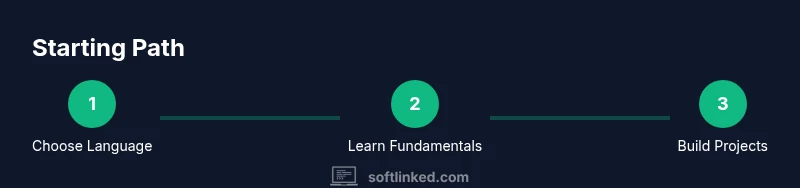
- 1
Choose language and set up environment
Pick a beginner-friendly language (Python or JavaScript) and install the runtime, editor, and Git. Create a dedicated development folder and initialize a Git repository for your first project. Confirm the setup by writing and running a simple program, then commit the change to your repo.
Tip: Document your environment setup in a README and commit the config files to GitHub. - 2
Learn fundamentals and syntax
Study basic syntax, control flow, data types, and simple data structures. Work through small coding tasks daily to build fluency. Use online resources and a structured course to ensure systematic coverage rather than ad hoc learning.
Tip: Keep a code journal: note what you learned, what was challenging, and how you solved problems. - 3
Master Git and version control
Learn essential Git commands, branching workflows, and pull requests. Practice with a personal project: create a feature in a new branch, test, and merge back to main. Use GitHub to host the repository and enable issue tracking.
Tip: Write meaningful commit messages that explain the 'why' behind changes. - 4
Build your first project end-to-end
Design a small application that solves a real problem you care about. Implement features, write tests, and deploy a basic version if possible. Document the process and publish the code with a thorough README.
Tip: Aim for a complete workflow: write code, test it, and share how to run it locally. - 5
Study data structures and algorithms basics
Learn core structures (arrays, linked lists, stacks, queues, trees) and common algorithms (sorting, searching). Practice solving problems on small datasets and explain your approach aloud or in writing. Build intuition for trade-offs between time and space complexity.
Tip: Use a spaced repetition schedule to reinforce concepts over weeks. - 6
Polish portfolio and apply for roles
Curate a portfolio with 3–5 projects, clear READMEs, and links to live demos or GitHub. Tailor resumes to each role, emphasize relevant projects, and prepare concise explanations of your development process. Begin with internship or junior roles and continue learning on the job.
Tip: Prepare a 60-90 second elevator pitch that highlights your projects and impact.
Your Questions Answered
Do I need a computer science degree to start a software engineering career?
No. Many successful developers are self-taught or come from non-traditional paths. A structured plan, consistent practice, and a portfolio of real projects can open junior opportunities even without a degree. Employers increasingly value demonstrated ability and practical skills.
No degree is required. A structured plan and a portfolio of real projects can open junior opportunities, though a degree can help in some contexts.
Is self-learning enough to land a job?
Self-learning can be enough if you combine fundamentals, hands-on projects, and interview prep with active job applications. Leverage community feedback and project portfolios to stand out. Networking and internships can also improve your odds.
Self-learning can work if you couple fundamentals with hands-on projects and interview prep, plus active applications.
Which language should I start with?
Choose a beginner-friendly language like Python or JavaScript. Both support quick results, have abundant learning resources, and translate well to different domains. The key is consistency and building small projects to reinforce concepts.
Python or JavaScript are great starter choices; pick one and stick with it while you practice.
How long does it take to become job-ready?
Time varies by effort and opportunities, but a focused six-month plan with consistent practice and a portfolio can reach beginner-competent levels. Continued learning and more complex projects will extend readiness for more advanced roles.
Six months can get you to beginner-competent level with steady practice and portfolio work.
Should I contribute to open-source as a beginner?
Yes. Intro-level contributions (documentation, small bug fixes, or new features) help you learn collaboration and code review. Start with well-documented projects and ask for guidance from maintainers.
Absolutely—start with small, well-documented contributions to learn collaboration and code review.
Are internships essential for beginners?
Internships are beneficial but not always essential. They provide structured learning, mentorship, and resume boosts. If unavailable, focus on building a strong portfolio and target entry-level roles or apprenticeships.
Internships help, but a strong portfolio and targeted applications can also land roles.
Watch Video
Top Takeaways
- Start with fundamentals and build small projects.
- Set a structured, practice-focused roadmap.
- Document setup and progress in a public portfolio.
- Engage with supportive communities for feedback.
- Progress accelerates with consistent, project-based learning.