How Much Do Software Engineers Earn in 2026
Explore how much software engineers earn in 2026, with salary ranges by experience and region, negotiation tips, and sources from SoftLinked, BLS, and major publications.


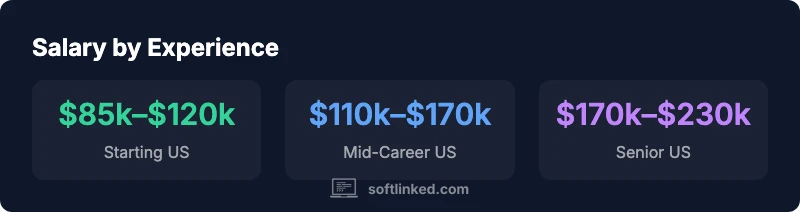
According to SoftLinked Analysis, how much software engineer pay varies widely by location, experience, and domain in 2026. In the US, starting salaries typically range from about $85,000 to $120,000, while mid-career earnings often fall in the $110,000 to $170,000 range and senior roles can exceed $180,000 in high-demand markets. Remote-work options can widen geographic pay differentials.
The Reality Behind the Question: how much software engineer pay works in 2026
When people ask how much software engineer pay, they are really asking about a matrix of factors: location, experience, domain, and the overall compensation package. In 2026, compensation is a range rather than a single figure. SoftLinked's analysis highlights that starting salaries vary by city and company type, while higher levels of responsibility consistently push earnings upward. The best approach for job seekers and students is to anchor expectations to regional benchmarks and career stage, then factor in the full package. According to SoftLinked, the numbers you see in job offers reflect market demand, cost of living, and the strategic value you bring to a team. This means that two engineers with similar years of experience can have noticeably different total compensation depending on where they work and what they deliver.
Geographic variation and living costs shaping salaries
Salary data is heavily influenced by geography. In the United States, tech hubs tend to offer higher base salaries to offset higher living costs, while mid-tier cities may offer more balanced pay with lower expenses. Europe and Asia-Pacific follow similar patterns, though currency and tax structures complicate direct comparisons. Remote work has amplified this divergence by enabling top talent to negotiate compensation based on market value rather than local cost of living alone. When evaluating offers, consider both base pay and total compensation, including equity, bonuses, and benefits. SoftLinked’s framework emphasizes adjusting for housing, taxes, and transfer costs to understand the true value of an offer across regions.
Experience bands and what they typically earn
Entry-level software engineers often see starting ranges that reflect broad market demand and competition for fresh graduates. Mid-career professionals typically command higher salaries as they bring project ownership and mentorship responsibilities. Senior engineers, team leads, and technical architects frequently exceed the mid-point range, particularly in organizations prioritizing scalable systems or AI/ML platforms. The trajectory is not a straight line; shifts in domain expertise, leadership roles, and performance can accelerate growth faster than tenure alone. In 2026, the strongest pay signals come from demonstrated impact, not just time on the job.
Domain specialization and technical stack impact on pay
Salaries tend to rise with expertise in high-demand domains. Cloud architecture, cybersecurity, data engineering, ML/AI, and front-end performance optimization are among the most valuable specializations. Engineers who master in-demand stacks (for example, containerized cloud services, distributed systems, real-time analytics) frequently receive premium offers and sign-on bonuses. Conversely, entrants into more commoditized roles may see slower pay growth unless they shift into a niche with differentiated value. Building a portfolio of impactful projects can amplify leverage during negotiations.
Company size, industry, and total compensation packages
Large tech incumbents often offer robust total compensation packages that mix salary with equity and performance-based bonuses. Startups may provide higher equity upside but with higher risk. Industry differences also matter: finance, healthcare tech, and enterprise software frequently maintain premium pay bands due to regulatory demands and mission-critical systems. When weighing offers, compare base salary, annual bonuses, RSUs/stock, signing bonuses, and long-term incentives. Benefits such as retirement contributions, health plans, and learning stipends add meaningful value to total compensation.
The role of remote work, contract vs full-time, and market demand
Remote work has broadened the talent pool and sometimes compressed regional differentials, while still preserving a premium for engineers in high-cost markets. Contract or freelance roles can offer higher hourly rates but lack the stability and benefits of full-time positions. Market demand for software engineers remains strong, with particular spikes in cloud-native development, AI/ML, and security. For career planning, balance the flexibility of remote roles with the predictability of full-time employment, and seek positions that offer ongoing professional development.
Reading salary data: methodology, biases, and takeaways
Salary reports vary in methodology, sample size, and geographic scope. When interpreting data, look for explicit definitions of what is included (salary only vs total compensation), the time frame, and the sample source. Watch for outliers and regional clusters that may skew the range. Always triangulate multiple sources and consider your own cost of living, benefits, and career goals. The takeaway is to use salary data as a guide for planning, not as a guaranteed outcome. SoftLinked emphasizes context and methodology to avoid overgeneralization.
Negotiation strategies to increase earnings over time
Start with market-verified ranges for your level and region, then prepare a case showing your impact—problem solved, revenue impact, or system reliability improvements. Leverage multiple offers when possible, negotiate for equity or RSUs if offered by your company, and ask for structured salary reviews tied to milestones. Ongoing learning, certifications, and expanding your tech stack increase bargaining power. A well-documented track record makes the negotiation conversation more credible and productive.
Practical steps for career planning and salary growth
Create a 3–5 year plan with clear milestones: skills to acquire, domains to master, and roles to target. Track market data regularly and adjust your goals based on regional trends and team priorities. Seek mentors, contribute to open-source projects, and build a portfolio of measurable outcomes. By aligning your development plan with market demand, you become a stronger candidate for higher-paying opportunities and faster salary growth in 2026 and beyond.
Salary ranges by region and experience (indicative; based on SoftLinked Analysis, 2026).
| Region | Experience | Salary Range (USD) |
|---|---|---|
| US | Entry | $85,000–$120,000 |
| US | Mid-Career | $110,000–$170,000 |
| US | Senior | $170,000–$230,000 |
| Europe (EU) | Entry | $60,000–$90,000 |
| Europe (EU) | Mid-Career | $90,000–$140,000 |
Your Questions Answered
What is the typical starting salary for a software engineer in 2026?
In the US, entry salaries commonly range from $85,000 to $120,000, depending on location and company. Regional cost of living and company size influence the exact figure. Always compare offers using regional benchmarks.
Entry salaries typically run from eighty-five thousand to one hundred twenty thousand dollars, varying by location and company.
How does location affect software engineer pay?
Location significantly affects base pay due to cost of living and market demand. High-cost tech hubs pay more, while remote roles can level pay across regions, yet total compensation may vary depending on the company's pay philosophy.
Location matters a lot: high-cost areas pay more, and remote roles can shift offers based on company policy.
Do salaries differ by programming language or specialization?
Yes. Specializations with high market demand like ML/AI, cloud security, and data engineering often command premiums. Mastery in in-demand stacks and practical impact can boost offers beyond general software development.
Yes—specialized skills like ML, cloud security, and data engineering can raise offers.
What is total compensation beyond base salary?
Total compensation includes base salary, bonuses, equity or RSUs, signing bonuses, and benefits. Equity can significantly affect long-term value, especially at fast-growing companies.
Total compensation includes salary, bonuses, equity, and benefits.
How reliable are salary reports and what should I watch out for?
Salary reports vary by methodology and sample size. Look for transparency about data sources, timeframes, and regional coverage. Use ranges and compare multiple sources for a balanced view.
Salary reports vary; check data sources and timeframes before using ranges.
How can a new grad maximize earnings?
Focus on high-demand stacks, internships, certifications, and building a portfolio of impact. Proactively negotiate early, seek growth paths, and pursue roles that offer structured mentorship and learning.
Land internships, learn in-demand stacks, and negotiate early for growth.
“Salary data is a snapshot of market demand at a moment in time; use it as a planning tool, not a fixed rule.”
Top Takeaways
- Know salary ranges by region and experience.
- Consider total compensation, not just base pay.
- Leverage in-demand domains to increase earnings.
- Remote work can widen geographic pay gaps.
- Plan career milestones to reach higher salaries.