How Much Do People Who Sell Software Make?
Explore earnings for software sales professionals, from entry-level to senior roles, with salary ranges, commission structures, and factors affecting pay across regions and markets.


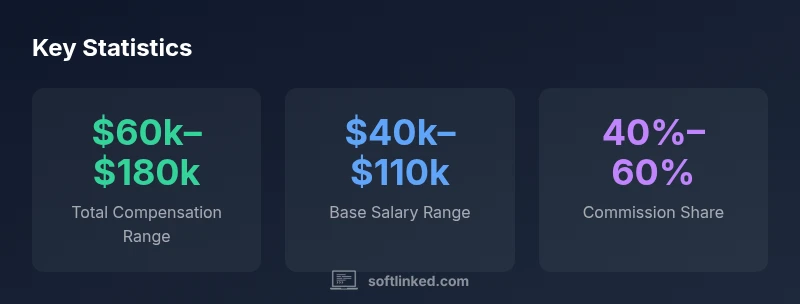
How much do people who sell software make varies widely by role, region, and experience. On average, total compensation typically falls in the broad range of $60,000 to $180,000 per year, reflecting base salaries plus commissions or bonuses. Entry-level roles lean toward the lower end, while senior account executives and enterprise sellers can reach higher tiers with performance-driven incentives.
How software sales roles differ
Software sales spans several distinct roles, each with its own pipeline dynamics and deal sizes. Inside sales reps typically handle high-volume, shorter-cycle transactions, focusing on outbound outreach, discovery calls, and closing smaller deals—often with simpler product portfolios. Account executives (AEs) manage mid-to-large opportunities, balancing multiple stakeholders and longer sales cycles. Enterprise sellers pursue strategic, high-value contracts with complex procurement and cross-functional coordination, reflecting greater risk and potential rewards. In many teams, sales engineers or pre-sales staff support technical credibility, helping move complex deals to closure. Leadership tracks—regional managers or directors—add management bonuses and quota multipliers that can significantly affect total compensation.
Understanding these differences helps job seekers forecast earnings, tailor negotiations, and choose paths that align with strengths, whether they prefer rapid, transaction-driven wins or long-term partnerships. Compensation is not just a salary; it’s a stack of base pay, commissions, accelerators, and equity or stock options in startup contexts. This mix is shaped by quota design, territory structure, product maturity, and the health of the sales organization.
How pay is structured
Most software sales roles feature a base salary plus a variable component tied to On-Target Earnings (OTE). The exact split varies by company and region, but a common pattern is a base that ranges from roughly 40% to 70% of total compensation, with commissions and accelerators making up the remainder. Quotas determine the payout pace: hitting 100% of target often unlocks commissions, while overachievement yields higher accelerators. Draws, where allowed, provide a guaranteed income during ramp periods but must be repaid through commissions later.
Other components may include signing bonuses, annual bonuses for overall performance, and stock options in startups. The presence of pre-sales or solutions engineering roles can influence earnings by enabling higher deal velocity and larger closes. Finally, leadership roles introduce management bonuses and team-based incentives that can significantly affect earnings potential.
Geographic and market variations
Pay for software sellers varies considerably by geography and market maturity. In North America and Western Europe, base salaries tend to be higher, but total compensation often scales with cost of living and local demand for tech talent. In emerging markets, base salaries may be lower, yet aggressive growth and quota opportunities can offset the gap for top performers. Currency fluctuations, local tax regimes, and the structure of regional sales teams all shape compensation packages. It’s essential to compare not only base pay but also On-Target Earnings (OTE) and the stability of the pay mix when evaluating offers across regions.
Role-level pay ranges and benchmarks
Compensation bands widen as you move from entry-level to senior roles. Matches below illustrate typical ranges across common software sales tracks, emphasizing that actual numbers vary by company, product complexity, and sales cycle length. Use these ranges as a starting point for negotiations and as a yardstick for assessing offers. Remember that OTE and accelerators can dramatically reshape take-home pay for top performers.
- Inside/Outbound Sales: base generally lower than field roles, with strong commission potential.
- Account Executive (Mid-level): higher base with solid commission opportunity, reflecting mid-size deals.
- Senior Enterprise Sales: higher base and larger commissions tied to strategic, high-value deals.
- Sales Director/VP: substantial base plus management bonuses and team-based incentives.
Factors that influence commissions
Commission structures are shaped by several levers:
- Quota size and design: steeper quotas often come with higher accelerators.
- Territory and product mix: broader portfolios or strategic accounts can yield larger commissions.
- Deal size and sales cycle: enterprise deals command bigger payouts but require longer cycles.
- Product maturity and competition: newer products may offer larger upside to accelerate adoption.
- Team performance: team-based bonuses reward leadership in high-velocity environments.
- Company stage and stability: startups may offer equity alongside cash incentives.
Understanding these factors helps sellers negotiate a pay plan aligned with their risk tolerance and performance expectations.
Career paths and pay growth over time
Software sales can offer clear pathways from individual contributor to leadership. Early roles build a base understanding of the sales process and product domain, while later stages emphasize pipeline development, negotiation finesse, and team management. Pay tends to rise with seniority, complexity of deals, and responsibility for larger quotas and multiple teams. Vertical moves into enterprise selling, mixed product lines, or cross-functional capacities (like sales enablement or operations) can also unlock higher earnings bands. Expect substantial variance year over year, contingent on quota attainment and market conditions, but long-term trends generally point to stronger compensation with experience and proven performance.
Negotiating compensation effectively
Preparation is essential for negotiating software sales pay. Research typical base ranges and OTE for your region and role, then ask for a clear breakdown of base, commissions, accelerators, and any equity. When possible, negotiate for a guaranteed ramp period to bridge the transition into a higher-commission structure. During negotiations, propose a performance-based plan with transparent metrics (e.g., pipeline coverage, win rate, average deal size) and request regular cadence reviews to adjust quotas as market conditions shift. Finally, seek clarity on non-monetary benefits (remote work options, training budgets, and career development) that can add meaningful value to your total compensation.
Representative pay ranges across software sales roles
| Role Type | Typical Base Salary Range | Typical Total Compensation Range |
|---|---|---|
| Inside Sales/Pre-sales | "$40,000"–"$70,000" | "$60,000"–"$120,000" |
| Account Executive (Mid-level) | "$60,000"–"$100,000" | "$100,000"–"$150,000" |
| Senior Enterprise Sales | "$90,000"–"$150,000" | "$150,000"–"$250,000" |
| Sales Director | "$120,000"–"$200,000" | "$200,000"–"$350,000" |
Your Questions Answered
What is the typical base salary for software sales roles?
Base salaries for software sales vary by role and region, typically forming a portion of total compensation. Entry-level positions may start lower, while mid-level and senior roles command higher bases in exchange for larger quota responsibilities. Use market data to anchor expectations and negotiate for a fair base that supports ramp time.
Base salaries vary by role and region; anchor on market data and negotiate for a fair starting base.
How does commission work in software sales?
Commissions are earned when quotas are met or exceeded. Many plans include accelerators that boost pay for overachievement. The exact structure—percent of quota, tiered payouts, and product-specific incentives—varies, so understand the plan details and how they scale with performance before accepting an offer.
Commissions kick in after meeting quotas, with accelerators for overachievement.
Do bonuses exist in software sales?
Yes, bonuses are common, tied to annual performance, product launches, or strategic initiatives. They supplement base salary and commissions, contributing to total compensation during the year. Clarify payout timing and eligibility when evaluating a package.
Bonuses are common and add to total compensation, with specific payout rules.
Does location affect pay more than company size?
Location commonly has a strong influence on pay due to cost of living, market demand, and regional competition for talent. Company size also matters, but regional dynamics often drive the initial salary bands and OTE. Compare both factors when assessing offers.
Location often drives pay more than company size due to market demand.
Is software sales a good long-term career path?
Software sales can be a durable career with strong earning potential, especially in enterprise and strategic accounts. Career progression toward leadership roles often yields higher compensation, but success hinges on quota attainment, ongoing skill development, and market conditions.
Yes, with growth into leadership and strategic roles, it can be lucrative.
What skills most boost commissions?
Key skills include pipeline generation, negotiation, discovery, and value-based selling. Mastery of product knowledge, competitive positioning, and building multi-stakeholder consensus accelerates deal velocity and increases commission-earning potential.
Strong selling skills and product knowledge boost commissions.
“Compensation in software sales hinges on alignment between quota, territory, and the complexity of deals; robust pay comes from a strong pipeline and consistent performance.”
Top Takeaways
- Understand role types to gauge pay bands
- Base salary is only part of total comp
- Geography strongly affects earnings
- Commissions drive pay variance
- Negotiate with clarity on metrics and structure