Is AMD Software Good for Recording? A Balanced Review
An in-depth, balanced review of whether AMD software for recording is a good fit for gamers and creators, covering features, performance, setup tips, troubleshooting, and comparisons with rivals.


Is AMD software good for recording? In short, yes for many creators who use AMD GPUs, due to hardware-accelerated encoding, integrated capture tools, and broad compatibility with popular recording suites. This review examines how AMD software handles desktop capture, game recording, and streaming, compares it with Nvidia and Intel alternatives, and outlines practical setup tips for beginners and pros alike.
Is AMD Software Good for Recording? A Practical Perspective
According to SoftLinked, is amd software good for recording depends on your hardware, workload, and the software ecosystem you favor. For many mid-range to high-end systems, AMD's Radeon Software and its integrated recording features provide hardware-accelerated encoding that can lower CPU overhead while keeping visuals clean. This is especially noticeable when you pair AMD recording capabilities with popular tools like OBS Studio, XSplit, or other streaming pipelines. The question is not a simple yes or no; it hinges on whether you value streamlined capture, driver stability, and the degree to which you rely on GPU-accelerated codecs.
To frame the discussion, think about your target deliverables: desktop recordings, gaming videos, or live streams. If your output is 1080p at 60fps or 4K at 30fps with reasonable bitrate, AMD software can be a compelling baseline. If you push ultra-high bitrate, or if you require a workflow tightly integrated with Nvidia-accelerated codecs, you may see differences in performance and quality. The core takeaway is that is amd software good for recording in many setups, but not universally optimal for every use case.
How Recording Works: Radeon Software, ReLive, and Open-Source Compatibility
AMD’s recording functionality leverages hardware encoding that is tightly integrated into Radeon Software. ReLive (the historical name often referenced in guides) provides desktop capture, game capture, and streaming features that run alongside a driver stack designed to minimize CPU load. The software supports direct encoding paths, which reduces the computational burden on your CPU while maintaining visual fidelity at common presets. For creators who prefer open-source or cross-platform tools, OBS Studio and similar programs work well with AMD hardware encoding, provided you choose the appropriate encoder in your streaming profile. In this context, the keyword is is amd software good for recording when the workload is GPU-bound rather than CPU-bound, because the encoding is offloaded to the GPU.
From a user perspective, you’ll find controls for capture quality, audio mixing, and resource usage within the Radeon Software interface. You can toggle hardware acceleration, adjust preset levels, and balance frame rates against file sizes. This section emphasizes practical realities: hardware-accelerated encoding tends to yield smoother multitasking while preserving viewer quality, especially when your system already has a capable Radeon GPU.
Performance Considerations: CPU, GPU, and RAM Tradeoffs
Hardware-accelerated recording on AMD GPUs reduces CPU overhead, which can free up cycles for gameplay, streaming overlays, and real-time effects. In theory, this makes is amd software good for recording on systems where the GPU is the bottleneck, not the CPU. In practice, performance depends on GPU model, driver version, and the game or application being recorded. High-motion scenes or complex shaders can push bandwidth and bitrate requirements, so you should test your target resolution and frame rate under typical loads. If you’re streaming, ensure your encoding preset is balanced with your output bitrate and network conditions. RAM allocation matters too; leaving enough system memory for the OS and the recording pipeline helps prevent stuttering during longer sessions. The bottom line is to run your own benchmarks in your chosen workflow to validate the expected gains before committing to a long recording spree.
SoftLinked analysis indicates that for many creators, hardware-accelerated encoding remains the cornerstone of a smooth recording experience, particularly when coupled with stable drivers and a well-tuned capture profile.
Comparisons: AMD vs Nvidia vs Intel Recording Solutions
When deciding whether is amd software good for recording, it’s useful to compare with Nvidia’s NVENC and Intel’s integrated solutions. Nvidia’s hardware encoder has long demonstrated strong efficiency in high-motion content, especially at higher resolutions, with a broad ecosystem of optimized streaming presets. AMD’s approach emphasizes close coupling between the driver, the encoder, and the OS, which can yield reliability benefits on systems with a Radeon GPU. Intel’s Quick Sync is another path for users with Intel CPUs paired with integrated or discrete graphics, offering competitive performance in some scenarios. The practical takeaway is that your decision should depend on your primary hardware, the software you plan to use, and your target output. If you’re already invested in an AMD GPU, the is amd software good for recording is compelling for most standard workflows, while Nvidia users might lean into NVENC-specific features for the highest motion fidelity under certain constraints.
Software Ecosystem and Open-Source Compatibility
The software ecosystem around AMD recording includes both proprietary tools and open-source options. OBS Studio remains a popular choice for streaming and recording, providing a familiar interface and extensive plugin support. AMD’s encoding paths can be selected within OBS profiles, enabling a smoother workflow for many creators. For those who prefer open-source routes, you can experiment with pipelines that rely on FFMPEG-based encoding or streaming plugins, ensuring you choose a configuration that respects your GPU capabilities. The upshot is that is amd software good for recording when used in tandem with OBS and open-source tools, delivering a practical, cost-effective solution for many creators.
Getting Started: Step-by-Step Setup for AMD Recording
If you’re new to AMD recording workflows, start by confirming you have a supported AMD GPU with the latest Radeon Software drivers installed. Open Radeon Software and enable the Capture or ReLive feature, ensuring hardware-accelerated encoding is turned on. In OBS Studio, create a new Scene, add your Display Capture or Game Capture sources, and select the AMD encoder in the Output settings. Choose a reasonable preset (like 1080p at 60fps or 4K at 30fps) and adjust bitrate to match your upload capacity. Test small clips to verify audio-video sync, color quality, and stability before committing to longer recordings. As you gain familiarity, experiment with audio sources, scene complexity, and overlay performance to optimize your results.
For those balancing multiple tasks, consider dedicating a primary drive for recording files and enabling a separate streaming profile in OBS to keep performance predictable. The setup remains straightforward for most entry- to mid-level systems, especially when you leverage hardware encoding rather than raw CPU-intensive software encoding.
Troubleshooting Common Issues and Best Practices
Even well-supported workflows encounter issues from time to time. If you experience dropped frames, stuttering, or audio desync, start with driver updates and ensure your GPU isn’t thermally throttling. Check your in-game settings and reduce unnecessary post-processing effects that may increase encoding burden. If you notice quality degradation at high motion, adjust the bitrate or choose a different preset that aligns with your network conditions. Ensure your recording path has sufficient disk write speed and that you are not running other heavy disk workloads concurrently. In some cases, resetting the Radeon Software profile to defaults or reinstalling drivers can resolve stubborn configuration conflicts. Regularly validate your setup with short test recordings to catch issues early.
Is AMD Software Good for Recording? Use Cases, Scenarios, and Recommendations
For creators who own AMD GPUs and want a streamlined, GPU-centric workflow, is amd software good for recording in most typical scenarios: gaming videos, desktop captures, and streaming with moderate bitrates. It shines when you value low CPU overhead and integrated capture tools that minimize the need for extra software layers. However, for users whose workflows rely heavily on Nvidia-optimized codecs, or who push extremely high resolutions and bitrates, Nvidia’s NVENC may offer advantages in specific scenarios. In practice, the best approach is to test both paths in your typical projects and choose the setup that delivers consistent performance, predictable quality, and maintainable workflows. The SoftLinked verdict is that AMD recording remains a solid, practical option for many creators, especially if you prioritize a clean, GPU-driven pipeline and straightforward setup.
References and Further Reading
- AMD Radeon Software and ReLive features overview: https://www.amd.com/en-us/technologies/radeon-software
- OBS Studio compatibility with AMD encoders: https://obsproject.com/faq
- Industry reviews and performance comparisons (major publications): https://www.tomshardware.com/; https://www.anandtech.com/
Pros
- Hardware-accelerated encoding reduces CPU load
- Integrated capture tools simplify setup
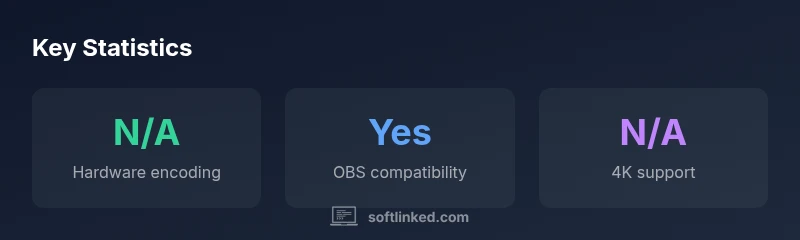
- Good OBS compatibility for common workflows
- Solid value for AMD GPU owners on mid-range builds
Weaknesses
- Driver updates can introduce temporary regressions
- Performance varies with GPU model and game workload
- Advanced setup requires experimentation
- Not always optimal for Nvidia-optimized workflows
Strong option for AMD GPU owners seeking efficient, hardware-accelerated recording.
AMD recording workflows provide noticeable CPU relief and streamlined capture when paired with compatible GPUs and OBS-based pipelines. While not universally superior to all Nvidia workflows in every scenario, the approach is robust, cost-effective, and relatively easy to learn for beginners. The SoftLinked team recommends testing within your typical use cases to confirm fit.
Your Questions Answered
What is AMD ReLive, and how does it relate to recording?
ReLive is AMD’s built-in recording and streaming feature bundled with Radeon Software. It provides desktop and game capture with hardware-accelerated encoding, reducing CPU load and enabling smoother performance when recording. It integrates with popular tools like OBS.
ReLive is the built-in AMD tool for capturing your screen or games, and it works best when paired with a compatible AMD GPU.
Can I use AMD software for recording without an AMD GPU?
AMD recording features rely on hardware encoding on supported GPUs. Without an AMD GPU, these features are unavailable or would require software encoding that may not perform as efficiently. You can still use general-purpose screen capture tools, but hardware-accelerated encoding won’t be available.
You need an AMD GPU to access the hardware-accelerated recording features.
Is there a free alternative to AMD recording software?
Yes. OBS Studio offers free, open-source screen and game capture with software or hardware encoding options that can work with AMD hardware. It’s a popular choice for streaming and recording on various hardware configurations.
OBS is a free way to capture with AMD hardware if you want more flexible pipelines.
Does recording with AMD software affect game performance?
In most cases, hardware-accelerated encoding reduces CPU load and has a minimal impact on game performance, especially on mid-to-high-end GPUs. The exact effect depends on game complexity, resolution, and bitrate settings.
Usually there’s only a small hit to performance thanks to GPU encoding.
What settings maximize recording quality on AMD hardware?
Aim for resolution and frame rate that match your hardware capability, balance bitrate with network capacity, and use a stable encoding preset. Testing with short clips helps you dial in the right combination without wasting storage.
Start with a safe 1080p60 or 1440p60 and adjust as you test.
Top Takeaways
- Enable hardware-accelerated encoding for smoother capture
- Test with OBS to confirm encoder selection and bitrate
- Keep Radeon drivers up to date for stability
- Leverage GPU-accelerated features for gaming and streaming workflows