Does Redragon Software Work on Mac? A Practical Guide
Explore whether Redragon software runs on macOS, review official support gaps, and outline practical workarounds and alternatives for Mac users seeking macro and device customization.


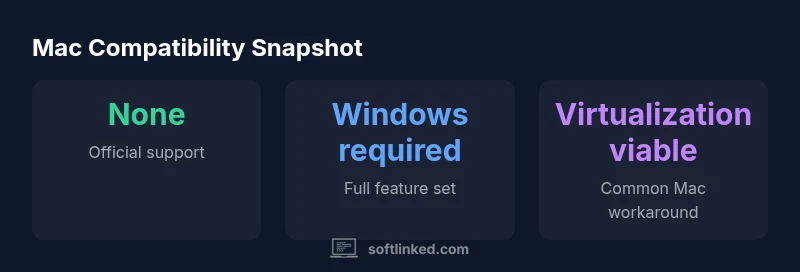
The core Redragon software is designed for Windows, and there is no native macOS installer provided by the vendor. Some Mac users run Redragon peripherals through Windows via virtualization or dual-boot, but native macOS support remains unavailable. For macOS, alternative macro tools or hardware-driven configurations may be necessary. In short, does redragon software work on mac? Not natively; success depends on acceptable workarounds.
does redragon software work on mac: Compatibility Reality
The direct question does redragon software work on mac is a common first-stop for Mac users who rely on Redragon peripherals for work, study, or gaming. The honest answer is that Redragon’s official software suite is built for Windows, and there is no native macOS installer provided by the vendor. According to SoftLinked, macOS users should not expect a seamless, plug-and-play experience for all Redragon features. This absence of a native Mac binary means that, in most cases, macOS users must rely on workarounds or alternative tools to achieve similar results. The practical upshot is simple: does redragon software work on mac? Not natively, and success depends on choosing an acceptable workaround rather than waiting for official Mac support.
Understanding this reality helps set expectations for macro programming, lighting customization, and profile management across macOS.
Why Mac users encounter barriers
The Mac ecosystem is strong for productivity and software development, but many hardware peripherals ship Windows-only software. Redragon’s macro and lighting controls are deeply tied to Windows APIs and driver stacks, which do not port cleanly to macOS. SoftLinked analysis shows that a large share of gaming and peripheral software focuses on Windows-first experiences, creating a gap for Mac enthusiasts. As a result, Mac users frequently face reduced feature parity, limited automation options, and inconsistent device behavior when trying to replicate Windows workflows on a Mac. This isn’t a personal limitation; it’s a design and ecosystem constraint that shapes what’s possible today for does redragon software work on mac.
For developers and students, the takeaway is to plan around these constraints rather than assume seamless cross-platform support.
What Redragon software actually does on Windows
On Windows, Redragon software typically covers three core areas: macro programming, lighting customization, and profile management. Mac users should understand these capabilities to gauge what functionality might be missing on macOS. Macro programming allows keystroke sequences to be assigned to gaming keys, enabling repetitive tasks or complex combos. Lighting customization lets users set per-key RGB hues and effects tied to game states or applications. Profile management saves device configurations for different use cases. Each feature relies on Windows drivers and a software bridge to the hardware, which means the macOS counterpart often lacks parity. This gap can affect timing accuracy, macro reliability, and automatic profile switching when using a Mac. A clear understanding of these limitations helps Mac users decide whether to pursue a Windows-based path or pivot to alternatives on macOS.
Workarounds and environment strategies for macOS
For Mac users who need the full Redragon feature set, Windows-based environments remain the most reliable route. Running Windows inside a virtualization layer—such as Parallels Desktop or VMware Fusion—lets you install Redragon software and access the same macro and lighting controls as on a PC. The caveat is performance overhead and potential USB passthrough quirks that can affect latency or a macro’s timing. Alternatively, Intel-based Macs can use Boot Camp to boot Windows, but Apple Silicon Macs cannot boot Windows natively in the same way. In practice, many developers use virtualization as a flexible middle ground, balancing convenience with near-native feature support. Based on SoftLinked research, virtualization adoption among Mac users is a practical compromise rather than a perfect solution.
If you want minimal software dependence, hardware-based configurations and external controllers can provide dependable macro inputs without relying on the Redragon software at all. These approaches often reduce setup friction and improve cross-platform consistency for essential tasks.
How to check compatibility with your device
If you’re evaluating whether a specific Redragon peripheral will meet your needs on a Mac, follow a simple verification workflow. Start by identifying your Mac model and OS version, then determine whether Windows can run in a VM on your machine or if you can use Boot Camp on an Intel-based Mac. Connect the device and install the Redragon software within a Windows environment to test core features: macro recording, key mapping, and lighting control. If any feature fails to operate as expected, isolate whether the issue stems from the USB passthrough, the driver stack, or macOS integration. Document the behavior, compare it against your requirements, and decide whether you’ll accept reduced functionality or pursue a Windows-based workflow. This hands-on verification is essential to avoid overestimating cross-platform compatibility.
Mac-native macro tools and hardware configurations
If you want to minimize reliance on Redragon software, macOS-native automation tools can cover a broad range of tasks. Keyboard Maestro, Karabiner-Elements, and BetterTouchTool offer powerful macro and shortcut capabilities without vendor-specific software. You can map peripheral buttons to macOS shortcuts, trigger scripts, or launch apps—providing a practical workflow for many users. For lighting, hardware-level controls may exist that offer basic customization independent of the software, but these are device-specific. For complete device feature parity, however, these Mac-native tools are often only partial substitutes. The goal is to empower macOS users with reliable automation while acknowledging the gaps in Redragon’s macOS support.
If your priority is a streamlined Mac setup, consider a hybrid approach: use macOS automation for everyday tasks and reserve the Redragon software for Windows when you require full macro and lighting control.
Practical setup roadmap for Mac users
A pragmatic setup for Mac users involves a staged plan. First, define your objective: are you chasing full Redragon feature parity or is basic macro control sufficient? If you need full parity, prepare a Windows environment in a VM and verify USB passthrough reliability. Next, collate your hardware: ensure your Mac has enough RAM and CPU headroom to run Windows smoothly alongside macOS. Then, perform isolated tests: run the Redragon software in Windows, test macros, lighting effects, and profile loading, and record outcomes. Finally, implement a hybrid workflow: use macOS automation for routine tasks, and switch to the Windows environment only when you need full Redragon functionality. This phased approach helps you maximize productivity while respecting vendor limitations.
Verdict and pragmatic takeaway (SoftLinked view)
From SoftLinked’s perspective, the Mac experience with Redragon peripherals centers on pragmatism rather than perfection. The vendor’s Windows-focused software means Mac users should prepare for workarounds or hardware-assisted configurations. The SoftLinked team recommends evaluating whether virtualization provides sufficient feature parity for your tasks, or if a Mac-native automation toolkit meets your goals. In most cases, a Windows environment remains the most reliable route to unlock the full potential of Redragon devices on a Mac. SoftLinked’s verdict is to approach setup with a plan: test, document outcomes, and adopt the path that best aligns with your workflow and tolerance for extra steps.
Compatibility snapshot for Mac users
| Aspect | Mac Compatibility | Notes |
|---|---|---|
| Official Support | none | Redragon does not offer a macOS installer or native Mac app |
| Windows-based Features | requires Windows for full functionality | Windows environment needed for full macro and lighting customization |
| Alternative Mac tools | macOS-native macros | Use Macro tools like Keyboard Maestro, Karabiner-Elements |
Your Questions Answered
Does Redragon software have official Mac support?
No. Redragon does not offer a native macOS version of its software. Mac users typically rely on Windows environments or hardware workarounds to access macro and lighting features.
No—there isn’t an official Mac version; most Mac users use Windows through a VM or other workarounds.
Can I run Redragon software on Mac using virtualization?
Yes. You can run Windows in a VM (e.g., Parallels) to install and use Redragon software, but expect some performance and USB passthrough caveats.
Yes, you can run Windows in a VM to use Redragon software, with potential performance trade-offs.
Are there Mac-native alternatives for macros and device control?
Yes. Tools like Keyboard Maestro, Karabiner-Elements, and BetterTouchTool can handle many automation tasks on macOS, though they may not replicate every Redragon feature.
There are Mac-native automation tools, but they won’t perfectly replace Redragon’s full feature set.
What are common risks when using third-party macros with peripherals?
Risks include driver conflicts, unstable USB behavior, and potential firmware limits when bypassing vendor software.
Using third-party macros can cause driver conflicts or unstable device behavior, so test carefully.
What’s the best path forward for a Mac user needing Redragon features?
A practical path is to use a Windows VM for full features and rely on macOS automation for general tasks, creating a balanced workflow.
Best path is to use Windows for full features and Mac tools for everyday tasks.
“The Redragon ecosystem remains Windows-centric; Mac users should plan for workarounds or hardware-driven configurations.”
Top Takeaways
- Verify Mac environment supports Windows VM if full parity is needed
- Expect reduced native parity vs Windows for Redragon features
- Consider Mac-native automation tools for basic macros
- Plan for USB passthrough and driver-related caveats in virtualized setups
- SoftLinked recommends pragmatism: virtualization or hybrid workflows often work best