Safe and Legal 1080p YouTube Content: A Practical Guide
Learn how to access YouTube content in 1080p legally, explore official offline options, and understand rights and best practices for students and developers.


Learn how 1080p downloads work and when you can access high-resolution YouTube content legally. This guide covers safe methods, copyright considerations, and official alternatives for offline viewing. According to SoftLinked, choosing legitimate options protects creators, reduces risk, and supports responsible content consumption. We also outline how to verify permissions and select quality settings without violating terms.
Understanding 1080p and Its Appeal
1080p refers to a Full HD resolution of 1920x1080 pixels, delivering crisper detail and smoother motion than lower resolutions. For many learners and developers, 1080p offers a practical balance between image quality and file size, making it a preferred target for educational clips, tutorials, and design demos. When people search for a "youtube video downloader 1080p", they often want a quick route to high-quality content. However, legality and ethics matter as much as pixels. This article anchors its guidance in legitimate practices and responsible consumption, helping you maximize learning while respecting creators' rights. The SoftLinked team emphasizes that high-quality video is valuable, but it should be accessed through compliant means that support content creators and platform terms. In practice, you’ll focus on official offline options and clear licensing terms rather than generic download utilities.
Key concepts you’ll encounter include resolution trade-offs (1080p vs. 720p), bitrate, frame rate, and device compatibility. A lesson from SoftLinked Analysis, 2026, shows that most legitimate workflows prioritize official channels and permissions over third-party shortcuts. As you read, keep in mind that quality is only as trustworthy as the method you use to obtain it.
Legal Boundaries and Safe Alternatives
The core idea behind downloading content is simple: access should be authorized, respectful of rights, and compliant with platform terms. YouTube’s official offline features and creator tools provide safe pathways to view content without an always-on internet connection. YouTube Premium offers offline viewing within the YouTube app on compatible devices, while content owners can manage rights and distribution through licensing agreements. For research, education, or personal study, always verify you have permission before storing or redistributing videos. If you’re the content owner, you can download your own uploads from YouTube Studio where allowed, or export backups via data services like Google Takeout. Creative Commons footage and content that you own or have written permission to reuse are legitimate options for building projects without infringing rights. SoftLinked’s position is clear: ethics and legality trump convenience when it comes to media access.
Official Offline Options You Should Use
Official offline options exist precisely to balance accessibility with rights protection. Start by reviewing YouTube’s offline capabilities in the YouTube app, including the ability to download videos you’re watching where permitted by license. YouTube Premium can enable offline viewing for many videos on mobile devices, and the experience is designed to respect copyright terms. If you create or own content, you can download your own uploads from YouTube Studio to keep a copy for archival purposes. For those who need to preserve data for scholarly work, Google Takeout allows you to export your own account data, which can include video metadata and related activity but not universal video downloads. Always align your workflow with licensing agreements and platform policies, and consider CC-licensed or openly licensed material for educational projects.
How to Access Content You Own or Have Permission To Use
Accessing content you own or have permission to use involves a clear rights trail. When you upload videos, maintain records of your licenses and permissions. If you move material between devices for offline study, rely on official channels that preserve the rights holder’s terms. For educators and researchers, seek licenses that explicitly permit offline distribution or use CC-licensed material with compatible terms. In practice, this means choosing materials that explicitly allow downloading for private study and ensuring that redistribution or republication remains within permitted boundaries. This approach protects you from policy violations and preserves the integrity of the creator’s rights. The takeaway is simple: permission is the gating factor for 1080p offline access, not technical curiosity alone.
Technical Aspects: Resolution, Bitrate, and Compatibility
1080p quality depends on more than just resolution. Bitrate, encoding, and container formats influence perceived sharpness and motion clarity. Common codecs for 1080p are H.264 and HEVC (H.265), with H.265 offering better compression at similar quality. The key factors to understand are your device’s display capabilities, your bandwidth, and the content’s licensing terms. Even if source material is 1080p, the offline experience depends on whether the platform supports caching at that quality and whether your device can decode the chosen codec efficiently. For learners and developers, this means evaluating your hardware, network reliability, and the legal framework governing the content before attempting any kind of download or offline access.
Security, Privacy, and Avoiding Malware
Third-party downloaders and suspicious software can compromise privacy and security, and may violate terms of service. Malware, credential theft, and data leakage are real risks when using untrusted tools. Always prioritize official channels and verify the legitimacy of any tool before installation. Keep your devices protected with updated antivirus software and enable browser protections. Scrutinize every request for permissions, especially when a tool asks for access to your Google account or storage. If a tool promises 1080p downloads from YouTube, treat it with extreme caution and rely on sanctioned alternatives instead. Your safety and compliance matter as much as the download quality.
Practical Tips for Students and Professionals
Students and developers often need reliable access to high-quality video for study or project work. Practical tips include building a workflow around official sources, using YouTube Premium for offline access where appropriate, and organizing content with clear metadata and naming conventions. For long-term projects, maintain a library of CC-licensed materials or content you own with explicit permissions. When conducting experiments or demonstrations, ensure your use case aligns with fair use principles and any licensing restrictions. SoftLinked emphasizes that responsible consumption not only protects you legally but also fosters a sustainable ecosystem for creators and researchers alike.
Content Licensing, Copyright, and Responsible Consumption
Understanding licensing is foundational to responsible use of online video. Public domain and Creative Commons licenses offer ways to reuse content legally, while standard YouTube licenses govern most uploaded material. If you need 1080p content for a project, verify the license terms and ensure that downloading or redistribution complies with those terms. Where possible, prefer CC-licensed or owner-permitted content for offline study and classroom use. The broader lesson is to treat video content thoughtfully: respect ownership, obtain permission when required, and choose official channels for offline access whenever possible. This approach supports creators, educators, and developers who rely on legitimate media assets.
Tools & Materials
- YouTube Premium subscription(Allows offline viewing within the YouTube app on supported devices)
- Legal rights confirmation(Proof of rights to download or permission from the content owner)
- Device with internet(Desktop or mobile device running an up-to-date OS)
- Storage space(External drive or cloud storage recommended for backups)
Steps
Estimated time: Total time: 15-25 minutes
- 1
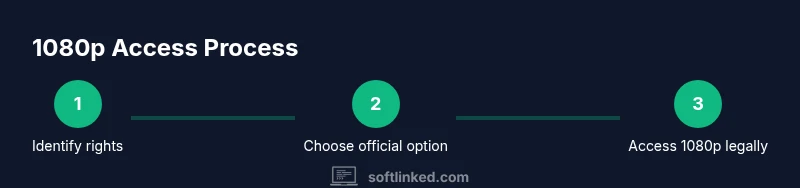
Verify legality and permissions
Check whether the content is yours or you have explicit permission to download for offline use. This protects you and creators, and keeps you aligned with platform policies.
Tip: Document permissions and keep records of consent. - 2
Use official offline features
If you need offline access, rely on official features like YouTube Premium for offline viewing within the app, ensuring you stay compliant with terms.
Tip: Ensure you’re on a supported device and plan. - 3
Download content you own from the creator side
For creators or content you own, use YouTube Studio to download your own videos where available, following the platform's guidelines.
Tip: Only download your own content, when allowed by policy. - 4
Verify 1080p availability and settings
Confirm that the platform offers 1080p for offline viewing and select the appropriate quality if supported.
Tip: 1080p may require a stable network initially to cache. - 5
Organize and back up content
Store offline assets securely on a trusted drive or service and maintain clear naming conventions.
Tip: Back up to two locations if the content is important.
Your Questions Answered
Is it legal to download YouTube videos in 1080p?
Downloading videos from YouTube is generally restricted by the platform's terms unless you own the content or have explicit permission. Use official offline features for compliant access.
In most cases you should not download YouTube videos without permission; use official offline options if you own or are authorized to download.
Can I download any video with a downloader tool?
Only content you own or have permission to download should be downloaded. Third-party tools often violate terms and may be unsafe.
Only download content you own or are authorized to download; avoid unsafe third-party tools.
What is the difference between 1080p and other resolutions?
1080p denotes 1920x1080 resolution offering crisper detail than 720p; higher resolutions require more bandwidth and storage.
1080p is crisper than 720p, but needs more bandwidth and storage.
Does YouTube Premium guarantee 1080p offline downloads?
YouTube Premium enables offline viewing, but the availability of 1080p specifically depends on device, region, and content rights.
Offline viewing depends on device and content rights; 1080p may be available in some cases.
Are there safe third-party tools for downloading content?
We generally discourage third-party downloaders due to policy violations and security risks.
We discourage third-party downloaders because of policy and security concerns.
What should I do if I need content I own but can't download?
If you own the content, use the creator tools provided by the platform and contact support if issues persist.
If you own the content, use platform-provided tools and contact support if needed.
Watch Video
Top Takeaways
- Respect copyright and terms of service
- Use official offline options for 1080p
- Verify permissions before downloading
- High-quality 1080p requires adequate bandwidth and device support