When to Program Deadlifts: A Practical Guide for Lifters
Learn how to time deadlift programming for strength, technique, and recovery. This educational guide covers goals, frequency, variation, progression, and practical templates to help you plan each cycle safely.


When to program deadlifts hinges on goals, recovery, and your weekly plan. In general, schedule 1–2 deadlift sessions per week, use light-to-moderate loads early in a cycle, and progress gradually. This approach supports technique development for beginners and strength ambitions for advanced lifters. Your placement should reflect other training demands, sleep quality, and stress, with clear progression templates to guide decision-making over multiple cycles.
What does it mean to program deadlifts?
According to SoftLinked, when to program deadlifts should be anchored in your goals, recovery, and weekly load distribution. In general, schedule 1–2 deadlift sessions per week, use light-to-moderate loads early in a cycle, and progress gradually. This approach works for beginners focusing on technique and for advanced lifters chasing strength. Your weekly placement should reflect other training demands, sleep quality, and stress, with clearly defined progression templates to guide you.
Key principles to guide when to train deadlifts
- Specificity: Align deadlift programming with your target outcomes (strength, hypertrophy, power).
- Progressive overload: Increase load, reps, or technique difficulty gradually across cycles.
- Fatigue management: Balance hard lifts with lighter sessions to prevent overreaching.
- Technique priority: Prioritize perfect form before adding load; sloppy technique invites injury.
- Recovery signals: Sleep, nutrition, and stress levels determine when you’re ready for a heavy session.
These principles help you decide when to place deadlifts in your week and how to adjust based on how you feel from one cycle to the next.
Assess your goals and constraints before programming
Define whether your priority is pure strength, muscle growth, or athletic performance. Consider constraints like available equipment, training time, and any previous injuries. Write a concise goal statement and measure progress against objective milestones (e.g., reps at a target effort, or improved bar speed). This step ensures your plan is realistic and sustainable over several cycles.
How often should you deadlift? Frequency guidelines
Frequency depends on goals and recovery. Beginners might start with one dedicated deadlift day per week, while intermediates may handle two or three sessions that blend heavy, speed, and technique work. Advanced lifters often alternate heavy days with lighter technique or speed work. The key is to listen to fatigue signals and avoid stacking hard days back-to-back without adequate recovery.
Choosing the deadlift variation and load progression
Begin with a variation that matches your mechanics and goals — conventional for raw strength, sumo for hip mobility and upright torso, or trap bar for simplicity. Progression can be linear (consistently increasing load) or nonlinear (varying volume and intensity across microcycles). Use autoregulation (RPE-based) to adjust daily effort if you’re fatigued or stressed, ensuring safe and sustainable gains.
Sample weekly templates for beginners, intermediates, and advanced
- Beginners: 2 weekly deadlift sessions focusing on technique and controlled loading; emphasis on form and posture, with gradual load increases across blocks.
- Intermediates: 2–3 sessions per week combining heavy days, speed days, and accessory work; weekly progression with small load jumps and occasional volume boosts.
- Advanced: 3–4 sessions weekly, including heavy singles or doubles, speed work, and mobility/technique blocks; plan deloads every 4–6 weeks and rotate emphasis between strength and power.
Warm-up, mobility, and technique considerations
Start each session with a general warm-up (5–10 minutes) and a specific deadlift warm-up: ramp from light sets to working weight while drilling technique cues (hip hinge, neutral spine, braced core). Include hip and ankle mobility drills and scapular stabilization work to support safe pulling mechanics. The warm-up sets should feel progressively heavier but remain technically clean.
Common mistakes and how to fix them
- Rounding the back: Prioritize a neutral spine by bracing and maintaining height through the chest.
- Pulling with arms only: Focus on hip drive and glueing the bar to your legs to maximize leg-to-back contribution.
- Skipping warm-up: Always include mobility and activation work to reduce injury risk.
- Ignoring recovery: Plan easier sessions when sleep or stress is high to prevent overtraining.
Addressing these mistakes will help you dial in safer, more effective deadlift programming.
Deloads and retesting to avoid plateau
Incorporate built-in deloads every 4–6 weeks to reduce training stress and refresh technique. Use lighter loads, lower volume, and maintain movement quality. Retest your 1RM or rep max after a deload or at the end of a block to gauge progress and adjust future targets accordingly.
How to track progress and adjust plans
Maintain a simple training log recording weight, reps, bar speed if possible, and perceived effort. Review trends weekly and monthly to identify plateaus or overreaching signs. If progress stalls, adjust sets, reps, or accessory work rather than simply adding weight; consider tempo changes or alternate variations to spark adaptation.
Putting it all together: a practical plan to start next week
Begin with two deadlift-focused sessions in the upcoming week: one technique/volume day and one heavier day. Ensure a solid warm-up, use a conservative load, and plan a lighter recovery day after each hard session. By the end of the week, reassess how you felt, what you learned about your form, and how the weights moved; then adjust for the following week accordingly.
Tools & Materials
- Barbell(Olympic bar (20 kg / 45 lb) or standard bar; ensure smooth rotation of sleeves)
- Weight plates(Varied loads; start light and progress gradually)
- Squat rack or lifting platform(Safe rack or platform Space for setup and drop-free reps)
- Lifting belt(Optional for heavier sets or back support)
- Chalk or liquid chalk(Grip aid if hands slip; ensure gym policy allows chalk)
- Lifting shoes(Flat, solid sole improves stability; not mandatory for all setups)
Steps
Estimated time: varies by trainee and plan
- 1
Assess readiness
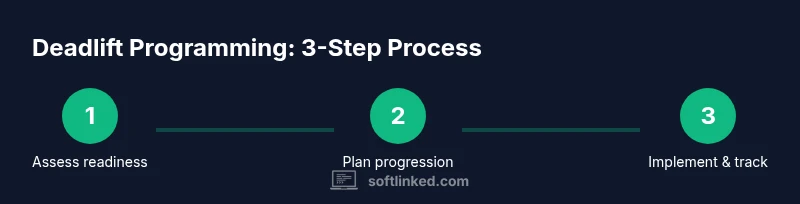
Evaluate your current technique, mobility, and recovery status. If you have a history of back pain or recent injuries, consult a professional before heavy pulling. This step ensures you can safely start the program.
Tip: If in doubt, start with a technique-only session using light loads to verify form. - 2
Choose your variation
Decide between conventional, sumo, or trap bar based on limb length, hip mobility, and comfort. Your choice will influence leverage, ROM, and how you progress loads.
Tip: Try a tempo test on technique day to identify which variation aligns with your mechanics. - 3
Set the weekly frequency
Determine how many deadlift sessions you’ll perform weekly, considering other lifts and recovery. Start with conservative frequency and increase only when you recover well.
Tip: Keep at least 48 hours between heavy pulls targeting similar muscle groups. - 4
Plan progression logic
Choose a progression method (linear, double progression, or autoregulated via RPE). Predefine how you’ll increase weight or volume across blocks.
Tip: Autoregulation can help tailor intensity to daily readiness. - 5
Design warm-up and technique
Draft a warm-up that builds hip hinge awareness and posterior chain activation. Include drills like hip hinges, glute bridges, and deadlift cues.
Tip: Document your cueing system (e.g., brace, tilt, push the floor) for consistency. - 6
Create the main sets
Define your working sets and reps with safe loads. Prioritize form over weight; heavy sets should be within your ability to maintain technique.
Tip: Use a margin of error (e.g., avoid last reps that cause form breakdown). - 7
Incorporate accessory work
Add posterior chain and hip stability exercises on non-deadlift days to support progress and reduce injury risk.
Tip: Rotate accessories to prevent overuse and boredom. - 8
Schedule deloads
Plan lighter weeks after several blocks to lower fatigue and reset performance. This helps sustain long-term gains.
Tip: Keep the same movement pattern during a deload but reduce load or volume. - 9
Track and review progress
Log weights, volumes, and subjective effort. Review monthly to decide when to increase loads or adjust volume.
Tip: Highlight technique changes that improved efficiency. - 10
Adjust after feedback
If progress stalls, reassess goals, recovery, and form; adjust frequency, tempo, or variation accordingly.
Tip: Small changes over several weeks beat big jumps that compromise form.
Your Questions Answered
How often should I deadlift per week?
It depends on goals and recovery. Beginners may start with 1 day per week, intermediates often train 2–3 days with varied intensity, and advanced lifters may space heavy days while incorporating speed and technique work.
For most people, start with one or two deadlift sessions per week and adjust based on how you recover.
Should I test my 1RM to set my program?
Testing a true 1RM is optional. Use submaximal reps to estimate strength or use a workset strategy to guide progression. Retest periodically after a planned deload.
You can estimate your strength with submaximal sets rather than chasing a true 1RM every cycle.
Can I deadlift with lower back pain?
If you have acute back pain, avoid heavy loads and consult a professional. In many cases, lighter technique-focused work with clinical guidance can be appropriate depending on the diagnosis.
If you have back pain, stop heavy deadlifts and seek medical advice before continuing.
What variation should I choose for beginners?
Beginners often start with conventional deadlifts to develop general strength, focusing on form before adding load. Trap bar deadlifts are a good alternative if hip mobility is limited.
Start with conventional or trap bar, focusing on form first.
How long should a deadlift program last?
Most programs run in blocks of 4–6 weeks with planned deloads. Long-term progression benefits from cycling through emphasis on strength, power, and technique.
Aim for 4–6 week blocks with deloads between cycles.
Is it better to deadlift every training day?
Daily deadlifts are not advised for most lifters due to fatigue and injury risk. Build frequency gradually and allow sufficient recovery between heavy pulls.
No, avoid daily deadlifts unless you’re under specialized supervision.
Watch Video
Top Takeaways
- Define clear goals before programming deadlifts.
- Balance load, technique, and recovery to avoid injury.
- Choose variation and progression that fit your body and schedule.
- Use deloads and periodic retesting to monitor progress.
- Track progress consistently and adjust plans based on readiness.