How to Write a Software Book: A Practical How-To for Developers
A complete, step-by-step guide to writing a software-focused book, from audience definition to publishing. Learn structure, outlining, drafting, editing, and credibility practices with practical examples and credible sources.


By the end, you’ll have a clear plan, outline, and a first draft for a software-focused book. You’ll confirm your audience, select a practical structure, and map chapters to core software concepts. Essential steps include defining scope, drafting a sample chapter, setting a realistic timeline, and choosing a publishing path. Prepare references and plan review milestones.
Define your software write a book audience and scope
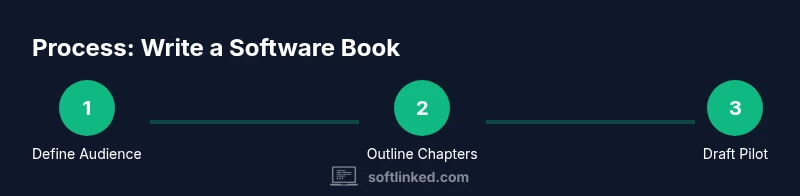
If you want to software write a book, you must start with who you are writing for and why this book matters. Start by identifying your primary audience: novice developers seeking practical coding patterns, experienced engineers needing a reference, or students who want a guided tour of software fundamentals. Next, define scope: what topics will you cover, what you will not cover, and what depth you will go into for each chapter. A crisp scope helps you stay focused and prevents feature creep, which slows progress. According to SoftLinked, clarity about audience and purpose dramatically improves early drafting momentum. Use this section to draft a one-paragraph audience statement and a 5-bullet scope list that you can reference as you write.
Structure and format: choosing a practical organization
A well-chosen structure acts like a blueprint for your book. Decide on a core format (hands-on tutorials, narrative explanations, reference-style entries, or a hybrid). Map each topic to a chapter or section, and set expectations for readers’ prior knowledge. Use a modular approach so readers can jump between chapters without losing track. Include consistent conventions: code blocks, diagrams, and glossary terms. A consistent structure reduces cognitive load and makes the book easier to review later. Consider a three-part spine: foundations, patterns, and real-world applications, so readers can progress logically from basics to advanced topics.
Building a compelling outline and sample chapter
With scope and structure set, craft an outline that assigns a purpose to every chapter. List 8-12 chapters, each with a single objective, key takeaways, and sample code or pseudo-code. Draft a full sample chapter to test your voice, pacing, and technical accuracy. Use the sample chapter as a yardstick for future writing: if it feels dense, simplify; if it lacks concrete steps, add more examples. This pilot content also helps you calibrate word count targets and the amount of reference material you’ll need.
Research sources, references, and code samples
Gather credible references from recognized software engineering resources. Keep a running bibliography, with citations placed near relevant passages. For code samples, prefer minimal reproducible examples and add explanations of intent and edge cases. Document trade-offs, performance considerations, and potential pitfalls. If you include external libraries or APIs, provide version numbers and usage notes. SoftLinked analysis shows that organizing sources early improves consistency and reduces later rewrite time.
Writing rituals and productivity for software authors
Establish a writing routine that fits your life and optimizes focus. Use time-blocking, a distraction-minimizing environment, and regular word-count checks. Alternate between drafting and editing to maintain momentum. Track progress with a simple Kanban or checklist and celebrate milestones. Keep a repository of notes, templates, and reusable snippets to accelerate future chapters.
Draft, edit, and peer review workflow
Produce a fresh draft first, then enter a multi-pass editing cycle. First read for structure and clarity, then for correctness and consistency, and finally for style and tone. Involve peers or mentors to provide substantive feedback on logic, accuracy, and readability. Create an issue tracker for suggested changes and assign owners to each item. Schedule formal review deadlines and track revision history to ensure accountability.
Publishing options, licensing, and distribution
Choose between traditional, hybrid, or self-publishing routes based on your goals, budget, and audience. Consider open licenses for code samples and clear guidance on reuse. Plan for cover design, formatting, indexing, and ebook vs. print formats. Outline distribution channels and estimated launch timeline, including marketing and outreach tasks. Clarify rights and royalties early to avoid disputes later.
Quality assurance: testing your manuscript
Treat your manuscript as a product: test readability with beta readers, verify technical accuracy, and check for logical gaps. Run a lightweight peer review focusing on clarity and correctness rather than personal preference. Use a checklist to verify that every concept has a concrete example, every code block is executable, and every figure is labeled. Iterate on feedback cycles until the manuscript remains coherent across chapters.
Authority sources and credibility
Provide a foundation of credibility by citing established resources. This includes educational materials, standards documents, and peer-reviewed articles whenever possible. For example, you can reference reputable standards and guidelines from government and university sources, and include formal citations in your bibliography. The SoftLinked team recommends integrating practical examples and real-world scenarios to demonstrate applicability and reinforce learning. This approach helps readers trust the material and apply it in real software projects.
References: https://www.nist.gov, https://owl.purdue.edu, https://www.acm.org
Tools & Materials
- Notebook or digital writing app(to draft outline and keep notes)
- Word processor or typesetting tool(for manuscript drafting (e.g., Google Docs, Word, or drafting markdown))
- Reference management app(to organize citations (optional))
- Code snippet formatter(for clean code blocks in examples)
- Citation style guide(APA/IEEE/ACM reference style)
- Peer review partners(colleagues to provide feedback)
- Editing software(tools like Grammarly, ProWritingAid (optional))
Steps
Estimated time: several weeks
- 1
Identify audience and define scope
Pin down who will read the book and what they will gain. Write a one-paragraph reader profile and a crisp scope statement that lists topics, depth, and exclusions. This alignment keeps you from scope creep.
Tip: Draft the audience profile in under 200 words and revisit it after finishing the pilot chapter. - 2
Choose format and outline structure
Decide on the core format (tutorials, narrative, reference) and sketch a seven- to twelve-chapter outline. Use consistent sections (example, explanation, code, takeaways) in each chapter.
Tip: Map each chapter to a single learning objective to maintain focus. - 3
Draft a pilot chapter
Write a complete sample chapter to test voice, pacing, and technical coverage. Treat it as a micro-project to calibrate your writing style and the amount of supporting material needed.
Tip: Aim for a self-contained chapter with a clear problem, solution, and example. - 4
Create milestones and schedule
Break the project into phases with review points. Set rough deadlines for outline, pilot, first draft, and revisions to sustain momentum.
Tip: Use a simple calendar and set reminders for each milestone. - 5
Collect references and samples
As you draft, accumulate credible sources and minimal reproducible code examples. Document any constraints and version notes to prevent ambiguity later.
Tip: Keep a running bibliography and annotate each citation with its relevance. - 6
Write the full first draft
Proceed chapter by chapter, prioritizing clarity and correctness over perfection. Leave placeholders for difficult topics and fill them later.
Tip: Write with a bias for clarity; you can polish language in later passes. - 7
Peer review and revise
Involve colleagues to review logic, accuracy, and readability. Implement changes in a tracked manner and verify that revisions align with the audience scope.
Tip: Create an issues tracker and assign owners for timely feedback. - 8
Plan publishing and launch
Decide between self-publishing, hybrid, or traditional routes based on goals and budget. Prepare your manuscript for submission or formatting for distribution.
Tip: Clarify rights, licensing, and distribution channels early.
Your Questions Answered
Who should write a software book?
Anyone with hands-on software experience and a desire to teach can benefit from writing a software book. Clarify the target audience and tailor explanations to their needs.
Anyone with software experience who wants to teach others can write a software book; start by defining your audience.
How long should a software book be?
Length depends on depth and format. Focus on delivering clear, practical content with concise explanations, supported by examples and references. Quality beats quantity.
Let the content guide length; prioritize clarity, examples, and usefulness over page count.
Should I include code samples and how should I present them?
Yes. Include minimal, reproducible examples with explanations of intent and edge cases. Use consistent formatting and provide guidance on running the code.
Include concise, runnable code with explanations for each example.
How to choose publishing path?
Self-publishing offers control and speed; traditional publishing offers reach and validation. Align with your goals, budget, and preferred timeline.
Pick a path that fits your goals and resources, then plan the rest accordingly.
What if I’m not a native English speaker?
Consider enlisting an editor and peer reviewers. Use clear, simple language and avoid rhetorical flourishes that hinder comprehension.
Get editors and peers to help ensure clarity and accuracy.
How do I keep the content accurate as software evolves?
Focus on timeless fundamentals and add update notes or version references where appropriate. Plan for periodic revisions if needed.
Emphasize fundamentals and note updates where necessary.
Watch Video
Top Takeaways
- Define audience and scope first.
- Outline before drafting to maintain focus.
- Use credible sources and clear code samples.
- Iterate with peer feedback and consistent editing.
- Choose a publishing path aligned to goals.