How to Deal with Stress as a Software Dev: A Practical Guide
A practical, educator-style guide from SoftLinked on managing stress for software developers. Learn boundaries, routines, and mental-health habits to sustain focus and code quality.


Learn to recognize stress patterns, implement practical routines, and protect deep-work time. This guide outlines a step-by-step approach to reducing burnout for developers, including planning boundaries, mindful breaks, and healthy communication with teammates. By applying these strategies, you can sustain focus, reduce frustration, and improve both code quality and well-being.
Understanding Stress for Developers
Stress is the body's natural response to demand, but when you code, it often mixes with cognitive load, tight deadlines, and constant interruptions. The software environment rewards speed and accuracy under pressure, which can push mental resources beyond comfortable levels. In practice, stress manifests as racing thoughts, shakiness, trouble sleeping, irritability, and a sense of being pulled in a thousand directions. For developers, these symptoms are frequently tied to context switching, flaky tooling, unclear requirements, and the cognitive overhead of debugging, testing, and deployments.
According to SoftLinked, many developers experience cognitive overload from frequent interruptions and multi-tasking, which erodes focus and increases frustration. The key to progress is not to avoid stress entirely, but to recognize its sources and design routines that reduce unnecessary strain. Start by mapping your typical workday: when do you feel your attention wane? which tasks trigger the most back-and-forth? Are there moments when you switch contexts more often than you complete a single task? Once you can name the triggers, you can engineer buffers, delineate mental space, and protect the quality of your code.
In this section, we lay out practical patterns for turning stress into information you can act on rather than a force that derails you. We’ll cover both quick fixes you can apply today and longer-term habits that compound your resilience over weeks and months. By building awareness and small, repeatable routines, you can stay productive without sacrificing well-being. The SoftLinked Team emphasizes that sustainable progress comes from consistent, incremental changes rather than dramatic, unsustainable shifts.
The Sources of Stress in Software Work
Stress sources in software development are diverse: looming deadlines, debugging under time pressure, flaky CI pipelines, and a backlog of pull requests can create a persistent sense of pressure. Meetings with vague outcomes, frequent interruptions, and constant context switching make it hard to reach a state of flow. Poorly defined requirements and frequent feature changes contribute to cognitive load as you rework code, run tests, and validate fixes. External factors like remote-work isolation or noisy environments also erode focus. Recognizing these sources is the first step toward targeted relief. When teams lack a stable spec or clear acceptance criteria, developers carry the extra burden of interpretation and negotiation, amplifying stress.
The practical implication is to design processes that reduce the demand-to-capacity gap. This includes clearer specs, better planning, automation, and healthier team dynamics. In the coming sections we map common sources to concrete tactics—so you can choose what to change first and build momentum quickly.
Practical Coping Strategies: Time Management
Time management is foundational to reducing stress for developers. Begin with a clear schedule that protects deep-work periods and minimizes context switching. Block 60–90 minute chunks for complex tasks like feature implementation or debugging, followed by short 5–15 minute breaks to reset attention. Prioritize tasks using a simple system: must-do today, should-do this week, can-wait. A well-groomed backlog reduces decision fatigue and provides a predictable path through your work. Consider a weekly planning routine to align personal priorities with team milestones, and set explicit finish-dates for tasks to prevent work from overflowing into personal time.
Structured routines lower cognitive load and help you predict the day’s energy highs and lows. The goal is not to cram more work but to finish meaningful work with fewer interruptions. Practical tools like calendar blocks, task tags, and progress tracking can reinforce discipline without feeling punitive. If you notice your momentum stalling, re-evaluate the next block to ensure it aligns with your current energy level and the project’s critical path.
Practical Coping Strategies: Communication and Boundaries
Clear, respectful communication is a powerful stress reducer. Proactively setting boundaries helps protect focus and reduces last-minute pressure. Use concise, concrete language when discussing commitments with teammates and managers. Examples include: “I can deliver X by date Y with these assumptions,” or “I need two uninterrupted blocks to complete this task.” Establish a reliable status routine (daily standups, updated task boards) to manage expectations without constant check-ins.
Scripts can save time and reduce anxiety. For instance, when asked to take on new work, reply with a brief impact assessment and a proposal for a feasible timeline. If a deadline feels unrealistic, propose a data-backed adjustment (e.g., additional time for testing or a staged release). Healthy boundaries also mean saying no when demands exceed capacity, and communicating proactively about blockers. Regular feedback loops with peers help keep alignment and reduce stress caused by miscommunication.
Practical Coping Strategies: Technical Practices to Reduce Friction
Technical friction is a major source of mental load. Investing in robust tooling and repeatable processes cuts down on error-prone manual steps. Emphasize automated tests, reliable build and deployment pipelines, and code reviews that emphasize learning over gatekeeping. When possible, automate repetitive tasks (linting, formatting, dependency checks) to free mental bandwidth for solving hard problems. Document decisions and maintain lightweight design principles so future work requires less re-interpretation. Reducing friction at the code level—through clear interfaces, modular design, and strong test coverage—keeps your brain from working overtime on avoidable issues.
Another source of stress relief is predictable release cycles. CI failures trigger a cascade of pressure; by stabilizing pipelines and reducing false positives, you protect developer morale and maintain velocity.
Mental and Physical Wellness Habits
Wellbeing is the bedrock of sustained software performance. Prioritize sleep, regular physical activity, and consistent meals to stabilize mood and cognitive function. Short, deliberate breaks for breathing or stretching can reset attention more effectively than a scroll through chat apps. Hydration and balanced nutrition support mental clarity, especially during long debugging sessions. Mindfulness practices—such as box breathing or a brief grounding exercise—help you regain focus after a setback. A stable routine outside work (consistent sleep schedule, morning exercise, and time for hobbies) provides resilience when project pressures spike.
SoftLinked Analysis, 2026 indicates that developers who adopt sleep hygiene, regular exercise, and scheduled breaks report steadier focus and fewer mood dips across their workweeks. While strategies vary by person, the core takeaway is to protect recovery as vigorously as you protect deliverables.
Creating a Personal Stress-Management Plan
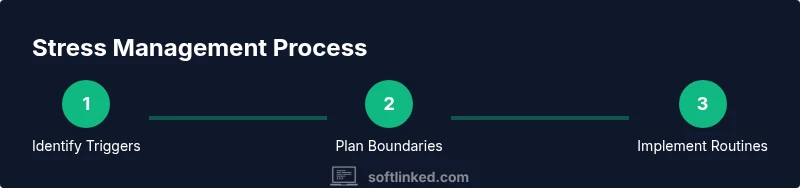
A personal plan makes stress management actionable. Start with a self-assessment: identify your top stressors, your current coping strategies, and where you tend to lose focus. Next, select a small number of concrete routines you can start this week—one deep-work block, one boundary script, and one quick wellness habit (e.g., a 5-minute breathing exercise). Put these routines into a simple calendar or task manager and review weekly for what worked and what didn’t. Measure progress not by lines of code but by consistency, energy, and satisfaction with your work. A plan that’s too ambitious quickly becomes discouraging; aim for sustainable, incremental changes that compound over time.
When to Seek Help and Resources
If stress becomes overwhelming or linked to symptoms like persistent sleep disruption, panic, or anxiety that interferes with daily life, seek help from trusted sources. Start with your supervisor or HR to discuss workload and support options. Employee assistance programs (EAPs) and mental-health resources can provide confidential guidance. If you’re dealing with persistent burnout, consider speaking with a licensed professional or therapist, and don’t hesitate to involve your healthcare provider. Building a support network—peers, mentors, and family—offers practical perspectives and emotional resilience. The SoftLinked Team encourages timely outreach when struggles exceed personal strategies.
Case Examples: Real-World Scenarios
Scenario A: A developer faces a looming deadline with a flaky CI pipeline. They pause to document the failure modes, propose a staged delivery plan, and block time for focused debugging. They communicate the risks and update the backlog with a clear, feasible plan. Result: reduced last-minute fire drills and better code quality.
Scenario B: A team experiences constant interruptions from chat messages and meetings. They implement focused deep-work blocks, reduce unnecessary meetings, and create a shared “blocked” calendar. They use a short daily standup to surface blockers and adjust workloads. Result: smoother collaboration and higher sense of control.
Scenario C: A coder notices fatigue after long sessions of context switching. They restructure their day to pair complex work with restorative breaks, practice breathing techniques, and ensure better sleep. Result: improved concentration and less cognitive drain.
Tools & Materials
- Ergonomic workspace setup(Desk, chair with lumbar support; monitor at eye level)
- Deep-work calendar blocks(Block 60-90 minutes, 2-3 times per day)
- Task backlog with priorities(Clear list to reduce decision fatigue)
- Breathing/grounding app(Guided exercises for quick resets)
- Water bottle and healthy snacks(Stay hydrated to support focus)
- Noise-cancelling headphones(Useful in loud environments)
Steps
Estimated time: 60-90 minutes
- 1
Assess your current stress
Identify your top stressors and where you lose focus. Record patterns over a week to see when you’re most productive or most overwhelmed. Use a simple diary or a notes app to capture signals.
Tip: Note both triggers and your coping responses to identify what actually helps. - 2
Define your goals and boundaries
Set realistic daily and weekly goals. Establish clear boundaries with teammates about response times and deep-work periods. Write a brief commitment you can share publicly within your team.
Tip: A short, specific boundary plan reduces scope creep. - 3
Block deep-work sessions
Schedule continuous blocks for complex tasks. Minimize interruptions by turning off non-urgent notifications and using a status indicator to signal availability.
Tip: Protect at least two deep blocks per day for critical work. - 4
Schedule regular breaks
Incorporate 5- to 15-minute breaks after each deep-work block. Use breathing or quick stretches to reset your nervous system.
Tip: Even a short reset can restore sharpness for the next task. - 5
Triage and plan your day
Begin with a quick daily plan: 3 top tasks, 1 optional, and a realistic finish time. Reassess midway and move items if needed.
Tip: Start with the smallest high-impact task to build momentum. - 6
Set boundaries with stakeholders
Communicate expectations clearly and offer data-backed timelines. Use a shared board to show progress and blockers.
Tip: Keep communications concise and objective. - 7
Practice cognitive reframing
Rewrite negative thoughts into productive questions (e.g., 'What can I control now?' rather than 'This is impossible').
Tip: Pause before reacting to reduce knee-jerk stress. - 8
Track progress and reflect weekly
Review what worked, what didn’t, and adjust your plan. Celebrate small wins and identify patterns that predict burnout.
Tip: A weekly reflection builds resilience over time. - 9
Review and adjust your plan
Update routines and boundaries as projects change. Keep what improves focus and drop what doesn’t.
Tip: Don’t overcorrect; small iterative tweaks win over time.
Your Questions Answered
What is burnout and how does it affect software development?
Burnout is a state of emotional, physical, and mental exhaustion caused by prolonged stress. In software development, it can reduce focus, slow decision-making, and lower code quality. Addressing burnout requires changes to work pace, boundaries, and support systems.
Burnout is long-term stress that reduces focus and hurts code quality. Address it by adjusting pace, setting boundaries, and seeking support.
How can I create boundaries with my team and managers?
Start with clear, specific commitments and a preferred communication window. Use a shared board to visualize workload and blockers, and practice saying no when requests exceed capacity.
Set clear commitments and a shared workload board. Don’t hesitate to say no when needed.
Are short breaks effective for stress management?
Yes. Brief breaks between tasks help reset attention, reduce fatigue, and prevent cognitive overload. Even 5–10 minutes can improve subsequent performance.
Short breaks between tasks help reset your focus and energy.
What tools help manage stress in software development?
Effective tools include calendar blocks for deep work, task boards for clear priorities, and lightweight mindfulness or breathing apps for quick resets.
Use calendars for deep work, simple task boards, and quick breathing apps to reset.
When should I seek professional help for stress?
If stress causes sleep disruption, persistent worry, or impacts daily functioning, consider talking to a licensed professional or using employee assistance programs.
If stress disrupts sleep or daily life, seek professional help or use workplace resources.
Can stress affect code quality?
Yes. High stress can impair decision-making and introduce more errors. Managing stress helps maintain focus, which supports cleaner design and fewer bugs.
High stress can reduce focus and increase errors; managing it helps code quality.
Watch Video
Top Takeaways
- Block deep-work time to protect focus
- Set clear boundaries with realistic expectations
- Use short, regular breaks to reset the nervous system
- Document and reflect to improve plans over time
- Seek help early if stress worsens