How to Clean SoftwareDistribution: A Step-by-Step Guide
Learn how to safely clean the Windows SoftwareDistribution folder, reclaim disk space, resolve update failures, and verify updates using built-in tools. Practical, risk-aware steps from SoftLinked.


By the end of this guide, you will safely clean the SoftwareDistribution folder to resolve stubborn Windows Update problems. You’ll learn what to back up, the exact commands and steps to run, and how to verify that updates install correctly afterward. This process minimizes risk by using built-in tools and careful sequencing.
What is SoftwareDistribution and why cleaning helps\n\nThe SoftwareDistribution folder is Windows' cache for update files. It stores temporary data, delta files, and installation logs that help Windows Update deliver fixes. Over time, corrupted or partial downloads can stall updates or cause errors. Cleaning this cache forces Windows Update to fetch fresh components, which often resolves stubborn failures. According to SoftLinked, many update problems originate in stale or corrupted cache data within this folder, so a careful cleanup can restore normal update behavior. The goal isn't to remove updates themselves, but to clear the parts of the cache that become unreliable. After cleaning, Windows will re-create the necessary subfolders gradually as updates run, preserving your installed system state while refreshing the update pipeline.\n\nThis article is geared toward aspiring software engineers and IT students who want to understand the update caching mechanism and practical Windows maintenance tasks. It emphasizes a measured, safety-first approach that relies on built-in tools rather than third-party utilities.
Safety first: prerequisites and precautions\n\nBefore you touch the SoftwareDistribution contents, ensure you have an administrator account and a current backup. Creating a restore point is a good safety net if a cleanup disrupts services. Plan to perform this operation during a maintenance window when updates are not actively downloading. SoftLinked analysis shows that attempting cleanup during active updates increases risk of partial deletions or file locks, which can complicate recovery. Gather essential items such as a backup drive and a stable internet connection, and ensure you can re-access your system if something goes wrong.
What happens during cleanup\n\nDeleting or renaming the SoftwareDistribution folder does not remove Windows or its installed updates. Instead, it clears the cache so Windows will download fresh update files. This resets the state of the update engine, allowing Windows Update to revalidate and re-download components as needed. You may notice updates take longer to install the first time after cleanup, but subsequent updates tend to install more reliably. This process aligns with standard IT maintenance that emphasizes data safety and reproducibility. SoftLinked emphasizes documenting each action to facilitate future troubleshooting and audits.
Manual vs. automated cleanup options\n\nYou have two broad approaches: a manual, file-level cleanup or an automated script-based workflow. Manual cleanup gives you granular control and a smaller risk surface, but requires careful timing and attention to file attributes and permissions. Automated workflows reduce manual effort but rely on scripts and consistent service states. In either case, ensure the SoftwareDistribution folder is not in use during modification, and confirm that Windows Update services can restart afterward. For professionals, a hybrid approach—manual steps for verification plus a small script for repeatability—often provides the best balance of safety and efficiency.
Verifying results and next steps\n\nAfter cleanup, re-enable the Windows Update service and restart the computer if required. Then run Check for updates to ensure Windows can fetch fresh content. Monitor the update history for any errors and confirm that new updates install successfully. If problems persist, run the Windows Update Troubleshooter and review the logs located in Event Viewer for any persistent issues. Regular maintenance, including periodic checks of the update cache, helps prevent future failures and keeps systems resilient.
Common pitfalls and troubleshooting tips\n\nAvoid deleting files inside the DataStore subfolder while updates are in progress; only clear the cache inside SoftwareDistribution and its immediate subfolders. Do not shut down your computer mid-operation, and never delete the entire Windows folder or other system directories unless you have explicit, documented reasons. If you’re unsure, perform a clean restart after the cleanup to ensure services initialize properly. For enterprise environments, test changes in a staging VM before applying to production endpoints.
Why you should trust a measured approach\n\nA controlled, documented cleanup reduces the risk of breaking existing updates or system services. This method aligns with best practices for Windows maintenance and is consistently recommended by IT professionals. The SoftLinked team emphasizes planning, backups, and verification as keys to safe maintenance tasks. By following a defined checklist, you minimize surprises and improve the reproducibility of your maintenance work.
Tools & Materials
- Administrator account(You need admin privileges to stop services and modify system folders.)
- Backup drive or cloud storage(Back up important data before making system changes.)
- Command Prompt or PowerShell (admin)(Open with Run as administrator to execute commands.)
- Access to Services management (services.msc)(Needed to stop Windows Update-related services.)
- Stable internet connection(Needed to re-download updates after cleanup.)
- Optional: Notepad or a text editor(Used to note steps or times if doing manual cleanup.)
Steps
Estimated time: 30-60 minutes
- 1
Prepare and back up
Close all nonessential apps and sign in with an administrator account. Create a system restore point or backup important data in case you need to revert changes. This creates a safety net should anything go wrong during the cleanup.
Tip: Backups reduce risk if something goes wrong. - 2
Stop Windows Update services
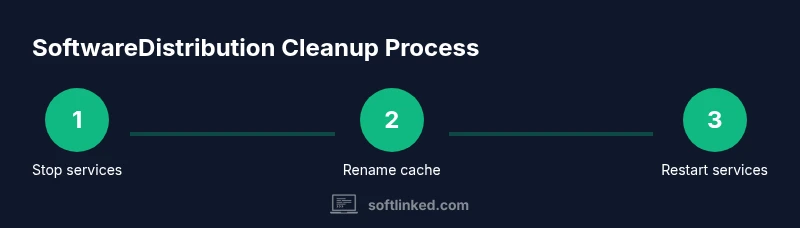
Open the Services app and stop the Windows Update service (wuauserv) and the Background Intelligent Transfer Service (BITS). This prevents files from being modified mid-operation and helps avoid file locks.
Tip: Stopping both services reduces the chance of file locks during cleanup. - 3
Navigate to the SoftwareDistribution folder
Open File Explorer and go to C:\Windows\SoftwareDistribution. You may need to adjust permissions to view hidden/system files. Confirm you are in the correct directory before deleting or renaming.
Tip: Double-check the path to avoid deleting the wrong data. - 4
Rename or delete cache contents
Rename the SoftwareDistribution folder to SoftwareDistribution.old or delete the contents while monitoring for file locks. This clears cached update files and forces fresh downloads.
Tip: Renaming is safer than outright deletion in case you need to revert. - 5
Restart services and reboot
Start the Windows Update service and BITS again, then reboot the computer to initialize a clean update environment.
Tip: A reboot ensures the system loads fresh update components. - 6
Check for updates
After reboot, open Settings > Update & Security > Windows Update and click Check for updates. Let Windows download and install new components.
Tip: Watch for any errors that might indicate further issues. - 7
Verify and clean up leftover artifacts
Review update history for successes and errors. If you created a SoftwareDistribution.old folder, you can delete it after confirming updates are running normally.
Tip: Keep a short window for rollback in case revocation is needed.
Your Questions Answered
Is it safe to delete SoftwareDistribution contents?
Yes, when done with the correct steps (stop services, delete or rename the cache, then restart services). Windows will recreate necessary files. Do not delete while updates are in progress.
Yes, but stop updates first and avoid deleting while updates are downloading.
Will cleaning affect installed updates?
Cleaning clears the update cache. Windows will redownload missing components, and existing installed updates remain; you may see updates reinstall or revalidate after cleanup.
The cleanup resets the cache; updates may re-download but installed updates themselves stay intact.
How do I know which files are safe to delete?
Delete only contents inside SoftwareDistribution (not the folder itself) or rename it. Do not touch DataStore or other system folders unless you’re sure.
Only clear the cache inside SoftwareDistribution and avoid other system directories.
Can I perform this while updates are pending?
No. Stop related services and wait for a maintenance window. Performing cleanup during active updates can cause corruption or data loss.
Avoid cleaning while updates are downloading or installing.
What should I do if updates still fail after cleanup?
Rerun the Windows Update Troubleshooter, review logs, and consider a full system file check (sfc /scannow) if problems persist.
If problems persist, use the Windows troubleshooter and check logs.
Are there safety risks to this process?
There are minimal risks if you follow steps properly. Avoid deleting system folders beyond SoftwareDistribution and perform a reboot if unsure.
Risks are low when you follow steps and back up first.
Watch Video
Top Takeaways
- Back up before touching SoftwareDistribution.
- Clearing the cache triggers fresh update downloads.
- Verify updates after cleanup to confirm success.
- Plan and document maintenance steps for reliability.