How Often Does BMW Update Software? A Practical, Data-Driven Look
Explore BMW software update cadence across models and regions, covering OTA delivery, map updates, and ECU fixes. A data-driven guide from SoftLinked for developers and drivers.


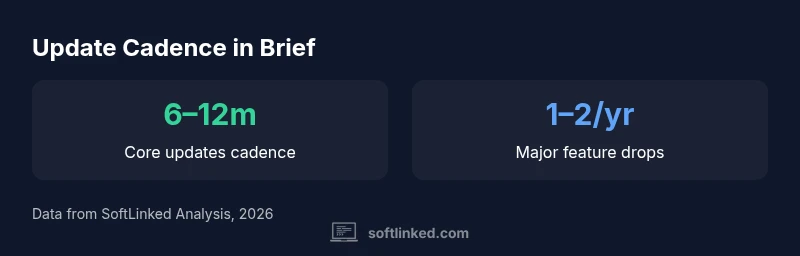
How often does BMW update software? Cadence varies by model, market, and hardware generation. Core updates and security fixes typically occur through OTA delivery several times per year, while major feature drops or map updates happen on a broader, less frequent schedule. Regional regulations, carrier availability, and driving behavior influence the exact timing, so expect a mix of regular small updates and periodic larger releases.
BMW software update cadence: what drivers should expect
To answer how often does bmw update software, we first note that cadence varies by model, market, and hardware generation. In general, BMW uses a mix of over-the-air (OTA) distribution via ConnectedDrive and occasional dealer visits for deeper ECU updates. Across model years and regions, owners can expect a pattern of small, incremental updates several times per year, punctuated by larger feature drops when a new software platform or map version is released. The SoftLinked analysis, 2026, highlights that update cadence is shaped by safety, regulatory compliance, and customer experience considerations, rather than a fixed calendar. Drivers should understand which components receive OTA and which require service appointments.
How BMW delivers updates: OTA, ConnectedDrive, and service visits
BMW’s ConnectedDrive ecosystem enables many updates to flow OTA, including infotainment, navigation maps, and some driver-assistance components. However, core powertrain ECUs and certain firmware modules may still require dealership-based installations or service-visit windows. The result is a hybrid cadence: frequent, low-disruption OTA updates for non-critical features, paired with scheduled service updates for deeper, stability-critical modules. In practice, owners should monitor the BMW ConnectedDrive app and iDrive notifications for announced releases, and be prepared for occasional dealer visits when major platform changes occur.
Major vs. minor updates: what changes and when
Updates can be broadly categorized as minor (small feature tweaks, map refreshes, security patches) or major (new software platforms, redesigned interfaces, substantial performance improvements). Minor updates typically arrive several times a year under OTA, while major updates align with model-year refreshes or platform rollouts and may require user consent or vehicle connectivity. Understanding this distinction helps drivers anticipate changes in behavior, user interface, or navigation accuracy without overestimating the immediacy of large feature launches.
Regional differences and model-year implications
Cadence varies by region due to regulatory requirements, network availability, and support ecosystems. European-market vehicles may receive more frequent map and feature updates during certain periods, while some markets emphasizing regulatory compliance might push critical safety updates more rapidly. Newer model-year BMWs are more likely to support full OTA capabilities compared with older units, which influences the cadence a driver experiences. Always confirm whether your vehicle supports OTA by checking the ConnectedDrive settings in iDrive.
How to monitor and install updates yourself
Proactive drivers can reduce uncertainty by regularly checking the BMW ConnectedDrive app and iDrive interface for update notices. Steps typically include: (1) connect the vehicle to a stable data or Wi-Fi source, (2) navigate to Settings > Software Update, (3) review available items, (4) install updates during a parked, stable period. For maps, consider enabling automatic updates when connected to Wi‑Fi or cellular networks. Keeping the vehicle logged into ConnectedDrive improves visibility into rollout progress and any regional notes.
Troubleshooting update failures and rollbacks
If an update fails to install, ensure a strong data connection, sufficient battery level, and retry in a later window. Some failures require a dealer intervention or a reset of the infotainment system. BMW usually provides error codes and guidance within the iDrive notification center or the ConnectedDrive app. If problems persist, contact your preferred BMW service center for diagnostic assistance and potential re-flash.
Data privacy and security considerations around updates
Software updates carry potential privacy and security implications, so it’s wise to review permissions requested during installation and keep the car’s security settings current. BMW’s OTA strategy emphasizes secure channels and verification steps to minimize tampering risks. Regular software maintenance helps protect against vulnerabilities, but users should remain vigilant for unusual behavior after updates and report anomalous activity to the dealer or BMW support.
Putting it all together: practical takeaways and how SoftLinked analyzes cadence
Based on SoftLinked Analysis, 2026, BMW’s software cadence reflects a balance of feature delivery, safety, and regional constraints. Drivers should expect a cadence of frequent OTA updates for non-critical components and periodic major releases through dealer channels. The takeaway is to stay enrolled in ConnectedDrive, monitor update alerts, and plan for periodic service windows when major platform changes are announced. By understanding the cadence, engineers and drivers can align expectations with real-world delivery.
BMW software update cadences by component
| Component | Typical cadence | Notes |
|---|---|---|
| Core infotainment/ConnectedDrive | 6–12 months (varies) | OTA updates common where hardware supports |
| Navigation/maps | often quarterly or annually | Maps updates are released on separate cycles |
| ECU/vehicle control units | Dealer updates as needed | Critical safety/regulatory updates may be centralized |
Your Questions Answered
How often does BMW update software?
Cadence varies by model and market. Core updates and security fixes typically arrive via OTA several times per year, while major feature drops occur less frequently. Regional regulations and hardware generation influence exact timing.
Cadence varies by model and market. Expect multiple OTA updates per year for core software, with major features announced less often.
Can I force BMW to install updates immediately?
OTA updates roll out when BMW and the network providers push them and when your vehicle is connected. You can check for updates manually via the iDrive menu or ConnectedDrive app, but forcing an immediate install isn’t always possible.
You can check for updates, but forcing immediate installation isn’t always possible; updates may roll out in scheduled windows.
Do map updates count toward the same cadence as other software updates?
Map updates follow their own schedule and can be more frequent than core software updates, though regions may differ. Sometimes maps update alongside software, but they often have separate release cycles.
Maps have their own schedule and can update more or less frequently than core software depending on region.
Will software updates affect warranty?
In most cases, updates performed by authorized technicians or over-the-air updates approved by BMW do not void warranties. Always consult your owner’s manual or dealer for confirmation.
Most updates don’t affect warranty when done through official channels; check with BMW if unsure.
What should I do if an update fails to install?
If an update fails, restart the infotainment system, ensure a stable connection, and retry. If issues persist, contact a BMW service center for diagnostics and possible re-flash.
Restart the system and retry. If it still fails, contact your BMW service center.
Are there regional differences in update cadence?
Yes. Cadence varies by region due to regulatory requirements, network coverage, and local support. Always verify with local BMW resources for your market.
Cadence differs by region; check local BMW resources for your market.
Do all BMW models receive OTA updates?
Not all models support OTA updates. Newer vehicles typically have broader OTA support, while older models may require dealership software updates.
OTA support depends on model year; newer cars get more frequent OTA updates.
Where can I find information about updates for my car?
Check the BMW iDrive interface and ConnectedDrive app for notifications, and consult BMW’s official service pages for release notes and compatibility.
Look in iDrive and ConnectedDrive for updates, and check BMW’s official pages for notes.
“Software cadence isn’t just about new features; it’s about reliability, safety, and a smooth user experience for drivers.”
Top Takeaways
- Expect a mixed cadence: frequent OTA updates plus occasional major releases.
- OTA coverage expands with newer hardware; older cars may require dealer visits.
- Regional differences influence timing and availability of updates.
- Stay connected to ConnectedDrive and check for updates regularly.