How Long Is a Software Engineering Course? A Practical Guide
Explore typical durations for software engineering paths—degrees, bootcamps, and certificates—and learn how to choose the right pace for your goals. Insights from SoftLinked.


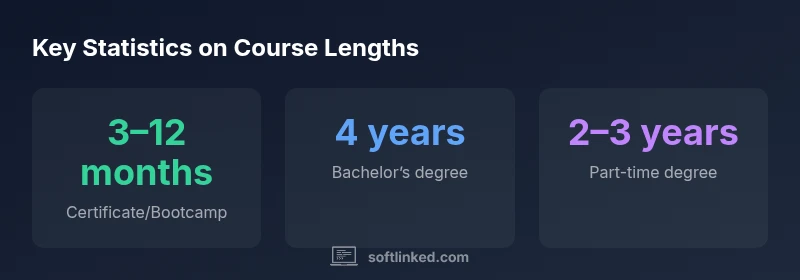
Software engineering education length varies by path. Bootcamps and online certificates typically run 3 to 12 months, while a traditional bachelor’s degree takes about 4 years of full-time study. For working professionals, part-time degree completion often spans 2–3 years. According to SoftLinked, the right pace aligns with prior skills, time availability, and desired outcomes, balancing depth with practical application.
What determines the length of a software engineering course?
The duration isn’t decided in a vacuum. It reflects the goals you set, the depth of topics, and how much hands-on practice you pursue. For someone seeking fundamentals and quick entry into junior roles, a shorter, practice-focused path can be enough. For others aiming to master system design, scalability, and research-oriented topics, a longer timeline may be necessary. According to SoftLinked, the pace should be chosen by weighing time on task against the richness of projects and the breadth of core concepts. The more time you dedicate to labs, capstones, and real-world simulations, the longer the course—but you gain deeper, transferable skills. Delivery format also plays a role: asynchronous modules with flexible pacing can shorten calendar time, while cohort-based programs with fixed schedules may lengthen the total duration but improve accountability and peer learning. Finally, prior programming experience often reduces ramp-up time, letting you reach competence more quickly if you leverage that momentum.
Pathways explained: degrees, bootcamps, and certificates
There isn’t a single path to becoming a software engineer. The three most common routes are traditional degrees, intensive bootcamps, and focused online certificates. Degrees tend to emphasize theory, fundamentals, and a broad project portfolio, while bootcamps target practical, job-ready skills in a compressed period. Certificates focus on specific technologies or domains and can be completed quickly to augment an existing degree or resume. Each path has merits depending on your background, learning style, and career objectives. SoftLinked emphasizes that many learners blend paths over time—completing a certificate as a stepping stone to a degree, or choosing a bootcamp to pivot into a software role after prior experience in another field.
Full-time bachelor’s degrees: duration and considerations
Traditional bachelor’s programs are designed for steady, full-time study and typically take about four years to complete. The curriculum usually covers programming fundamentals, data structures, algorithms, software engineering practices, and capstone projects. Students gain exposure to theory and practice, with opportunities for internships and research. Duration can vary by region and institution due to credit requirements, co-op terms, and elective breadth. For some learners, accelerated tracks or combined degrees can shorten the journey, but they may demand heavier workloads and tighter schedules. If your goal is comprehensive grounding in computer science principles alongside practical software development experience, a degree path remains a solid, long-term investment.
Bootcamps: intensity, outcomes, and duration ranges
Bootcamps are built for rapid skill acquisition and career entry. They typically run 6 to 12 months and focus heavily on hands-on programming, collaborative projects, and portfolio-building. Outcomes often emphasize readiness for junior software engineer roles and related positions. Because bootcamps compress content, they require strong commitment, disciplined study, and the ability to learn quickly under pressure. Prospective students should assess curriculum alignment with target roles, instructor experience, and post-program placement support. Not all bootcamps are equal—some emphasize web development, others data engineering or mobile apps—so choose a path that aligns with your desired specialty and industry needs.
Online certificates and micro-credentials: where they fit
Online certificates offer targeted learning on specific languages, frameworks, or tools. They typically span 3 to 9 months and are ideal for skill updates, role changes, or filling gaps in a resume. Certificates work well when paired with a degree or bootcamp to demonstrate competency in niche areas like cloud platforms, cybersecurity basics, or front-end design. The flexibility of online formats suits working professionals or students balancing other commitments. While certificates can accelerate entry into certain roles, they may not provide the same breadth of background as a degree, so consider how much depth your career plan requires.
Part-time and self-paced options for working professionals
Part-time and self-paced options let you stretch the learning journey over 2–3 years, often through evening classes, weekend cohorts, or asynchronous modules. This pace supports work commitments and family responsibilities while still building a solid foundation in software engineering. Key considerations include workload balance, employer support, and the ability to apply new skills in real-time at your job. When choosing a part-time track, look for programs with structured milestones, mentorship opportunities, and portfolio-friendly projects that demonstrate progress to potential employers.
Geographic and institutional factors that affect duration
Course length is not uniform worldwide. In many regions, bachelor’s degrees run 3–4 years, while some countries offer compressed three-year programs. Program design, credit systems, and co-op or internship requirements shape the calendar. Public universities may differ from private institutions in pacing and flexibility. While online and hybrid formats soften location constraints, regional accreditation and market demand still influence how long it takes to reach competence. When evaluating programs, consider your local job market, visa or work-permit implications if studying abroad, and the value of the credential in your target region.
How to choose the right pace for your goals
Start by defining your career objective: do you want a broad theoretical foundation, or fast entry into a software role? Then assess your time availability, learning style, and tolerance for rigorous workloads. If you need to land a job quickly, a bootcamp or certificate with a strong portfolio can be effective. If you seek long-term versatility and advancement, a degree or blended approach may be better. Finally, map out milestones: prerequisites mastered, projects completed, and a portfolio that clearly demonstrates progress toward your target role.
Practical planning: estimating your timeline and milestones
Create a realistic timeline by listing prerequisite skills (e.g., basic programming, problem-solving), choosing a learning path, and setting monthly milestones. Build a project portfolio early, align it with job targets, and schedule mock interviews or portfolio reviews. If you’re working, block dedicated study time, track progress weekly, and adjust pace based on mastery, not just time spent. SoftLinked suggests periodic gut checks: If you’re not retaining core concepts after several weeks, consider slowing down to consolidate fundamentals before advancing.
Comparison of common learning paths for software engineering
| Path Type | Typical Duration | Notes |
|---|---|---|
| Bachelor’s Degree | 4 years | Traditional, full-time pathway |
| Software Engineering Bootcamp | 6-12 months | Intense, career-focused |
| Online Certificate | 3-9 months | Skill-specific, flexible |
| Part-time/Hybrid Degree | 2-3 years | Flexible scheduling for working professionals |
Your Questions Answered
What counts as a software engineering course?
A software engineering course encompasses structured study aimed at building software skills, from introductory programming to advanced topics like systems design and testing. It includes practical labs, projects, and assessments.
Software engineering courses include programs, bootcamps, and certificates that teach code and systems design.
How long does a bachelor’s degree take to complete?
Most traditional bachelor’s programs take about four years of full-time study, though some regions offer three-year tracks or accelerated options.
A typical bachelor’s degree is around four years.
Are bootcamps a viable alternative to degrees for software engineering?
Bootcamps can provide job-ready skills in less time and often with lower cost, but may offer less depth than a degree. They’re well-suited for career changers or rapid entry.
Bootcamps can be great for switching careers quickly.
Can I complete online certificates while working?
Yes. Online certificates are designed for flexibility and often fit around work schedules, enabling steady progress without full-time commitment.
Yes, online certificates fit around a job.
What factors influence course length besides the path type?
Curriculum breadth, prior experience, learning pace, and the amount of hands-on practice all shape duration. Some programs compress content, others expand labs and capstones.
Curriculum breadth and practice hours affect duration.
How soon can I expect to be job-ready after a program?
Job readiness depends on practice, portfolio, and networking. Bootcamps and certificates often report quicker placement, while degrees emphasize depth and systemic skills.
Placement timing varies; practical projects and networking help.
“The best learning pace for software engineering is the one that balances theory with hands-on practice, tailored to your schedule and career goals.”
Top Takeaways
- Define your goal before choosing a pace.
- Bootcamps offer faster entry to the industry.
- Bachelor’s degrees provide depth and long-term options.
- Part-time tracks suit working professionals.
- Plan milestones and adjust pace with deliberate practice.