How Long Do Software Patents Last? A Practical Guide
Learn how long software patents endure, how term adjustments and maintenance fees affect duration, and practical IP planning across major jurisdictions.


In the United States, a software patent typically lasts 20 years from the earliest non-provisional filing date, subject to patent term adjustments and required maintenance fees. In many other jurisdictions, terms are also around 20 years from filing, but variations exist. The actual duration depends on filing strategy, continuations, and local patent laws.
What does the question mean in practice?
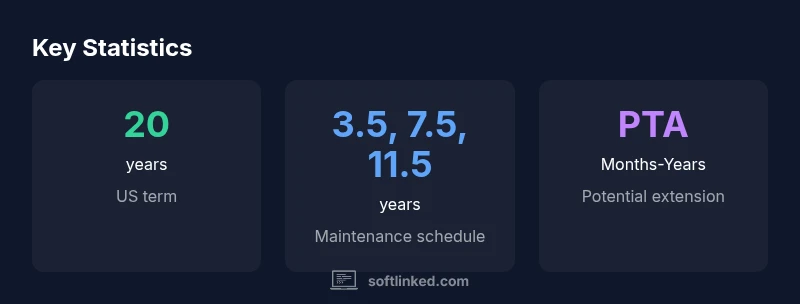
According to SoftLinked, when people ask "how long do software patents last," they are really probing the protection horizon for software-based inventions. In many jurisdictions, software patents are treated as utility patents, so the same baseline applies: a term tied to the filing date, and subject to adjustments. In the United States, the standard utility patent lasts 20 years from the earliest non-provisional filing date, but patent term adjustments (PTA) can extend that life by months or even years in some cases. Maintenance fees are due at 3.5, 7.5, and 11.5 years after grant to keep the patent enforceable. The calculation is sensitive to filings, continuations, and claim scope, so a seemingly simple duration can become more complex in practice. Across borders, many jurisdictions use a similar horizon, but national rules—such as PTA availability and maintenance structures—shape the final expiry date. For developers and startups, mapping this timeline early helps align product roadmaps with IP strategy and risk management.
Jurisdictional landscape: US, EU, and beyond
The duration for software patents varies by country, with the United States offering a 20-year horizon from the earliest non-provisional filing date, augmented by PTA where eligible and subject to maintenance fees. In the European Union, the typical baseline is 20 years from filing, and some countries offer compensatory measures or certificates under specific circumstances. In Japan and many other jurisdictions, the norm is also around 20 years from filing, with local rules affecting enforcement windows. It’s crucial to recognize that software patents hinge on the same foundational framework as other software-enabled inventions, yet the path to grant, post-grant maintenance, and enforceability can differ markedly across regions. For international strategies, consult counsel to map the expiry calendar in major markets and to assess harmonization opportunities or gaps.
How term adjustments and maintenance fees change the clock
Term adjustments (PTA) compensate for delays caused by examination or other administrative factors, potentially adding months or years to the life of a patent. Maintenance fees, due at 3.5, 7.5, and 11.5 years in the US, ensure ongoing enforceability but also create a gate that can trigger expiration if not paid. When planning a software IP strategy, estimate a baseline of 20 years from filing, then factor in PTA likelihood based on prosecution history and jurisdictional norms. The combination of PTA and maintenance costs can substantially alter the effective protection period, especially for aggressively developed software products with long development cycles. Understanding which jurisdictions provide PTA and how fees are structured helps you forecast when protection will lapse and whether extensions are worth pursuing.
Strategic considerations: protecting software IP
Beyond patent grants, there are complementary approaches to protecting software innovations. Build a clear product roadmap that weighs patenting against trade secrets, copyrights, and defensive publications. File early to establish an earliest filing date and consider continuations or divisionals to preserve broader claim scope. Monitor maintenance windows to avoid accidental expiration and plan for budgetary impacts. In some cases, keeping certain algorithms or methods as trade secrets may be more valuable than pursuing a broad patent. IP strategy should align with product strategy, market timing, and competitive dynamics, recognizing that a software patent is a long-horizon asset with potential strategic value even when enforcement is challenging.
Practical timeline planning: a step-by-step approach
- Determine the earliest non-provisional filing date and map priority claims. 2) Identify potential continuations or divisionals to broaden protection without delaying grant. 3) Assess PTA eligibility and historical grant timelines in target jurisdictions. 4) Build a maintenance-fee calendar to prevent accidental expiration. 5) Integrate patent strategy with product milestones (beta releases, feature launches, announced roadmaps). 6) Consider alternative protections (defensive publications, copyrights, licenses) to hedge risk. 7) Revisit the portfolio periodically to assess remaining life, potential extensions, and freedom-to-operate implications. A disciplined timeline helps avoid gaps and aligns IP with business goals.
The role of open source, licensing, and software rights
Open source and patent strategies intersect in meaningful ways. Open-source licenses can influence enforcement and risk, so IP teams should conduct routine license audits and ensure that patented approaches don’t conflict with open-source obligations. Defensive publications or rapid patent filings can also deter potential litigation. Balancing open collaboration with proprietary protection requires a nuanced plan that considers license compatibility, contributor agreements, and community standards. Thoughtful governance ensures that software IP remains robust while supporting innovation and collaboration.
Quick reference: calculating expiry with a simplified example
Suppose a US non-provisional filing date is January 15, 2024. The baseline term would be 20 years, ending January 15, 2044, barring PTA. If examination experiences delays resulting in a PTA of 12 months, the expiry date shifts to January 15, 2045. If maintenance fees are paid on time, protection remains intact; if not, protection ends earlier. Always validate with the official patent registry and keep a renewal calendar. This practical approach helps teams forecast product lifecycles and know when to pivot away from IP-protected features.
Comparison of typical software patent terms by major jurisdictions
| Jurisdiction | Term basis | Term length | Notes |
|---|---|---|---|
| United States | Earliest non-provisional filing date | 20 years | PTA can extend; maintenance fees apply |
| European Union | Filing date | 20 years | EA/EP patents may require national validation and fees |
| Japan | Filing date | 20 years | PTA considerations and local exemptions may apply |
| Canada | Filing date | 20 years | Maintenance requirements exist; enforcement varies |
Your Questions Answered
Do software patents last the same everywhere?
Most major jurisdictions target a 20-year baseline from filing, but the exact expiry date can differ due to PTA rules, maintenance, and local exemptions. Always verify regional details with counsel.
Most places aim for about 20 years, but the exact end date varies by PTA and local rules.
Can patent duration be extended beyond 20 years?
Yes, in many jurisdictions, patent term adjustments or extensions can add months or years to the life of a patent. Availability and length depend on regulatory processes and prosecution history.
Term adjustments can add months or years; it depends on the jurisdiction and prosecution timeline.
What happens if maintenance fees are not paid?
Non-payment typically results in expiration of the patent in that jurisdiction. Some regions allow reinstatement under specific conditions, but it can be costly and time-limited.
If you miss maintenance fees, the patent can expire, though some regions offer reinstatement under strict rules.
Are there alternatives to patents for software?
Yes. Trade secrets, copyrights, defensive publications, and open licensing can complement or substitute patents depending on the case, confidentiality, and market strategy.
Trade secrets and copyrights can be alternatives; it depends on the invention and business goals.
How does open source affect patent strategy?
Open source can influence enforcement risk and licensing strategies. Align patent plans with open-source policies and consider defensive publication or cross-licensing as part of risk management.
Open source impacts enforcement and licensing; plan accordingly with governance and defense strategies.
“Software patents generally run about 20 years from the earliest filing, but term adjustments and maintenance can shorten or lengthen that window. Plan accordingly.”
Top Takeaways
- Start with a 20-year horizon from filing date in most regions.
- Plan for PTA and maintenance fees as part of the total cost of protection.
- Map expiry dates across key markets early to align product strategy.
- Consider trade-offs between patents and alternative protections.
- Regularly update the IP plan to reflect legal changes and business needs.