How Can Software Piracy Be Controlled? A Practical Guide
Learn a practical, multi-layered plan to reduce software piracy with policy, licensing, DRM, and education. SoftLinked provides an educational framework for developers and teams to implement effective controls.


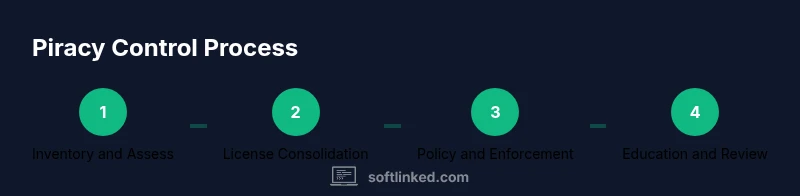
According to SoftLinked, you can effectively reduce software piracy by combining policy, technology, and education. This guide offers a practical, multi-layered plan: inventory and license management, enforceable access controls, user training, and transparent procurement. By implementing these steps, organizations can curb unauthorized usage while preserving productivity and software value. It emphasizes metrics, governance, and measurable outcomes to track progress.
Definition and scope
When asking how can software piracy be controlled, the question centers on unauthorized copying, distribution, and use of software beyond licensed terms. Piracy takes many forms—from full-crack circumvention, serial-number sharing, to tampering with license checks in enterprise apps. For defenders, the goal is not to police every desk but to reduce risk, ensure compliance, and protect software ecosystems. This section clarifies terms, stakeholders, and the balance between security and user experience. In practice, control strategies target three layers: policy (who can use what, where, and when), technology (licenses, authentication, and DRM where appropriate), and education (awareness and fair use). Understanding the scope helps teams design proportionate controls that deter pirates without crippling legitimate work.
Legal and ethical implications
Pirating software is illegal in most jurisdictions and can expose individuals and organizations to civil damages, criminal penalties, and reputational harm. Ethically, piracy undermines developers' ability to innovate, stifles updates, and can introduce compromised software. SoftLinked analysis shows that organizations with lax licensing often pay higher audit costs and faced remediation efforts that disrupt operations. A robust control program relies on accurate license inventories, auditable procurement trails, and clear accountability. By aligning policy with enforcement and education, teams reduce the chance of inadvertent violations while preserving user productivity. Encouraging legitimate access through tiered licensing, educational programs, and subsidized options can also shift behavior away from piracy. The ethical framework emphasizes fairness: those who benefit from software should support ongoing development. Legal compliance and ethical conduct together create a trustworthy software ecosystem that is more resilient against illegal copying and malware.
Technical approaches to control piracy
Control begins with solid licensing governance and technical tools. Asset discovery and license management platforms help map what software is installed against what is purchased. Cloud-based license models, subscription checks, and centralized activation reduce the chance of unchecked use. DRM and hardware-bound licenses can deter casual pirating, but they should be deployed carefully to avoid crippling legitimate users or creating complex support paths. Token-based authentication, license servers, and periodic compliance scans provide visibility and enforcement without constant on-device checks. Code signing and secure installers prevent tampering. Telemetry and audit trails ensure accountability while allowing teams to focus on essential work. Finally, combine these controls with open standards and transparent procurement to preserve user trust and minimize friction.
Economic and social considerations
Piracy is not just a technical problem; it is an economic and social phenomenon. Enterprises weigh the cost of implementing protection against potential losses from unauthorized use. Strict anti piracy measures can increase friction for legitimate users, potentially driving them to seek alternatives or open source options. A balanced approach that includes affordable licensing, flexible deployments, and clear return on investment tends to yield better compliance. When organizations invest in license stewardship and predictable pricing, they reduce the incentive to pirate and improve software maintenance and security. Education plays a role in shifting norms and reducing stigma around seeking legitimate channels. From consumer and developer perspectives, accessible licensing, community licensing, and pilot programs can align incentives and reduce the overall prevalence of piracy. SoftLinked's perspective emphasizes that governance and empathy for users can produce durable compliance outcomes.
Policy and governance
Effective policy requires clear ownership, documented procedures, and measurable outcomes. Establish a software governance committee, define licensing roles, and maintain an auditable trail of procurement and deployments. Policies should cover acceptable use, incident response, and remediation steps for violations. Align procurement with licensing terms and ensure that asset management data feeds security and risk assessments. Regular internal audits, external compliance checks, and clear escalation paths reinforce accountability. Finally, provide ongoing training and updates to keep pace with new licensing models and evolving piracy tactics.
Role of open source and education
Open source software and transparent licensing provide legitimate alternatives that reduce the appeal of piracy. Encouraging students and teams to explore community editions, educational licenses, and vendor sponsored programs expands access without compromising compliance. Education should address not only how to avoid piracy but why licensing terms exist and how fair pricing supports ongoing development. Hands on training in license management, asset inventory, and software procurement builds a culture of responsible usage that scales with organization size. When teams understand the economics and ethics, they make better decisions about what to deploy and how to license it.
Practical steps for developers and organizations
Implementing control starts with practical steps that translate policy into action. Begin with a complete software inventory to know what is installed and who uses it. Next, align licensing data with deployments, then deploy a centralized license management system. Enforce access controls on critical apps, and implement reasoned DRM only for high value software. Establish an approval workflow for new deployments and enforce renewal tracking. Finally, create an ongoing education program that explains licensing terms and demonstrates proper procurement. A steady cadence of reviews keeps the program effective as tools and suppliers change.
Case studies and examples
Real world cases show that a balanced approach works. A mid sized software publisher reduced unlicensed usage by combining inventory accuracy with user education and tiered licensing. A university implemented a centralized license server and an open source alternative program to reduce campus piracy while maintaining access for students. A tech company integrated a protection policy with a transparent procurement portal and saw fewer compliance violations and more satisfaction among teams. While specifics vary by industry, the common thread is that governance, not brute force, drives sustainable results.
Common misconceptions and myths
There are several myths: piracy is a victimless crime; DRM is foolproof; open source is insecure; penalties alone deter piracy; enforcement is cheap. In reality, effective control relies on accurate inventories, fair licensing terms, and user friendly processes. DRM can deter casual copying but may frustrate legitimate users if overused. Open source communities show that viable, cost effective options exist. Education and governance reduce pressure to pirate by providing legitimate, convenient alternatives. Finally, enforcement should focus on clear escalation and remediation rather than punitive measures alone, which improves long term compliance and trust.
Tools & Materials
- Software license inventory and asset management data(A comprehensive list of all installed software, licenses, and entitlements.)
- License management or software asset management (SAM) platform(Centralized system to track deployments, licenses, and entitlements.)
- Access control and authentication systems(RBAC, SSO, and permission models to enforce who can install or use software.)
- DRM tools and policy documents(Use selectively for high value software where appropriate.)
- Auditing templates and remediation playbooks(Procedures for audits, detection, and corrective actions.)
- User education materials(Training modules, awareness campaigns, onboarding docs.)
- Procurement portal or process(Clear workflow for requesting and approving software purchases.)
Steps
Estimated time: 8-12 weeks
- 1
Inventory the software estate
Identify all installed software across devices, users, and departments. Collect licenses, versions, and renewal dates. Map licenses to vendors and applications to business units to establish a baseline.
Tip: Use automated discovery tools to reduce manual effort and improve accuracy. - 2
Classify licenses by risk and impact
Group software by license type, criticality, and exposure. Prioritize enforcement on high risk or high cost applications to maximize ROI.
Tip: Label critical assets as red or amber for quick review during audits. - 3
Consolidate licensing data
Align license records with actual deployments. Remove redundancies and identify gaps where licenses are not available or are over-provisioned.
Tip: Aim for a single source of truth to simplify renewals and audits. - 4
Deploy a license management system
Implement a centralized SAM platform to automate tracking, alerts, and renewals. Ensure it integrates with procurement and identity systems.
Tip: Set up automatic renewal reminders to avoid lapses. - 5
Enforce access controls
Restrict installation and activation to authorized users or roles. Apply least privilege to reduce unauthorized usage.
Tip: Pair access controls with periodic reviews of who has permission. - 6
Educate users and stakeholders
Provide clear licensing terms, usage guidelines, and channels for questions. Run regular training sessions focused on compliance and procurement.
Tip: Use real world scenarios to illustrate consequences of noncompliance. - 7
Establish governance and remediation
Create policies for violations, escalation paths, and remediation steps. Document incident responses and assign ownership.
Tip: Keep playbooks simple and actionable for faster remediation. - 8
Monitor, measure, and iterate
Track key metrics, such as license utilization, renewal timeliness, and incident counts. Review outcomes quarterly and adjust controls as tools and licensing models evolve.
Tip: Treat compliance as an ongoing program, not a one time project.
Your Questions Answered
What is software piracy?
Software piracy is the unauthorized use, reproduction, or distribution of software beyond the terms of its license. It undermines developers, exposes users to malware, and creates unfair competition.
Software piracy means using or sharing software without proper license, which is illegal and risky.
Why is software piracy illegal?
Licensing terms protect developers and ensure ongoing support and updates. Violations can lead to fines, audits, or legal action, and can expose organizations to security risks and liability.
Licensing terms exist to fund development and ensure safe, supported software.
How can an organization detect piracy?
Organizations detect piracy using license inventories, software asset management systems, and periodic compliance scans. Audits and usage analytics help identify gaps and unauthorized deployments.
Use inventory tools and license checks to spot unlicensed software.
What is DRM and is it effective?
DRM can deter casual copying but is not foolproof. It can also hinder legitimate users if overused. A measured approach works best when paired with licensing and education.
DRM helps prevent easy copying, but it should be used thoughtfully.
Are there ethical alternatives to piracy?
Yes. Vendors offer educational licenses, tiered pricing, and open source options. Educational programs and trial access also provide legitimate routes to software.
There are legitimate ways to access software without breaking licenses.
What should developers do to prevent piracy?
Developers should invest in governance, licensing clarity, and user friendly procurement options. Provide educational resources and encourage compliant usage with transparent pricing models.
Developers can reduce piracy by making licensing clear and easy to follow.
Watch Video
Top Takeaways
- Audit licenses regularly to close gaps.
- Balance policy with user experience.
- Centralize license management for visibility.
- Educate users to reduce piracy incentives.