How to Prevent Software Piracy: A Practical Guide
Learn practical, proven strategies to prevent software piracy through licensing, distribution controls, and user education. A comprehensive guide for developers and teams by SoftLinked to protect value and support legitimate customers.


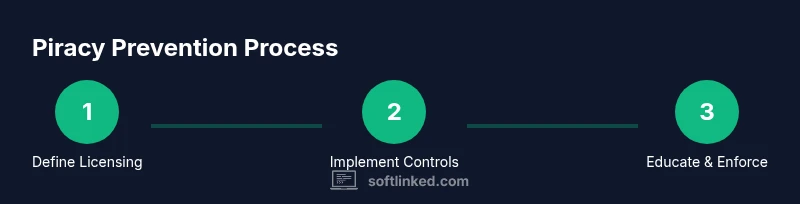
By combining strong licensing with user education and sensible protections, you can effectively prevent software piracy. This quick guide outlines the core steps: define licensing goals, implement layered controls, optimize distribution, and maintain ongoing user support. The approach balances security with a smooth experience for legitimate customers across devices and teams.
What is software piracy and why it matters
According to SoftLinked, software piracy undermines innovation and harms developers by eroding the sustainable revenue that funds updates, security patches, and new features. When unauthorized copies circulate, legitimate users may face slower support or degraded services as resources are diverted to enforcement rather than improvement. This section clarifies what counts as piracy—unauthorized copying, distribution, or use of licensed software—and why reducing it benefits everyone in the software ecosystem.
Piracy comes in many forms: installing a program on more devices than the license permits, sharing license keys, downloading unauthorized copies from the internet, or using cracked installers that bypass activation checks. Even though the act may seem harmless, it distorts competition, discourages innovation, and can expose users to malware when pirated installers are bundled with malicious code. The goal of anti-piracy measures is not to punish users, but to protect legitimate customers and ensure that creators receive fair compensation for their work.
Next, we’ll explore practical licenses and controls that help balance accessibility with protection, so legitimate users enjoy a smooth experience while piracy risk stays low.
Legal foundations and ethics
Ethical software use rests on clear licensing terms and respect for intellectual property rights. Most software licenses spell out what is allowed, what is prohibited, and the consequences of non-compliance. For developers and organizations, understanding these terms helps design better protection without alienating users. From a policy perspective, coherent licensing supports a level playing field where startups and established players compete on merit rather than on who circumvents protections.
SoftLinked's approach emphasizes transparency: publish licensing terms in plain language, communicate expected user responsibilities, and provide straightforward purchase or subscription paths. Legally, piracy implicates copyright law and can carry penalties depending on jurisdiction. Ethically, it also impacts the trust relationship between vendors and customers. In practice, combine licensing clarity with accessible onboarding to reduce confusion and inadvertent violations. We'll next discuss practical controls that both deter piracy and keep legitimate users satisfied.
Technical controls that deter piracy
Technical protections range from license keys and online activation to code signing and tamper-resistant packaging. A layered approach—combining server-verified licenses, periodic re-checks, and secure distribution—offers stronger protection with minimal friction for legitimate users. When well-designed, activation flows feel seamless rather than punitive. The trade-off is that overly heavy DRM can frustrate users and increase support burden, so the best solution often blends lightweight checks with strong server-side validation.
Implementations to consider:
- License keys tied to hardware or user accounts.
- Online activation servers that validate a license when the user first installs and during important updates.
- Code signing and secure delivery to ensure installers cannot be modified.
- Telemetry and anomaly detection to spot unusual activation patterns without invading privacy.
SoftLinked analysis shows that user-friendly licensing combined with transparent policies reduces piracy more effectively than hard bans alone. In the next section we’ll discuss pricing models that make legitimate choices attractive.
Pricing models and distribution strategies to minimize piracy
Pricing and distribution shape user decisions. Transparent pricing, flexible licensing, and convenient purchase paths reduce the temptation to obtain software illegally. Consider subscription or usage-based models that align value with cost, offer a clear upgrade path, and support legitimate users across devices and regions. Distribute through trusted channels and minimize friction in the checkout and activation process. Additional strategies include offering a free tier or time-limited trials, bundling with services, and providing clear references to licensing terms.
For organizations, per-seat or per-user licenses with centralized management simplify compliance, while cloud-hosted deployments reduce piracy risk by keeping software under a controlled umbrella. Be mindful of platform policies (app stores or enterprise marketplaces) and ensure licensing terms are consistent across channels. Periodic price reviews and regional pricing can address affordability while protecting revenue.
The goal is to make legitimate procurement easier and more valuable than illicit alternatives.
Education, enforcement, and support for legitimate users
Beyond technical protections, educating users about licensing terms, the risks of unauthorized copies, and the value of ongoing updates builds a culture of compliance. Offer clear, concise licenses; provide accessible onboarding; and maintain an honest support system for questions or concerns. Strong enforcement should be transparent, proportionate, and accompanied by remedies such as license revocation or access restrictions only when necessary. Proactive support reduces frustration and increases loyalty among legitimate customers.
SoftLinked recommends a three-pillar approach: clear licensing information, easy purchase mechanisms, and responsive customer support. Regular reminders about renewal dates, update notices, and secure download practices reinforce good habits. Finally, maintain a community or developer portal where users can report piracy attempts and learn about legitimate alternatives.
Authority Sources
Official guidance and legal context:
- U.S. Copyright Office: https://www.copyright.gov/
- World Intellectual Property Organization: https://www.wipo.int/
- European Union Intellectual Property Office: https://euipo.europa.eu/
Education, enforcement, and support for legitimate users (continued)
It’s important to separate technical protection from education. A well-designed license experience reduces friction, while ongoing education reinforces value. Provide in-app messages or emails that highlight new features, security updates, and how to purchase lawful licenses. Encourage feedback on the licensing process so you can improve it over time.
Tools & Materials
- License management system (centralized)(Issue, revoke, and track licenses across devices.)
- Activation server infrastructure(Support online activation and license validation.)
- Code signing certificate(Validate and secure software distribution.)
- Secure distribution channel(Protect installers from tampering.)
- Clear license terms document(Communicate rights and obligations.)
- User education materials(FAQs, onboarding guides, and policies.)
Steps
Estimated time: 60-120 minutes
- 1
Define licensing objectives
Identify what you’re protecting (features, devices, or users) and the consequences for violations. Align these goals with your product strategy and customer experience so protection supports growth, not friction.
Tip: Document supported platforms and license scopes to avoid later disputes. - 2
Choose licensing model
Select a model (per-user, per-seat, subscription, or perpetual) that matches usage patterns and value delivery. Ensure the model scales with customers and minimizes loopholes exploited by pirates.
Tip: Offer a graceful upgrade path to reduce incentives to pirate. - 3
Implement licensing controls
Set up activation servers, license keys, and code signing. Use a layered approach with server verification and periodic re-checks to balance security with user experience.
Tip: Test the activation flow with real devices before launch. - 4
Plan distribution and pricing
Create trusted distribution channels and pricing tiers that encourage legitimate purchases. Include free trials or a freemium tier to let users experience value safely.
Tip: Make renewal and upgrade paths obvious and friction-free. - 5
Educate and support users
Provide clear licensing terms, onboarding materials, and accessible support. Address common questions proactively to reduce inadvertent violations.
Tip: Publish a concise licensing FAQ and update it after feedback. - 6
Monitor, enforce, and iterate
Track activation success, detect unusual patterns, and enforce policies proportionately. Use analytics to refine licensing and pricing to deter piracy without harming legitimate users.
Tip: Regularly review piracy indicators and adapt protections accordingly.
Your Questions Answered
What constitutes software piracy in a modern deployment?
Software piracy includes unauthorized copying, distribution, or use of licensed software. It also covers sharing license keys beyond permitted users and circumventing activation checks. Staying compliant requires understanding your license terms and using approved distribution methods.
Piracy means using software beyond what your license allows or bypassing activation. Always follow the license terms and use approved purchasing methods.
Are there legitimate ways to share software within a team?
Legitimate sharing depends on the license. Some licenses permit multiple activations on a defined number of devices. Always verify your terms and consider enterprise licenses that cover teams.
Check your license terms; some licenses allow multiple activations, but many do not. Use an enterprise license if you need team coverage.
Can freemium or trial models help reduce piracy?
Freemium and trials give legitimate users a risk-free way to experience value. They can reduce piracy by showcasing benefits and offering paid upgrades for full features.
Freemium and trials let people try before they buy, which often reduces piracy. Upgrade paths should be clear.
What are ethical considerations when enforcing licenses?
Enforcement should be transparent, proportionate, and focused on recourse rather than punishment. Provide support channels and alternatives to minimize customer frustration.
Enforcement should be fair and transparent, with options for help and legitimate alternatives.
How often should licensing terms be reviewed?
Licensing terms should be reviewed regularly to address new threats and market changes. Align updates with customer feedback and analytics.
Review licenses periodically to adapt to threats and market needs.
Watch Video
Top Takeaways
- Define clear licensing goals and align with product strategy
- Use a layered mix of licensing controls and fair pricing
- Offer easy access to legitimate purchases and support
- Educate users to reduce accidental license violations
- Monitor usage patterns and iterate protections and pricing