What to Do for Application: A Practical Step-by-Step Guide
Learn how to craft a standout application with a clear goal, tailored materials, and a repeatable workflow. This guide covers planning, assets, writing, and submission strategies to maximize your chances.


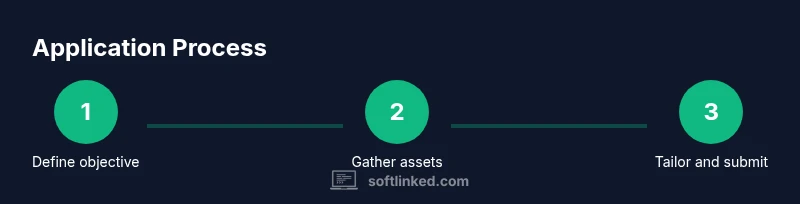
This guide helps you complete a strong application for any program or role. You’ll define your objective, assemble tailored materials, and present a coherent narrative that resonates with reviewers. Core requirements include a polished resume, portfolio samples, a personalized letter, and a clear timeline. Follow this guide to move from clutter to clarity, and submit with confidence.
Why a structured application matters
According to SoftLinked, a structured approach reduces ambiguity and increases clarity for reviewers. A well-organized submission signals professionalism, respect for the audience, and a clear sense of purpose. SoftLinked analysis, 2026, suggests that applicants who present a cohesive narrative across resume, portfolio, and letters have higher perceived fit with target programs. The goal is to eliminate guesswork for the reader by aligning materials around a central thesis: why this program or role is the natural next step for you. When the audience can quickly parse your intent, you gain valuable real estate—time—to convey impact and potential. The reader benefit is a smoother evaluation, while you benefit from a consistent, repeatable process you can reuse for multiple applications. In practice, this means starting with a strong objective, mapping required assets, and ensuring every element supports the same story.
Define the scope of your application
Before you write a line of content, define who you are writing for and what they need. Identify the target program or role and study its stated goals, values, and success criteria. Translate those requirements into concrete examples from your experience. Ask yourself: What problem did I solve that aligns with this program? What evidence can I provide (projects, outcomes, learning experiences) to show I can contribute from day one? Write a one-paragraph audience-facing summary that you can reuse in letters and opening statements. This scope sets boundaries for your materials and keeps you from chasing too many directions at once.
Gather and organize your materials
Create a living workspace for your application set. Start with a clean resume and a tailored cover letter. Collect portfolio items, project demos, or code samples that demonstrate relevant skills. Prepare a references list with contact details and context you can share with the reviewer. Build a master document that links to evidence and examples, then adapt it for each program. Use consistent formatting, fonts, and terminology so the reviewer experiences a cohesive presentation rather than a collection of disparate files. A central archive helps you update quickly and maintain a high standard across applications.
Crafting a compelling narrative
Your narrative should clearly connect your experiences to the program’s goals. Use a storytelling structure, highlighting challenges, actions, and outcomes in a concise, results-focused way without exaggeration. Employ the STAR method (Situation, Task, Action, Result) to organize each achievement. Emphasize transferable skills like collaboration, problem solving, and learning agility. Integrate metrics and qualitative feedback where possible, but avoid making up numbers. Tailor the narrative to the audience by selecting examples that mirror the program’s values and demonstrated needs. Finally, include a short personal statement that explains motivation and long-term goals in a way that complements the rest of your materials.
Polish, proofreading, and submission readiness
Polish is more than grammar; it’s about consistency, tone, and adherence to guidelines. Run spell and grammar checks, then review formatting, heading structure, and bullet styles. Ensure each document adheres to the program’s submission requirements (file types, naming conventions, page limits, and word counts). Create a final check list: are all required fields completed? Do your materials tell a single, cohesive story? Have you tested all links and demo videos? Before submission, have a peer or mentor review for clarity and impact. A careful, patient final pass can prevent common errors that derail good content.
Personalization and adaptation across programs
A key advantage is the ability to tailor for each program while keeping a core narrative intact. Duplicate the master set and replace targeted sections to emphasize alignment with specific goals, values, and team contexts. Swap out examples to highlight projects most relevant to the program’s focus, and adjust the tone to match the culture of the organization. Maintain consistency in dates, project names, and outcomes to avoid contradictions. Personalization shows commitment and respect for the reviewer’s time, dramatically improving engagement.
Final checklist before submission
Use a brief, actionable checklist to confirm readiness: (1) all required documents present and properly formatted, (2) file names and formats meet guidelines, (3) portfolio/demo assets are accessible and functional, (4) references contacted and prepared, (5) a personalized cover letter references program goals, (6) your one-page summary is aligned with the rest of the package, and (7) you’ve double-checked for typos, inconsistent tense, and formatting issues. A calm, final review reduces the risk of avoidable mistakes and increases confidence during submission.
Tools & Materials
- Resume/CV (tailored for the program)(Ensure alignment with the target role/program and highlight relevant projects)
- Cover letter or personal statement(Customize to address program goals and culture)
- Portfolio or project artifacts(Code samples, demos, case studies, or design work with accessible links)
- References list(Provide 3-4 references with contact info and context)
- Transcripts or certifications(Include if program requires academic records or proof of credentials)
- Submission templates and guidelines(Keep a master copy with naming conventions, fonts, and formatting standards)
Steps
Estimated time: 60-120 minutes per application set
- 1
Clarify your objective
Define the exact program or role you are pursuing and articulate what a successful outcome looks like. Create a one-sentence aim you can reference in every document.
Tip: Write the objective first, then build materials around it. - 2
Inventory your assets
Collect existing resumes, cover letters, project artifacts, and recommendations. Note gaps and plan to address them with new or revised content.
Tip: Use a single master folder to avoid duplicate files. - 3
Tailor core documents
Adapt your resume and portfolio to emphasize experiences most relevant to the target program. Align terminology with program goals.
Tip: Swap in the most relevant project stories first. - 4
Draft your narrative
Build a concise personal statement and cover letter that connect your journey to the program’s mission. Draft, then revise for clarity and impact.
Tip: Lead with your strongest alignment claim in the first paragraph. - 5
Collect references
Ask potential referees with plenty of lead time. Provide context about the program and key achievements you want them to mention.
Tip: Share a one-page summary of your impact with each reference. - 6
Proofread and format
Run grammar checks, verify consistency in tense and style, and ensure consistent formatting across all documents.
Tip: Pause overnight before final proofreading for a fresh perspective. - 7
Prepare assets for submission
Convert documents to the required formats, test links to portfolios, and ensure filenames match the naming conventions.
Tip: Keep originals in editable format; export final copies in required formats only. - 8
Submit and track
Submit on time through the designated channel and monitor for acknowledgment. Save a copy of submission receipts.
Tip: Set calendar reminders a week before the deadline for potential edits.
Your Questions Answered
What is the main purpose of an application?
The purpose is to demonstrate fit for the program or role by presenting a cohesive narrative and supporting evidence. It shows you understand the goals and can contribute meaningfully.
An application shows you fit the program and can contribute from day one.
How long should my resume be for early-career applicants?
For students or early-career applicants, a one-page resume is typically sufficient. If you have substantial relevant experience, two pages may be acceptable.
Usually one page for students; two pages if you have strong relevant experience.
Should you tailor materials for every program?
Yes. Align your examples, language, and goals with each program’s stated priorities to maximize perceived fit.
Yes—customize to show you understand the specific program.
How do you address a weak spot in an application?
Address gaps briefly, emphasize what you learned and how you improved, and redirect to stronger achievements.
Be honest about gaps and show how you grew from them.
How can you obtain good references?
Ask well in advance, provide context about the program, and share key achievements you’d like them to mention.
Reach out early and give referees clear talking points.
What is a practical timeline for applying?
Timelines vary by program. Plan at least several weeks ahead, with buffer time for edits and feedback.
Expect a few weeks from planning to submission with some flexibility.
Watch Video
Top Takeaways
- Define a clear objective before drafting.
- Tailor every document to the target program.
- Assemble assets in a single, organized archive.
- Proofread meticulously and verify submission specs.