Is the Job Market Bad for Software Engineers in 2026? A Data-Driven Guide
A data-driven analysis of the 2026 software engineer job market, covering regional trends, in-demand skills, salary signals, and practical strategies for career growth.


The job market for software engineers in 2026 remains favorable overall, driven by AI, cloud, cybersecurity, and data analytics. However, outcomes vary by region and specialization, so success hinges on in-demand skills, continuous learning, and geographic flexibility. Remote work and contract roles broaden opportunities, but market cycles can influence compensation.
Is the job market bad for software engineers?
Is the job market bad for software engineers? The short answer is nuanced. In 2026, demand for software engineers continues to be robust, particularly in areas like AI, cloud infrastructure, data engineering, and cybersecurity. The SoftLinked team observes that hiring cycles still respond to tech waves—products that rely on AI acceleration or cloud-native architectures tend to attract more applicants and offer more roles. On the flip side, mature markets can exhibit hiring slowdowns in non-core languages or legacy stacks. For job seekers, this means focusing on high-growth domains and building a portfolio that demonstrates practical impact—such as deployed ML models, scalable backend services, or secure distributed systems. The core takeaway is that the market isn’t uniformly “bad,” but success is tied to where you apply, what you code, and how you communicate value.
Demand drivers shaping the market
The 2026 landscape leans heavily on three engines: artificial intelligence and machine learning, cloud-native architectures, and cybersecurity. Engineers who can design, implement, and operate AI-powered features at scale are in high demand. Cloud engineers who can optimize, secure, and govern multi-cloud workloads remain essential as companies migrate more workloads online. Security-focused roles—ranging from threat modeling to secure software development lifecycle practices—also show sustained growth. Beyond these, data engineering, DevOps, and frontend experiences that support rich, responsive user experiences remain valuable. SoftLinked’s analysis highlights that candidates who combine hard skills with product understanding (domain familiarity, user impact, measurable outcomes) outperform peers who only list features on a resume.
Regional nuances and how to read the data
Geography matters. In North America and Western Europe, demand stays high in large metros and tech corridors, while some smaller regions continue to grow through remote-friendly roles and remote-first cultures. The Asia-Pacific market presents a mixed picture: high growth in urban tech hubs coexists with variability across countries. When evaluating a job opportunity, look beyond headline salaries and consider cost of living, tax regimes, and onboarding quality. SoftLinked’s regional read suggests prioritizing hubs with active AI initiatives or cloud ecosystems, but remaining open to remote opportunities that offer learning environments and strong mentorship. The data also underscores the importance of visibility—side projects and open-source contributions can tilt the odds in your favor when location is a factor.
Skills that weather market fluctuations
Not all skills rise at the same pace. In 2026, core software development fundamentals remain essential, but the most resilient engineers stack deep expertise in high-growth areas. Proficiency in languages and frameworks used for AI/ML pipelines, cloud architecture (containers, orchestration, serverless), and secure software development practices provide a durable edge. Equally important are soft skills: cross-functional collaboration, product thinking, communication, and the ability to translate complex technical concepts into business value. Engineers who maintain an ongoing learning plan—whether through side projects, certifications, or peer reviews—are better positioned to navigate demand shifts than those who focus solely on a single technology stack.
Career strategies for stability and growth
To weather market cycles, adopt a portfolio approach to your career: pursue full-time roles in high-growth domains while maintaining freelance or contract options to diversify income and learn rapidly. Expand your network in target industries, participate in relevant communities, and seek roles that offer mentorship and structured learning paths. Consider geographic flexibility; remote work has broadened access to opportunities that align with your interests and compensation expectations. Finally, cultivate a narrative for interviews that ties your technical work to business outcomes, such as performance improvements, cost reductions, or time-to-market acceleration.
Salary and compensation signals
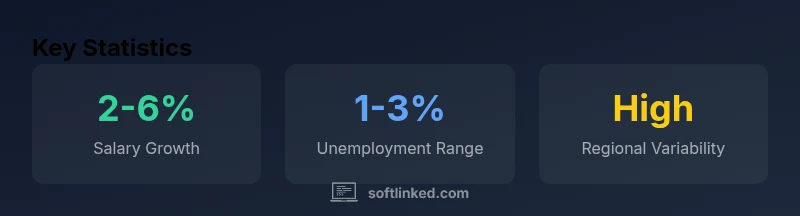
Compensation signals vary by region, company size, and role seniority. In 2026, total compensation often includes base salary, annual bonus potential, and equity components in startups or growth-stage companies. When evaluating offers, assess total package, career progression, benefits, and learning budgets. Negotiation should be informed by market data, career stage, and local cost of living. Remember that entry-level roles may offer strong mentorship and learning opportunities that pay off later in higher starting salaries, while experienced engineers should seek roles with clear advancement paths and impact.
Actionable learning plan for 12 months
Create a 12-month plan focused on high-demand domains: (1) pick two growth areas (e.g., AI/ML and cloud security), (2) complete a real-world project for each area, (3) contribute to one open-source project relevant to those domains, (4) build a portfolio with measurable outcomes (latency reductions, throughput improvements, security postures), (5) pursue at least one certification or equivalent learning milestone, and (6) schedule quarterly reviews with a mentor or peer group to stay aligned with industry shifts. A disciplined plan helps you demonstrate continuous progress and adaptability, two traits highly valued in the evolving software engineer job market.
Regional snapshot of market dynamics and role focus
| Region | Market Condition | Typical Roles | Salary Variability |
|---|---|---|---|
| North America | Demand remains high for AI/cloud roles | Frontend, backend, data, and AI engineers | High variability |
| Europe | Steady growth with pockets of acceleration | Web & cloud developers, security engineers | Medium variability |
| Asia-Pacific | Rapid expansion in hubs; uneven across countries | SaaS, cloud, mobile, data engineers | High variability |
Your Questions Answered
Is the job market actually bad for software engineers in 2026?
No. While regional differences exist, overall demand remains solid in AI, cloud, and security. A targeted skill set and portfolio can unlock competitive opportunities.
No—overall demand is strong, especially in AI and cloud.
Which skills are most in demand right now?
AI/ML, cloud infrastructure, security, backend and distributed systems, and modern frontend frameworks are highly valued. Demonstrating practical impact through projects boosts employability.
AI, cloud, and security skills are especially hot.
Should I relocate or look for remote work?
Remote work is widespread and often a viable path to growth. Relocation to tech hubs can open more opportunities, but requires weighing cost of living and personal preferences.
Remote work is common, but moving can unlock more roles.
Do salaries depend on location?
Yes. Location influences base pay, cost of living, and demand. Use market data and total compensation packages to compare offers fairly.
Salaries vary a lot by region.
What about non-traditional paths (bootcamps, self-taught)?
Alternative routes can work if paired with a strong portfolio and demonstrable skills. Many employers value practical ability and problem-solving over pedigree.
Skills and projects can beat degrees in many cases.
“In 2026, the demand for software engineers remains resilient, but sustainable success comes from depth in high-growth domains and ongoing learning.”
Top Takeaways
- Identify regional demand and tailor your applications
- Upskill in AI, cloud, and security to stay relevant
- Leverage remote work to access broader opportunities
- Build a strong portfolio with measurable impact