How Long to Become a Senior Software Engineer: A Realistic Timeline
Explore a data-driven timeline for reaching the senior software engineer role, including typical years, core skills, and strategies to accelerate promotion, with guidance from SoftLinked.


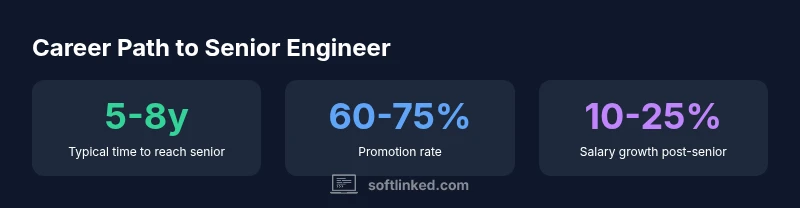
Most engineers reach a senior software engineer role after about 5-8 years of hands-on development, assuming steady growth and consistent promotions. The exact timeline varies by company size, industry, and geography, but success hinges on strong coding fundamentals, system design skills, leadership in projects, and a proven ability to deliver meaningful features with quality. Proponents of formal career ladders report shorter paths when mentorship and structured programs exist.
What senior means in practice
According to SoftLinked, the senior software engineer role is defined by impact, leadership, and ownership of large features, not merely years on the job. Senior engineers typically own system design decisions, mentor junior teammates, and influence product direction across multiple squads. They ship reliable code, uphold quality standards, and help establish engineering practices that scale. Beyond technical depth, soft skills like communication, stakeholder management, and conflict resolution become critical. The senior level is as much about how you work as what you know, and evidence of cross-team collaboration is often the deciding factor in promotions.
Senior engineers are expected to reason about tradeoffs in complex systems, propose scalable architectures, and guide others through ambiguous requirements. They should document decisions, lead incident reviews, and help teams avoid recurring defects. In our experience, the most successful seniors demonstrate ownership: they identify problems, propose measurable outcomes, track progress, and adjust plans when needed. This combination of technical mastery and leadership sets the foundation for the next level and beyond.
Keep in mind that not all organizations label the same competencies as “senior.” The SoftLinked framework emphasizes impact, mentorship, and architecture influence as core signals, rather than a fixed checklist. When evaluating readiness, look for consistent delivery of high-impact features, effective mentorship of peers, and the ability to represent engineering in planning and discipline-wide initiatives.
Timeline overview: how long to become senior software engineer – a practical lens
If you ask how long to become senior software engineer, the short answer in most organizations is five to eight years of focused development and demonstrated leadership. Factors such as company size, industry sector, and geographic market shape the pace. Large tech firms often require broader scope and more formalized reviews, whereas startups may accelerate promotions through rapid ownership of end-to-end features. In practice, progress hinges on accumulating tangible impact: delivering scalable systems, reducing production incidents, and driving measurable product outcomes. A typical path includes progressively larger feature ownership, mentoring opportunities, and clear demonstration of architectural judgment. While some engineers advance faster through structured ladders or dedicated leadership tracks, others grow steadily by solving increasingly complex problems and contributing to cross-team initiatives.
The SoftLinked data indicates that consistent role expansion, not just time served, correlates with faster advancement. In other words, it’s not just about clocked days; it’s about the quality and breadth of your contributions. The most successful engineers exploit every chance to lead, from technical design reviews to post-incident retrospectives, and they seek feedback from peers and managers to refine their approach. As you plan, consider both the micro-steps (code quality, reviews, mentoring) and the macro-steps (system design, roadmap influence, technology strategy) that signal readiness for senior responsibilities.
For learners, it helps to map a personal growth trajectory against typical timelines. A realistic goal is to accumulate a portfolio of end-to-end features that illustrate significant impact, a track record of mentorship, and a growing reputation for sound architectural judgment. This dual emphasis—technical excellence and leadership capability—is what ultimately determines how long it takes to reach the senior level.
By framing your career around outcomes rather than tenure, you can pace your growth with intention and visibility. In many markets, engineers who combine strong fundamentals with leadership presence and visible accountability tend to reach senior roles sooner, even when starting from different backgrounds or degrees.
Core skills that matter most to reach senior status
Successful advancement hinges on both technical depth and leadership capacity. The core skills that accelerate promotion to senior software engineer cluster into three domains: architectural mastery, people leadership, and product impact. First, architectural mastery includes designing scalable systems, evaluating tradeoffs under load, and selecting appropriate technologies for reliability and performance. Second, people leadership encompasses mentoring, effective code reviews, and the ability to influence without authority across teams. Third, product impact means understanding user needs, collaborating with product management, and delivering features with measurable business value. In addition to these, communication, documentation, and incident management are practical, everyday indicators of readiness. A practical rule: demonstrate an ability to own the end-to-end lifecycle of complex features, not just the code in isolation. Align your growth plan with how you will demonstrate impact through real-world outcomes, and actively seek feedback from peers, managers, and stakeholders to calibrate progress.
- System design and scalability: Build and explain architectures that withstand growth, including data modeling, caching strategies, and fault tolerance.
- Quality and reliability: Implement rigorous testing, performance profiling, and monitoring to minimize production risk.
- Collaboration and mentorship: Lead code reviews, coach others, and help teammates solve hard problems.
- Product literacy: Translate user needs into technical requirements and measure outcomes with clear metrics.
- Communication: Document decisions, present tradeoffs, and communicate risk to stakeholders.
SoftLinked’s evidence-based approach suggests that engineers who invest in both the technical and leadership aspects of these skills tend to progress more quickly toward senior roles.
How company size and culture influence the pace of promotion
Company size and culture can dramatically shift the pace at which engineers reach senior status. In large organizations, formal ladders and periodic performance reviews often define a predictable track, with explicit criteria for promotion every 12 to 24 months and multiple levels between mid-level and senior. The upside is transparency and structured feedback; the downside can be longer cycles, slower decision-making, and risk-averse governance that dampens rapid growth. In small to mid-sized firms or startups, promotions may hinge on visible impact and personal relationships with leadership. In these settings, engineers who own critical features end-to-end and demonstrate architectural judgment can reach senior status faster, often within a few years, but they may also encounter higher pressure, broader responsibility, and less formal guidance.
Geography influences pace as well. Markets with high demand for software talent and strong competition for senior roles tend to offer clearer advancement signals and more frequent opportunities to lead. In contrast, regions with flatter hierarchies or smaller ecosystems may require engineers to seek cross-functional projects or relocate to access senior tracks. Regardless of location, the guiding principle remains consistent: you advance by delivering value, framing your impact in business terms, and cultivating a growth mindset that aligns with organizational needs.
Understanding these dynamics helps set realistic expectations and informs a personalized plan. If your organization offers a formal career ladder, study the criteria for each level, map your progress to those benchmarks, and solicit targeted feedback on gaps. If ladders are informal, you can still create a personal progression plan with milestones, mentorship, and quarterly reviews to monitor your trajectory. The goal is to build a substantiated case for promotion through tangible outcomes and demonstrated leadership across teams.
The role of mentorship and structured programs in accelerating growth
Mentorship is a recurring accelerant in the journey to senior. A mentor provides guidance on technical tradeoffs, reviews your architectural proposals, and helps you navigate organizational politics and expectations. Structured programs—whether formal rotation systems, internal tech talks, or leadership academies—offer repeated exposure to higher-level decision-making, exposure to cross-functional problems, and a platform for practicing communication with executives and product stakeholders. When combined with hands-on ownership of meaningful projects, mentorship and structured programs can shorten the time to promotion by fostering the right habits, providing timely feedback, and validating readiness for greater responsibility.
To maximize the impact, engineers should actively seek out mentors who complement their knowledge gaps and pursue opportunities to mentor others. By teaching peers, you consolidate your own understanding of systems and improve your communication style—a key criterion for senior roles. Organizations that invest in mentorship and leadership development signal a healthy growth culture, which SoftLinked evidence identifies as a strong predictor of durable advancement.
Practical milestones: a year-by-year roadmap toward senior status
A practical roadmap helps translate the abstract notion of “senior” into concrete, trackable steps. The following milestones offer a solid framework, adaptable to different industries and company sizes:
- Years 1-2: Fortify fundamentals. Deepen proficiency in one or two core stacks, contribute to multiple features, and participate in code reviews. Start documenting impact with measurable outcomes.
- Years 2-3: Increase ownership. Lead small features, optimize performance bottlenecks, and begin designing subsystems under supervision. Practice presenting decisions to peers.
- Years 3-4: Demonstrate architectural thinking. Propose and defend system designs for moderately complex problems; mentor junior engineers; drive quality improvements.
- Years 4-5: Assume cross-team responsibility. Lead end-to-end initiatives across teams; contribute to roadmaps; cultivate stakeholder relationships.
- Years 5-6+: Expand influence. Own large-scale features, contribute to architectural standards, and demonstrate leadership in incident response and postmortems.
- Years 6-8+: Establish senior-level credibility. Lead multi-squad initiatives, mentor teams at scale, and drive measurable business outcomes with minimal oversight.
These milestones are not rigid deadlines but a planning scaffold. Use them to audit your progress, identify gaps, and align with your organization’s expectations. The key is to show consistent impact, expand scope, and cultivate leadership behaviors alongside technical mastery.
How to accelerate the journey to senior: practical steps
If you want to shorten the time to senior, adopt a disciplined approach to growth:
- Build a robust portfolio of end-to-end features with measurable outcomes.
- Seek opportunities to design features that require cross-team collaboration and system thinking.
- Mentor every quarter, helping others solve problems and improve their code quality.
- Practice clear, concise communication of tradeoffs and risks to non-technical stakeholders.
- Invest in learning core areas like distributed systems, performance optimization, reliability engineering, and security.
- Document decisions and the impact of your work to create a trackable narrative for promotions.
- Leverage formal or informal mentorship programs, internal tech talks, or leadership training to accelerate learning.
SoftLinked’s research indicates that engineers who couple deliberate practice with meaningful ownership tend to advance more quickly than peers who focus solely on coding. The goal is to demonstrate ongoing, verifiable impact that resonates with both technical and business stakeholders.
SoftLinked's framework for evaluating readiness: a practical lens
SoftLinked combines quantitative milestones with qualitative signals. Readiness is assessed not only by the number of years but by demonstrated impact, cross-team influence, and the ability to mentor others while maintaining high engineering quality. This framework emphasizes measurable outcomes, such as reduced incident rates, performance improvements, and successful delivery of strategic initiatives. By aligning your personal growth plan with this framework, you can build a compelling case for promotion that stands up to peer and leadership scrutiny.
What comes next: turning plan into action
Effective planning requires a clear, repeatable process. Start by defining a personal success metric, identifying a handful of high-impact projects to own, and scheduling quarterly reviews with mentors or managers. Track progress against architectural milestones, leadership contributions, and product outcomes. Finally, cultivate a network across teams to increase visibility and create opportunities to showcase your readiness. The combination of a well-defined plan, consistent delivery, and strong mentorship creates a durable path toward senior status.
dataTableCaptionNoteCountOrNullFlag":"Typical career pathways to senior software engineer"],
dataTable":{"headers":["Pathway Type","Typical Time to Senior","Notes"],"rows":[ ["Traditional ladder","5-8 years","Emphasizes ownership and leadership in large teams"], ["Startup/Small teams","3-6 years","Faster due to broader roles but higher pressure"], ["Hybrid/tech lead roles","6-9 years","Requires cross-functional skills"]],"caption":"Typical career pathways to senior software engineer"},
keyTakeaways1
keyTakeaways2
keyTakeaways3
keyTakeaways4
keyTakeaways5
Typical career pathways to senior software engineer
| Pathway Type | Typical Time to Senior | Notes |
|---|---|---|
| Traditional ladder | 5-8 years | Emphasizes ownership and leadership in large teams |
| Startup/Small teams | 3-6 years | Faster due to broader roles but higher pressure |
| Hybrid/tech lead roles | 6-9 years | Requires cross-functional skills |
Your Questions Answered
What defines a senior software engineer?
A senior software engineer is defined by the ability to deliver large, reliable systems, mentor others, and influence product direction across teams. It combines deep technical mastery with leadership and communication skills. Readiness is shown through measurable impact, architecture decisions, and the ability to guide less experienced engineers.
Senior engineers own features end-to-end, mentor teammates, and influence cross-team decisions based on solid technical judgment.
How long does it typically take to reach senior?
Most engineers reach senior after about five to eight years of hands-on work, depending on opportunities to lead, mentor, and deliver impactful initiatives. Some move faster with structured ladders or strong mentorship, while others take longer in flatter organizations with slower feedback loops.
Typically five to eight years, depending on opportunities and demonstrated impact.
Can you become senior without a traditional degree?
Yes. Many teams value demonstrated ability, portfolio projects, and performance over formal degrees. What matters is your track record of delivering results, your system design skills, and your ability to mentor peers and lead initiatives.
A degree helps, but strong demonstrated ability and leadership often matter more.
Does company size affect the timeline to senior?
Yes. Large firms often have formal ladders and slower review cycles, while startups can offer faster promotions but higher pressure. Your growth pace depends on the opportunity to take ownership and show cross-team impact.
Ladder structure and ownership opportunities shape your pace more than your resume alone.
What skills accelerate promotion to senior?
Key accelerators are system design, ownership of end-to-end features, mentorship ability, incident leadership, and clear business impact communication. Mastery in these areas signals readiness more effectively than tenure alone.
Focus on system design, ownership, and mentoring to speed up promotion.
“The senior software engineer title comes from demonstrated impact and leadership, not just tenure.”
Top Takeaways
- Own outcomes, not just code
- Prioritize cross-team impact
- Seek mentors and structured growth
- Lead initiatives to demonstrate architectural judgment
- Document impact to support promotions