How Long Does It Take to Become a Software Developer? Timelines Explained
Explore realistic timelines to become a software developer across CS degrees, bootcamps, and self-study. Learn milestones, tradeoffs, and a practical 24-month roadmap.


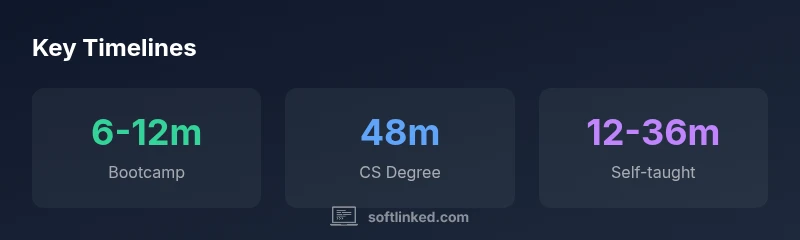
How long to become a software developer varies by path, background, and focus. Typically, a CS degree takes about 48 months, a focused bootcamp 6–12 months, and a self-directed track 12–36 months. Hybrid or internship-heavy routes can land you faster or slower depending on how you structure practice and projects.
How long does it take to become a software developer? A practical overview
If you’ve wondered how long to become a software developer, the answer isn’t a fixed number. Timelines vary widely by path, whether you enroll in a four-year CS degree, complete a bootcamp, or build skills through self-study. SoftLinked's guidance highlights that scheduling, prior experience, and focus area all shape the timeline. In practice, most learners converge on a handful of common timelines depending on their chosen route. This article breaks down the typical timeframes, milestones, and tradeoffs to help you plan your path with confidence.
This overview uses the question as a starting point and then dives into concrete timeframes, so you can map milestones to your own background and goals.
Path 1: Traditional Computer Science Degree (B.S.)
A standard Bachelor of Science in Computer Science typically spans four academic years, equivalent to about 48 months of full-time study. That timeline can compress if you transfer credits or attend an accelerated program, but most students spend this duration deeply exploring algorithms, data structures, software engineering practices, and computer organization. Pros include a broad theoretical foundation and strong credentialing; cons include cost, time, and sometimes a mismatch with immediate industry needs. When planning, consider how the degree's structure aligns with your career goals and whether you prefer hands-on projects alongside theory.
A CS degree can be a solid foundation for roles that require depth in theory, systems knowledge, and problem-solving. For some learners, the structure helps establish a consistent rhythm and a portfolio rooted in core concepts like complexity, runtime analysis, and software design patterns. If your goal is to work in teams on large-scale systems, the degree pathway can be particularly valuable for long-term career flexibility, leadership roles, and research opportunities.
Path 2: Coding Bootcamps and Accelerated Programs
Bootcamps offer condensed, career-focused training. Typical durations range from about 6 to 12 months, with an emphasis on practical skills, project portfolios, and interview preparation. Outcomes vary by program quality, mentorship, and job-placement support. The main advantage is speed to market and concrete portfolio work; the trade-off is less emphasis on theory and potentially variable recognition across employers. Always review post-graduation placement data and curriculum depth before enrolling.
Bootcamps work best when you want to enter the job market quickly and build a curated set of projects that demonstrate practical ability. To maximize value, select programs with strong career-services, visible alumni outcomes, and a clear focus on modern tech stacks like JavaScript, Python, or Java, along with a robust emphasis on version control and testing.
Path 3: Self-directed / Self-taught Routes
A self-directed track relies on structured study plans, online courses, and a steady stream of hands-on projects. Timeframes typically span 12 to 36 months of consistent effort, depending on how aggressively you learn and the pace at which you build real projects. The upside is flexibility and lower cost; the downside is uncertain outcomes without a strong personal accountability system. A successful self-taught journey centers on a deliberate curriculum, a public portfolio, and feedback from peers or mentors.
Self-directed learners can tailor their path to fit personal constraints, such as work schedules or family commitments. The key is building a portfolio that demonstrates real problem solving and the ability to deliver end-to-end features. The lack of traditional credentials can be offset by a compelling project narrative, clean code, and active involvement in open-source or community projects.
Factors that shape your timeline
Multiple factors influence how quickly you reach a professional level. Prior programming experience can shave months off your plan, while switching from a non-technical field may require more time to learn foundational skills. Geographic region and market demand affect job readiness dates, as do the focus areas you choose (web development, mobile apps, data engineering, or systems programming). Part-time study while working full-time lengthens the calendar but can improve financial stability. Finally, the quality of practice—consistent project work, code reviews, and real-world simulations—drives speed more than raw hours alone.
A practical timeline: a 24‑month roadmap
To illustrate a realistic path, here’s a milestone-driven plan for a learner starting from scratch and aiming for a junior software developer role within about two years. Months 1–3: learn fundamentals (syntax, control flow, basic data structures) and set up a coding environment. Months 4–9: build small projects, practice problem solving, and begin a portfolio. Months 10–15: tackle more complex projects, learn testing, version control, and debugging workflows. Months 16–20: deepen specialization (web, mobile, or backend), and contribute to open-source. Months 21–24: prepare for interviews, refine portfolio, and start applying to roles; track progress with monthly reviews.
Timelines and trade-offs by educational path
| Path | Typical Timeframe | Pros | Cons |
|---|---|---|---|
| CS Degree | 48 months | Structured curriculum, broad foundational knowledge | Long duration, cost, may be theory-heavy |
| Coding Bootcamp | 6-12 months | Intensive, job-ready focus, mentorship | Less emphasis on theory, variable outcomes, cost |
| Self-Directed (Structured Plan) | 12-36 months | Flexible, cost-effective, customizable | Requires self-discipline, uncertain outcomes |
| Hybrid/Part-time | 18-30 months | Balance work and study, portfolio-building | Slower pace, less immersive |
| Internship/Apprenticeship | 6-24 months | Hands-on experience, early exposure | Limited availability, often unpaid or low-paid |
Your Questions Answered
How long does it take to become a software developer?
Timelines vary by path: bootcamps 6–12 months, CS degrees ~48 months, and self-directed routes 12–36 months. Your pace depends on study intensity, prior experience, and project output.
Most people reach entry-level roles within one to three years with steady progress.
Is a computer science degree required for software development jobs?
No. Many developers start with bootcamps or self-study, especially for web and application roles. A degree can help for certain companies or roles, but portfolio and practical skills often carry more weight in hiring.
A degree helps, but it isn’t mandatory for many entry roles.
What learning path is best for a beginner?
If you want structure and immediate job focus, a bootcamp can be effective. If you prefer flexibility and long-term theoretical grounding, a CS degree or self-study with strong projects may be better.
Pick based on your learning style and career goals.
Do certifications beat a portfolio for entry roles?
Certificates are often less impactful than a strong portfolio of real projects. Employers value demonstrable skills and the ability to deliver features.
Show, don’t just tell, with real projects.
Should I intern before applying to full-time roles?
Internships provide hands-on experience and networking opportunities. Apply to entry-level roles while pursuing internships to maximize opportunities.
Internships are great stepping stones.
How can I measure progress along the timeline?
Set milestones (basics, projects, testing, collaboration), track them monthly, and solicit feedback from mentors or peers to adjust your plan.
Review your progress every month.
“Timelines to becoming a software developer are highly individualized, but with a focused plan, most learners reach entry-level skills within 1-3 years.”
Top Takeaways
- Choose a path that fits your goals and timeline.
- Bootcamps offer fastest route to job-ready skills (6–12 months).
- CS degrees provide broad foundations but take longer (about 4 years).
- Self-directed learning works with discipline and a strong portfolio (12–36 months).
- Invest in projects and internships to accelerate job readiness.