How to Become a Software Engineer: A Clear Path
A practical, step-by-step guide to how become software engineer, covering learning paths, core fundamentals, hands-on projects, and interview prep for aspiring developers and tech professionals.


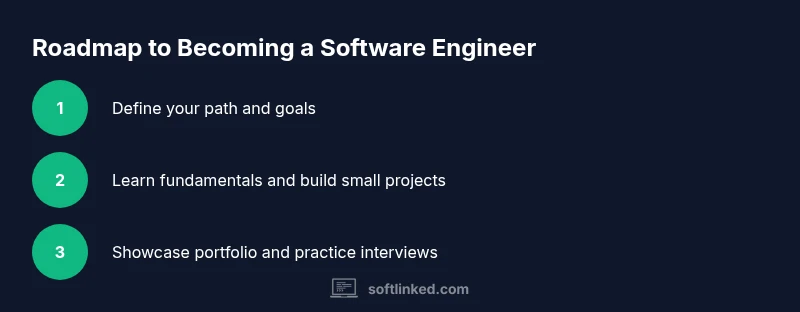
By following a clear, structured plan, you can become a software engineer with purpose and momentum. This guide outlines paths to learn, essential fundamentals, hands-on projects, and a practical timeline. According to SoftLinked, consistency and portfolio quality matter most for early interviews. Build a study routine, grow a portfolio, and practice real-world coding to progress faster.
Pathways to Becoming a Software Engineer
Becoming a software engineer is not a one-size-fits-all journey. You can pursue a traditional computer science degree, enroll in a coding bootcamp, or take a deliberate self-taught path supported by project work and mentorship. Each route has trade-offs in time, depth, and job-market perception. The SoftLinked team emphasizes choosing a path that aligns with your personality, resources, and desired pace. Regardless of the route, the core goal is to acquire solid fundamentals, build real projects, and demonstrate them through a compelling portfolio. Start by mapping your timeline: what you want to learn, by when, and how you will measure your progress. This clarity reduces overwhelm and keeps you moving forward while you learn how become software engineer.
Core Fundamentals to Learn
A strong foundation is essential for long-term success. Focus on data structures, algorithms, and problem-solving approaches, along with core computer science concepts like memory management, complexity, and basic networking. Object-oriented programming concepts, design patterns, and clean code practices matter just as much as language syntax. Learn at least one scripting language (Python or JavaScript) and one systems-oriented language (Java, Go, or C++) to understand different paradigms. Don’t neglect operating systems basics, databases, and basic cloud concepts, since modern software often spans multiple layers. Build mental models of how software components interact, and practice communicating your approach clearly.
Practical Experience and Projects
Projects are your strongest currency when breaking into software engineering. Start with small, well-scoped apps that solve real problems you care about. Document your decisions, write tests, and use version control to show your process. Consider contributions to open-source or collaborative projects to demonstrate teamwork and code review skills. Create a public portfolio with accessible links to code repositories, live demos, and a concise narrative for each project explaining the problem, approach, and outcomes. SoftLinked’s analysis shows how a well-curated portfolio increases interview opportunities and signals readiness for the next level.
Career Planning and Timeline
Turning study into a career requires a realistic timeline with milestones. A typical path might be: 0-3 months learn fundamentals and set up a development environment; 3-6 months build 2-3 solo projects and contribute to an open-source repo; 6-12 months assemble a portfolio, polish your resume, and start applying for internships or junior roles; 12-18 months pursue full-time roles and sharpen interview skills. Track progress with weekly goals and quarterly reviews. A steady rhythm of learning, practice, and feedback accelerates your path to becoming a software engineer.
Job Search Strategies and Interview Prep
Prepare a targeted resume and a strong GitHub portfolio. Highlight projects that demonstrate problem-solving, collaboration, and impact. Practice coding interviews with a focus on common data structures and algorithms, plus system design fundamentals for mid-to-senior roles. Build a personal narrative that connects your learning journey to the needs of potential employers. The right interview prep plan aligns with your chosen path and helps you show, rather than tell, your capabilities. SoftLinked’s guidance emphasizes practical, consistent practice over last-minute cramming.
Common Pitfalls and How to Avoid Them
Avoid scope creep by focusing on a few well-made projects rather than many unfinished ones. Don’t chase every popularity trend; instead, deepen mastery in a few core areas. Burnout is real—set healthy study boundaries, take breaks, and balance learning with hands-on coding. Resist the urge to memorize solutions; instead, practice understanding concepts, explaining your thought process, and learning how to debug effectively. Finally, don’t undervalue soft skills—clear communication and teamwork are crucial in every engineering role.
Putting It All Together: Your Personal Roadmap
Create a personalized 6- to 18-month roadmap that maps learning milestones to concrete projects and job-search actions. Start with a flexible syllabus that covers fundamentals, then progressively add complexity with more ambitious projects and broader exposure (web, mobile, backend, or data-focused work). Schedule regular code reviews with peers or mentors, and keep refining your portfolio based on feedback. By following a structured plan and documenting your journey, you’ll be well-positioned to land your first software engineer role and continue growing in the field.
Tools & Materials
- Computer with reliable internet connection(An up-to-date machine helps with compilation, testing, and multitasking.)
- Code editor (e.g., VS Code)(Install extensions for linting, debugging, and Git integration.)
- Git and GitHub account(Showcase history of commits, branches, and PRs.)
- Command-line terminal(Basic familiarity with shell commands accelerates learning.)
- Notebook or note-taking app(Record concepts, decisions, and retrospectives.)
- Online learning subscriptions or access to practice platforms(Optional but recommended for guided curricula and problem sets.)
Steps
Estimated time: 9-18 months
- 1
Define your path
Choose a primary route (CS degree, bootcamp, or self-taught). Outline why this path fits your circumstances and set a concrete goal for the first 90 days.
Tip: Document your motivation and the exact skill you want to master first. - 2
Learn core fundamentals
Focus on data structures, algorithms, OOP, and problem solving. Pair theoretical study with small coding exercises that reinforce concepts.
Tip: Explain solutions aloud to solidify understanding. - 3
Pick a first language and build a project
Select a beginner-friendly language and complete a capstone project that solves a real problem. Shipable code matters more than cleverness.
Tip: Include tests and documentation from day one. - 4
Set up your development ecosystem
Configure your editor, version control, and a local dev environment. Create a starter repo with a readme and initial commit history.
Tip: Automate repetitive setup steps with scripts. - 5
Create portfolio and GitHub presence
Publish your projects with clear READMEs, screenshots, and live demos if possible. Link to your code, describe outcomes, and highlight learning.
Tip: Keep your portfolio focused on outcomes and impact. - 6
Contribute to open source or collaborate
Join a small open-source project or collaborate with peers to gain teamwork experience and code review exposure.
Tip: Start with a modest issue and ask for feedback early. - 7
Practice interview fundamentals
Work on data structures and algorithm problems; add system design basics for future roles. Simulate mock interviews to improve clarity.
Tip: Time-bound practice builds rhythm for real interviews. - 8
Apply and iterate
Apply to targeted roles, refine your resume, and tailor cover letters. Use interviews as feedback to improve your roadmap.
Tip: Track interview outcomes and adjust your preparation plan accordingly.
Your Questions Answered
Do I need a CS degree to become a software engineer?
No. You can become a software engineer through a bootcamp, self-study, or a traditional CS degree. The key is mastering fundamentals, completing projects, and building a strong portfolio that demonstrates your skills to employers.
No, a degree is not strictly required. Focus on fundamentals, projects, and a solid portfolio instead.
What should I learn first?
Start with programming fundamentals: variables, control flow, data structures, and basic algorithms. Then choose a language to build real projects and iterate on problem-solving practice daily.
Begin with fundamentals, then pick a language and practice daily.
How long does it take to become a software engineer?
Timelines vary, but many find 9-18 months of focused study and project work to land an entry-level position, with longer periods for more specialized tracks.
Most people land an entry role after about 9-18 months of focused work.
Should I specialize or stay general?
Both paths work. Start general to learn foundational skills, then specialize in an area you enjoy (web, mobile, data, or systems).
Start broad, then specialize in an area you enjoy.
How important are open-source contributions?
Open-source contributions can significantly strengthen your portfolio, demonstrate collaboration, and provide real-world code to discuss in interviews.
Contributing to open source can boost credibility and signal teamwork.
How do I get internships?
Target internships with practical projects in your portfolio, apply broadly, and leverage any mentorship or internship programs you find through schools or communities.
Apply widely and use your portfolio to stand out.
Watch Video
Top Takeaways
- Choose a clear path and commit to a milestone-driven plan
- Master fundamentals before chasing frameworks or trends
- Build a strong portfolio with well-documented projects
- Practice interviews and refine your resume early
- SoftLinked guidance emphasizes consistency and portfolio quality