Safe Free RAR Software Downloads: A Practical Guide
A comprehensive, safety-focused guide to obtaining free download rar software, choosing legitimate tools like 7-Zip, verifying sources, and securely handling RAR archives.


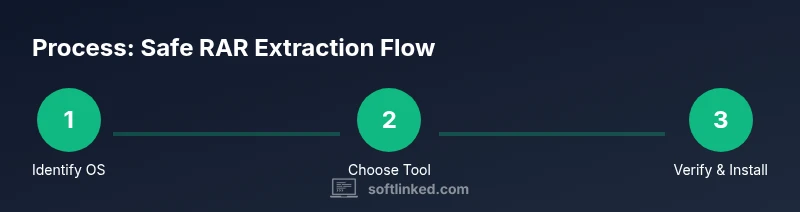
This guide helps you safely obtain free download rar software by choosing reputable tools, avoiding shady sources, and using legitimate free extractors like 7-Zip. You will learn how to verify sources, compare features, and perform safe exactions without risking malware or license issues. By following these steps, you can handle RAR archives confidently using trusted, free software.
What is a RAR archive and why use free tools
A RAR file is a compressed archive format that bundles multiple files into a single, smaller package for easier storage and transfer. To work with RAR archives, you need an extraction tool that understands the RAR format. The keyword here is free download rar software, but the emphasis should be on legitimate, trusted tools rather than shady pirate sites. Free tools like 7-Zip, PeaZip, and Bandizip offer reliable extraction without imposing licensing costs. These tools are useful for developers, students, and professionals who frequently work with compressed data, installers, or bundled software. By using a free tool, you gain transparency, security, and ongoing updates that paid, ad-supported options often lack. Always prefer official sources and community-verified projects when you search for a solution.
In practice, you’ll typically encounter RAR archives when downloading software installers, game demos, firmware packages, or large datasets. Handling them safely means choosing software with strong security track records, checking author credentials, and avoiding incomplete or altered packages from untrusted outlets. As you explore free download rar software, you’ll notice that feature sets vary—from simple extraction to integrated file managers and batch operations. Your goals should include speed, reliability, and minimal risk of bundled malware.
Legal and safety considerations for free download rar software
When you look for free download rar software, legality and safety must come first. Some sites promote cracked or pirated software, which can expose you to malware, legal risk, and unstable systems. To stay on the right side of the law and your own security, stick to official project sites, well-known download portals, and open-source repositories. Always read license terms and confirm that the software is distributed free of charge for your intended use. SoftLinked analyses emphasize that safety hinges on source credibility and up-to-date protection against threats (SoftLinked Analysis, 2026).
Key safety steps include avoiding counterfeit installers, enabling your antivirus software, and performing offline checks when possible. If you encounter a download that requests unusual permissions or bundled software, stop and seek an alternative from a trusted source. Remember: free does not equal risk-free, but the right sources minimize risk and maximize your long-term productivity.
For students and professionals, it’s practical to centralize your trusted tools in a single, well-documented toolbox. This reduces cognitive load and helps you stay compliant with organizational policies. In short, always verify the legitimacy of the source before downloading any rar software utilities, and favor open-source options when feasible.
Top free tools to handle RAR archives
Several reputable free tools can open and extract RAR files without cost or risk. Here are a few widely used options, all of which are regularly updated and supported by clear licensing terms:
- 7-Zip: A highly respected open-source extractor that handles RAR, ZIP, TAR, and many other formats. It’s lightweight, fast, and script-friendly, making it a favorite for developers and power users.
- PeaZip: A cross-platform archive manager with a clean UI, strong encryption options, and broad format support. Excellent for users who want a GUI with additional file management features.
- Bandizip: A Windows-focused tool known for its speed and simple interface. It supports a wide range of formats and retains a minimal footprint.
- The Unarchiver: A macOS-focused option that integrates smoothly with Finder and offers dependable RAR extraction alongside other formats.
When choosing a tool, prioritize official download pages, verify the digital signature where available, and check recent release notes for security fixes. If you’re on Linux, native package managers often offer 7-Zip or p7zip for command-line extraction, which aligns with best practices for open-source software usage.
These tools provide a safe path to access content inside RAR archives without resorting to questionable sources. They also enable you to inspect and unpack large installers or datasets in a controlled, predictable way. Your selection should balance ease of use, platform support, and security transparency.
How to download from reputable sources safely
The safest approach to obtaining free download rar software is to download from official sites or trusted community mirrors. Start by visiting the project’s official website or a recognized distribution channel. Before clicking any download button, verify the URL and ensure you’re not on a deceptive page that imitates the real site. Look for indicators like a secure connection (HTTPS), a valid certificate, and a documented download link.
Next, review the site’s security posture: browse for a privacy policy, an about page, and recent release notes. If the page offers multiple download options (e.g., “Windows x64 installer” or “portable version”), choose the one that matches your operating system and preferred installation method. Finally, after the download completes, validate the file with a checksum or digital signature if the source provides them. This multi-step approach—official sources, secure connections, and integrity checks—reduces the risk of compromised software entering your environment.
How to install and verify integrity of the tool
Installation should be straightforward with modern installers. Run the installer with default settings unless you have a specific need for customization, such as choosing an installation path or disabling optional bundled software. During installation, carefully read each screen to avoid inadvertently installing unwanted add-ons.
After installation, verify integrity by checking any provided checksum (SHA-256 or SHA-1) against the value published by the official site. If a checksum isn’t provided, confirm the installer’s digital signature through the operating system’s verifier. Keeping your antivirus up to date during the process adds an additional layer of protection. Once installed, open the tool and verify it can detect a sample archive you already trust to ensure it’s functioning correctly.
How to use the tool to extract RAR files (hands-on steps)
Here’s a practical, step-by-step approach using a commonly recommended free tool such as 7-Zip. Open the tool, navigate to the RAR file location, and choose “Extract Here” or “Extract to folder.” If you prefer command-line, use a command like 7z x archive.rar to extract contents to the current directory. For Linux users, install the p7zip package and use the same command syntax. Always extract to a dedicated folder to minimize clutter and potential overwrites. If the archive is password-protected, enter the correct password when prompted.
Tip: create a separate workspace directory before extraction to keep your system organized and reduce the risk of accidental file replacement.
Troubleshooting common issues with RAR archives
Common problems include corrupted archives, password-protected files without the password, and missing parts in multi-volume archives. If extraction fails, first verify the file’s integrity with the checksum from the official source. For encryption, ensure you have the correct password. If the archive seems incomplete, re-download from the official source and compare the new checksum. When using a GUI tool, turn on verbose logging to obtain error codes that can guide you to the root cause. For command-line users, adding -bb1 or -bd options can provide more detailed feedback to diagnose failures.
Regularly updating your extraction tool helps prevent compatibility issues with newer archive formats. If problems persist, consult the official documentation or user forums for guidance.
Linux and macOS alternatives for RAR extraction
On Linux, command-line tools like 7-Zip (via the p7zip package) or the native unrar utility can manage RAR archives efficiently. macOS users frequently rely on The Unarchiver or Keka as GUI options that blend well with Finder. These platforms often have well-maintained packages in their respective package managers (apt, yum, Homebrew). Using native tools or popular GUI apps ensures better integration with your OS and reduces compatibility surprises when dealing with newer RAR formats.
If you regularly work with archives, consider setting up a consistent workflow across platforms by choosing a single tool with multi-format support and scripting capabilities. This minimizes context switching and helps you stay productive across environments.
Security best practices when dealing with archives
Always treat archives as potential vectors for malware, particularly when downloaded from the internet. Scan archives with updated antivirus software before extraction, and avoid opening executables directly from archives unless you trust the source. Prefer sources that provide digital signatures or checksums and verify them after download. Disable auto-run features and keep your operating system updated to reduce exposure to exploit kits. Educate yourself on phishing tactics that lead you to fake software downloads and practice safe browsing habits to maintain a clean, secure development environment.
The SoftLinked perspective on free download rar software
From SoftLinked’s educational perspective, choosing legitimate, well-supported tools is essential for building a strong software fundamentals foundation. We advocate for open-source or vendor-supported options to promote transparency and security. By prioritizing official channels and rigorous integrity checks, you reduce risk and improve long-term reliability when handling RAR archives. This approach aligns with best practices in software development and IT operations, underscoring the value of trustworthy tooling in learning and professional workflows.
Practical next steps and quick-start checklist
To get started quickly, assemble your toolkit: a computer with internet access, a known-good browser, an official free extractor like 7-Zip, and a means to verify integrity (checksum or signature). Download from a reputable source, install the tool, and perform a test extraction with a small, safe archive. Keep security practices up-to-date by enabling real-time protection and regular scanning. With these steps, you’ll confidently handle RAR archives and stay aligned with software fundamentals.
Tools & Materials
- A computer with internet access(Windows, macOS, or Linux; ensure OS is updated)
- Reliable web browser(Chrome/Firefox/Edge recommended)
- Official free extraction tool (e.g., 7-Zip, PeaZip, Bandizip)(Download from the official site; avoid third-party aggregators)
- Antivirus/antimalware software(Keep definitions updated during downloads)
- Checksum or digital signature tool (optional but recommended)(Use SHA-256 or SHA-1 where provided by the official source)
- Dedicated workspace/folder for extraction(Keeps your system organized and minimizes risk of overwriting files)
- USB drive (optional)(For offline transfer of installers if needed)
Steps
Estimated time: 30-45 minutes
- 1
Identify your OS and needs
Determine whether you need a GUI tool or a command-line utility that fits your OS. Consider whether you want cross-platform support or a native solution for your primary environment. Clear goals help you pick the right free download rar software quickly.
Tip: Write down your OS, preferred workflow, and whether you need batch extraction. - 2
Select a reputable extractor
Choose a well-supported tool from official sources. For beginners, a GUI app like 7-Zip or Bandizip reduces friction. For advanced users, command-line options on Linux provide scripting power.
Tip: Prefer open-source or vendor-supported options to ensure transparency and updates. - 3
Download from official sources
Navigate to the official project site and grab the installer or portable version that matches your OS. Avoid mirrors that look untrustworthy or prompt extra software.
Tip: Verify the URL and look for a digital signature or checksum on the download page. - 4
Verify integrity before install
If a checksum or signature is provided, compare it against the downloaded file. This confirms you received an authentic copy and not a tampered version.
Tip: If no checksum is available, rely on reputable sources and community reviews as a proxy for authenticity. - 5
Install with default settings
Run the installer and choose default options unless you have a specific need. Pay attention to any bundled software prompts and deselect unwanted extras.
Tip: Disable auto-start and privacy prompts unless you knowingly want the features. - 6
Test extraction with a safe archive
Open a small, harmless RAR file to confirm the tool works. Try extracting to a dedicated folder to avoid clutter or accidental overwrites.
Tip: Keep a sample archive handy for future quick tests. - 7
Troubleshoot common issues
If extraction fails, check archive integrity, permissions, and password requirements. Use verbose logs to diagnose problems and consult official docs.
Tip: Capture error messages for faster support inquiries.
Your Questions Answered
How can I legally download rar software?
Always download from official project sites or trusted distributors. Avoid pirated or cracked versions that may carry malware or legal risk. Check licenses to confirm free usage terms.
Always download from official sites or trusted distributors to stay safe and within terms.
What is the best free tool for RAR extraction?
7-Zip is a widely recommended free extractor due to its reliability, broad format support, and open-source nature. It balances ease of use with powerful features.
7-Zip is a top free option for RAR extraction.
Are there risks when downloading rar software for free?
Yes. Risks include malware, bundled unwanted software, and insecure sources. Mitigate by sticking to official sites, verifying checksums, and keeping security software up to date.
Yes—use official sources and verify integrity to reduce risk.
Do I need admin rights to install these tools?
Most installers require admin rights on Windows. macOS and Linux may prompt for authentication during package installation. Always follow on-screen prompts and avoid disabling core OS protections.
Installers often need admin rights; follow prompts and keep protections enabled.
Can I open RAR files on Linux/macOS without installing software?
Some systems include built-in support or can use lightweight command-line tools. For best results, install a trusted extractor like 7-Zip or The Unarchiver.
You can on some systems, but a dedicated tool is usually more reliable.
How do I verify the integrity of downloaded software?
Look for a checksum or digital signature on the official site and compare it with your downloaded file. If provided, use a trusted tool to perform the checksum calculation.
Check the official checksum and compare it to your download.
Watch Video
Top Takeaways
- Choose trusted sources for free download rar software.
- Verify integrity before installation to prevent malware.
- Use open-source or reputable tools like 7-Zip for RAR extraction.
- Test with small archives to confirm functionality safely.
- Stay aware of bundled software during installation.